Muqdisho (RBC Radio):- Xildhibaano katirsan Golaha Baarlamaanka FKMG Soomaaliya ayaa maanta ku baaqey in si deg deg ah loo taageero dadka abaaruhu saameeyeen ee ku nool gobolada Sool iyo Sanaag.
Xildhibaano dhowr ah ayaa maanta magaalada Muqdisho ee caasimada Soomaaliya kula hadley warbaahinta waxayna baaq u direen Xukuumada Ra’isulwasaare Farmaajo iyo Hay’adaha samafalka in ay si deg deg ah ugu gurmadaan dadka abaaruhu ku haleeleen deegaanada miyiga ah ee gobolada Sool iyo Sanaag.
Sii Akhri
Monday, 3 January 2011


Proff Afyare Cilmi: Dastuur ku Sheega Haddii la Ansixiyo Hala Ogaado Dalka iyo Dadkaba Dembi baa Laga Galay
Proff Afyare ayaa sheegay in isaga uu si fiican u darsay dastuur ku sheega uuna ka ururiyey dowr arimood kuwaasoo uu ku tilmaamay in haddii la meelmariyo dembi laga galayo ummada Soomaaliyeed, gaar ahaan DKMG ee uu hogaamiyo Sheekh Shariif Axmed ay dusha saran doonto wixii mushkilad ah ee ka yimaada.
 Doha (RBC) Proff Afyare Cabdi Cilmi oo ka mid ah aqoonyahanada Soomaaliyeed mudooyinkana ku hawlanaa warbixin la xiriirta dastuurka cusub ee dhowaan lagu qoray wadanka Jabuuti ayaa ka digay khatarta ka iman karta dastuurka cusub.
Proff Afyare Cabdi Cilmi oo hadda wax ka dhig jaamacada magaalada Doxa ee dalka Qadar ayaa sheegay in markii uu arkay qoraalka dastuur ku sheega loogu magacdaray ‘QABYO QORAALKA’ ee dhawaan la soo bandhigay ayaa sheegay inuu ku arkay waxyaabo aad loola yaabo isla markaana fikrada lagu qoray dastuurka aysan ahayn mid Soomaaliyeed.Read More
Ethiopia: Why do things always fall apart in Africa?
Copycat Dictators and Cartoon Democracies in Africa
Ivory Coast, December 2010. Laurent Gbagbo says he won the presidential election. The Independent Ivorian Election Commission (CEI) said former prime minister Alassane Ouattara is the winner by a nine-point margin. The African Union, the Economic Community of West African States (ECOWAS), the United Nations, the United States, the European Union all say Ouattara is the winner. Gbagbo is only the latest African dictator to steal an election in broad daylight, flip his middle finger at his people, thumb his nose at the international community and cling to power like a barnacle to a sunken ship.
Ethiopia, May 2010. Meles Zenawi said he won the parliamentary election by 99.6 percent. The European Union Election Observer Team said the election "lacked a level playing field" and "failed to meet international standards". Translation from diplomatic language: The election was stolen. Ditto for the May 2005 elections.Read More
Somalia: Country Receives Humanitarian Supply From UAE As Droughts Hit the Nat
Mogadishu — The transitional federal government of Somalia on Monday proclaimed it had received humanitarian food supply from the United Arab Imarets as the nation struck severe droughts.
Abdurrahman Yusuf Farah, Somalia's deputy minister for water and minerals told the local press that a boat loaded with humanitarian food supply, which UAE government intended to help Somalia's droughts affected people, has docked at Mogadishu international airport.
"This boat is fro Dubai, and stopped over Aden. And it is humanitarian aid to assist Somalis whose lives affected by droughts" Mr. Farah spelled out, adding that Somali government appointed a committee to handle the droughts hit the war-ridden SomaliaRead More
Abdurrahman Yusuf Farah, Somalia's deputy minister for water and minerals told the local press that a boat loaded with humanitarian food supply, which UAE government intended to help Somalia's droughts affected people, has docked at Mogadishu international airport.
Somalia: Al Shabaab Fighters Conduct Military Drill
Lafole — More fighters loyal to Al shabaab movement conducted a large military exercise in Afgoye corridor where a lot of Somali displaced people live, an Al shabab official said on Monday.
With the presence of some al shabaab officials, hundreds of the group's fighters have matched a long walk at the villages of Lafole, Arbiska, Elasha and KM 13 in Lower Shabelle region in southern Somalia.Read More
With the presence of some al shabaab officials, hundreds of the group's fighters have matched a long walk at the villages of Lafole, Arbiska, Elasha and KM 13 in Lower Shabelle region in southern Somalia.Read More
Sunday, 2 January 2011
The Secessionist Camp: How long the futile campaign for secession will continue in “Somaliland”?
Mohamed obsiye has come up with yet another pro-secessionist array of attacks against Somaliweyn and its supporters in the form of another repackaged and recycled article (The Brief history of the Somali Union) in favor of “Somaliland” secession without providing any new shred of evidence to support his mendacious claims. This time the author, the PhD candidate, was so desperate in his attempt to get new coverts for his secessionist idea that he rubbished of what Somalis of all generations stood for centuries: Somali nationalism. To add insult to injury, he was unmoved by Ethiopia’s old age expansionist strategy and found massive fault lines in Somalis’ pursuit of their own rightful territories. What is wrong with uniting all Somalis under one roof i.e. under one-nation-state? After all, did not Ethiopia bring different people with different ethnicity, culture and religion under one-nation-state, not by choice but by coercion? How is this different to the aspirations of Somalis to bring all Somalis under one-nation-state? Does he not know Ethiopia was/is behind the suffering and misery of Somali people for generations? How is it sound and reasonable for the founders of current Ethiopia to come all the way from Gondor and Gambella, among other places, and occupy a Somali-populated territory, namely Ogden and claim as their own while Somalis are denied to claim their own land of thousands of years? What a shame! The fact that there was unfortunate cruel civil war and that the hapless Somalis did not reconcile themselves quickly enough does not mean that we should part company and leave everything we shared for generations behind us. Read More
Will Sudan break apart?
 |
In just over a week, a political earthquake may rock Sudan and send tremors across Africa. As the result of an expected referendum on January 9, it appears likely that southern Sudan’s 8mn inhabitants will vote to separate from the 34mn citizens of northern Sudan and create their own new nation of South Sudan. Since much of Africa’s current borders were drawn by European colonial powers, any changes are likely to unleash dangerous tensions or demands for secession across the continent. One of Africa’s biggest taboos has been that borders inherited from the colonial era were immutable. A break-up of Sudan, Africa’s largest nation, will bring into question the continent’s entire geopolitical architecture. Sudan, which extends from the Arab world into the heart of black Africa, was created by the British Empire to safeguard the Nile, Egypt’s sole source of water. Sudan is a dizzying collection of almost 600 often feuding tribes speaking 400 different languages spread over a vast area: northern, Arabic-speaking Muslims and Nubians; ferocious Beja from the Red Sea Coast (“Fuzzy-Wuzzies” to the British); wild Bagarra nomads from Darfur; and Stone Age tribes from the upper Nile. It is remarkable that Sudan has held together for so long. A bloody civil war has raged for 60 years between Muslim northerners and southerners, in which 2mn are said to have perished. The people of Sudan are 75% Muslim, about 25% animist and 5% Christian. Islamic law has been applied in the north, but mostly by southerners. Southern Sudan’s Christian secessionist movement has long been guided and financed by British and US Christian missionaries and aid groups. American Evangelical groups, who now form the voter core of the Republican party, have been playing a key role in promoting southern Sudan’s independence movement. South Sudan has also been rent for decades by conflict between its three main pastoral Nilotic tribes, the Dinka, Shilluk and Nuer, who routinely launch raids on one another for cattle and women. Sudan has also suffered another confusing conflict in the remote western regions of Darfur and Kordofan between nomadic and farming peoples. The International Criminal Court in the Hague has indicted Sudan’s President, Omar Hassan al-Bashir, for war crimes in Darfur’s murky tribal war that has become a highly emotional issue in the West. Just how much Bashir’s regime is responsible for alleged mass killings in Darfur’s tribal melee remain uncertain. But Sudan is on the US black list as a terrorist supporter and under US sanctions. Sudan, branded a “rogue state” by Washington, has long been targeted for “regime change.” The US media and evangelical Christian groups have demonised Sudan and Bashir, and branded him a dangerous Islamist. Israel has been very active in arming and supporting the South Sudan SPLA guerrilla movement, and will assume an even more influential role if southern Sudan goes independent. Sizeable deposits of oil were discovered in Sudan over the past decade. They are mostly located in south Sudan but the Khartoum government controls the export pipeline. China has become a major customer of Sudanese oil. Washington intends to elbow the Chinese out if the south breaks away. Control of global oil plays a primary role on US foreign and military policy. The US is becoming ever more deeply involved in Sudan. As a result, Washington has been discreetly working with southern Sudan to create a government, financial system, police, and army. South Sudanese officials are being trained in the US. The number of US diplomats and intelligence officers in Sudan has tripled. A break-up of Sudan will have an immediate effect on other unstable neighbours, like Somalia, Chad, and the Republic of Congo. Ethiopia may get more deeply involved in the region. Egypt, eternally sensitive about who controls the Nile’s life-giving waters, is deeply worried about Sudan’s future and fears a new regime in the south may begin diverting the river’s waters. Just at a time when the US is increasingly active in Djibouti, Yemen, Somalia, Ethiopia, Kenya and Uganda, it finds itself ever more deeply involved in engineering the break-up of Sudan. All this may be a bridge too far for the already over-stretched US military, intelligence services, and State Department, not to mention the empty US Treasury that now runs on borrowed money. |
How should Tanzanians remember year 2010?
The just ended year 2010 could go down in Tanzania’s history as one of the toughest. It saw the majority of the poor population leading miserable lives owing to skyrocketing of consumer prices.
Encouraging figures from authorities indicating the slowing down of inflation and rising economic growth showed no impact as the general public continued complaining of rising cost of living.
The authorities kept on bombarding the public with encouraging figures on inflation and economic growth. But in fact, it may be recalled that the prevailing tough conditions started in 2006, almost coinciding with President Jakaya Kikwete assuming office in October 2005.
Under his predecessor Benjamin Mkapa, for example, the prices of basic food items such as maize flower and sugar remained stable, unlike the present situation.
And according to Dr Azavery Lwaitama, a don of the University of Dar es Salaam, 2010 was a year that poor Tanzanians would not forget. “Every person that you talk to is complaining of life hardship.
This has been contributed by the financial crisis that hit the world in late 2008 and other malfunctioning internal policies.”
He says tenants have suffered much as a result of rising rental fee slapped on them by landlords who claim this is due to high construction costs. “Of course the prices of materials keep on rising everyday, and worse still it is the tenant who carries the burden,” Lwaitama says.
He adds that the ordinary people should not expect any relief in this New Year, especially so following the hiking of power tariffs.Read More
What will Uganda be like in 2011?

USUAL SCENES: Police brutality is expected if the voting period turns violent. FILE PHOTO
By Timothy Kalyegira (email the author)
Posted Sunday, January 2 2011 at 00:00
Posted Sunday, January 2 2011 at 00:00
Forecasting future events and trends is not difficult if one knows the basics. Human nature, with all its unchanging traits, is the constant in human affairs. Timothy Kalyegira predicts what this year has in store for Ugandans.
We can be fore for example that most Ugandans will complain about being short of money through most of January 2011 as a result of overspending during the Christmas 2010 holidays and festive season.
Therefore, based on long-established patterns of behaviour, history, social norms, geopolitical forces, religion and economics, the following is a forecast that can reasonably be expected to unfold in 2011.
Therefore, based on long-established patterns of behaviour, history, social norms, geopolitical forces, religion and economics, the following is a forecast that can reasonably be expected to unfold in 2011.
The 2011 general election
The biggest news story in Uganda in 2011 will, of course, be the general election. President Museveni has made it clear from 1996 that as a rule, he has no interest in handing power to the opposition.
The biggest news story in Uganda in 2011 will, of course, be the general election. President Museveni has made it clear from 1996 that as a rule, he has no interest in handing power to the opposition.
If FDC/IPC candidate Dr Kizza Besigye were to win the February 18 general election, do we see Museveni and First Lady Janet Museveni warmly shaking hands with the new President Kizza Besigye and First Lady Winnie Byanyima at the front door of State House Entebbe?
However, the main opposition parties have also made it clear that (in Besigye’s case) they will not go to court in the event of a rigged election or (in the case of the FDC/IPC and the Democratic Party) they will tally their own results. Put another way, Uganda in 2011 is headed for an aftermath similar to that which followed the 1980 election.
Whoever wins the February election (especially if it is the NRM), there will be plenty of drama on the national political landscape brought about by the emergence of the private (or independent) candidates in the 2010 election primaries and campaign.Read More
Saturday, 1 January 2011
Danish attack plot was 'destined to fail': expert
One of the five men arrested Wednesday was "so publicly exposed and known by the intelligence services that the plot against Jyllands-Posten was almost destined to fail," Magnus Ranstorp, a terrorism expert at the Swedish National Defence College, told the Politiken daily's online edition.
Munir Awad, a 29-year-old Swede born in Lebanon, was one of five men arrested Wednesday for hatching what Danish officials called a plan to "kill as many people as possible" in an assault on the Jyllands-Posten daily.
The paper published in September 2005 a dozen cartoons of the Muslim prophet that triggered violent and sometimes deadly protests around the world, as well as threats against the daily.
Four men -- including Awad and two other Stockholm-based men -- were arrested in suburbs of Copenhagen and one was arrested at his home north of the Swedish capital.
The four Swedish residents had all been under surveillance for months, Swedish intelligence service Saepo said this week.Read More
Somalia: Pro-government fighters disarmed by Ethiopian military
Incident comes one day after at least one Somali soldier and another civilian were injured when government forces clashed with Ethiopian military troops in central Somalia.
| Source: | (AHN) | Reporter: | Abdi Hajji Hussein |
| Location: | Dolow, Gedo, Somalia | Published: | January 1, 2011 05:22 am EST |
| Topics: | Unrest, Conflicts And War, Conflict | ||
 A government official, who spoke on condition of anonymity for security reasons, said three Ethiopian military officers came to the Dolow district where 300 Somali forces are based and ordered them to put down their weapons. A number of Ahlu Sunna Waljama’ fighters were also ordered to disarm.
The official said the Ethiopian action came after an Ahlu Sunna official held a meeting with members of the international community in the Kenyan capital Nairobi. The official charged that the Ahlu Sunna officer was smuggling weapons over the Ethiopian and Kenyan borders into Somalia.
Somali military officers have requested to meet with Ethiopian military officials to determine the reason behind the disarmament but all efforts have failed.
Somalia’s top government officials were not immediately available for comment.
Separately, the spokesman for Ahlu Sunna fighters in Dolow, Sheikh Mohammed Hussein, denied the reports that the group's forces there had disarmed. “The aim of propagating those reports is to humiliate the dignity of Ahlu Sunna Wajma’,” Hussein was quoted as saying.Read More
Subscribe to:
Posts (Atom)
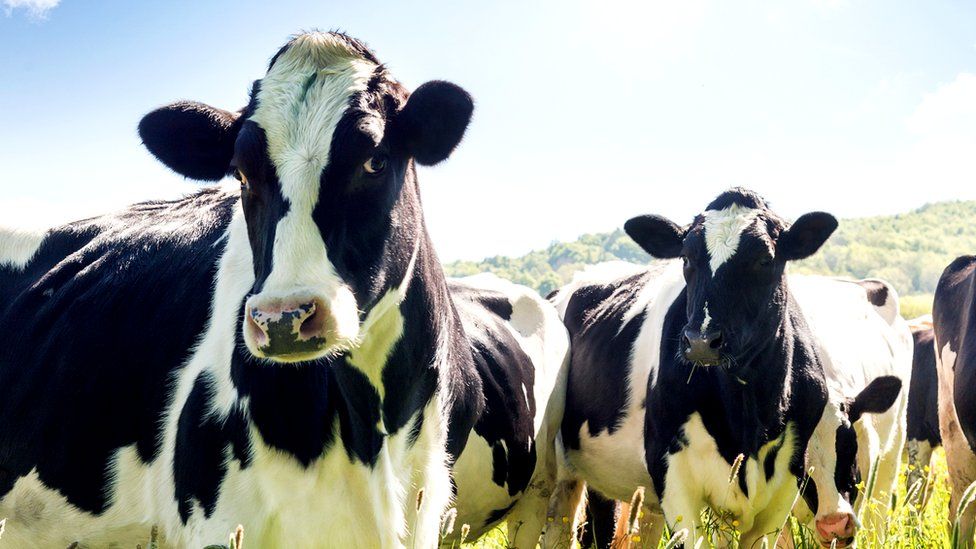
Why cows may be hiding something but AI can spot it
By Chris Baraniuk Technology of Business reporter Published 22 hours ago Share IMAGE SOURCE, GETTY IMAGES Image caption, Herd animals like...
-
Wednesday, November 14, 2012 By Jonathan Kalan Kasim moves swiftly around the machine. Like a dancer, he has style, a unique way of p...
-
Thousands of Somalis have fled the drought and the fighting Continue reading the main story ...

