Wednesday, 1 February 2012

Senegal anti-Wade protest: Two demonstrators killed


Protesters opposed to President Abdoulaye Wade running for a third term shout slogans during a rally in Dakar, Senegal Tuesday 31 January 2012 The opposition want "national resistance" to the president's bid for a third term

Related Stories

Two people have been killed in the Senegalese capital during a demonstration against President Abdoulaye Wade's re-election bid.
Police and thousands of opposition supporters clashed in the centre of the city on Tuesday evening.
Tear gas was fired and one student died when he was run over by a police truck.
Earlier in the week, two people were shot dead during protests in a northern town after a court ruled that Mr Wade's third-term election bid was legal.
Elections in the West African country - often held up as one of Africa's model democracies - are due on 26 February.
'Fear of the unknown' Seydi Gassama, director of Amnesty International Senegal, told the BBC that Mamadou Diop, a 32-year-old student at Cheikh Anta Diop University, was run over - and a another female protester also died.
The opposition June 23 Movement (M23) had organised the demonstration and has sworn a campaign of "national resistance" until Mr Wade rescinds his candidacy.
Once a veteran opposition leader himself, Mr Wade, 85, was first elected in 2000 - ending 40 years of rule by the Socialist Party.
Senegal's constitution has a two-term limit but the constitutional court has ruled this does not include Mr Wade's first term, which began before the clause was adopted.
At the same time as allowing Mr Wade to stand, the court ruled singer Youssou N'Dour and two other opposition candidates could not run.
There has been international criticism of the ruling amid warnings that Senegal's long-standing record for democracy and political stability could be jeopardised.
Nigeria's former President Olusegun Obasanjo - himself a failed third-term bidder - told the BBC's Network Africa programme that "fear of the unknown" made leaders like Mr Wade hang onto power.
"But there is life after the government house - as I have found," Mr Obasanjo said.
Mr Wade's campaign spokesman, Amadou Sall, told the BBC if opposition supporters do not want Mr Wade as president they should go to the forthcoming polls.
"Every five years the Senegalese citizens have the right to express themselves… on 26 February if they decide they don't want no more Abdoulaye Wade for president, Abdoulaye Wade will not be president, so it's all in their hands," he said.

Somalia hostages Buchanan and Thisted go home


Jessica Buchanan and Poul Thisted Jessica Buchanan and Poul Thisted (images courtesy of Danish Refugee Council)
Poul Thisted, a Danish aid worker held hostage in Somalia for three months, has returned to Denmark.
He and his American colleague Jessica Buchanan were freed by US Navy Seals in central Somalia last week.
Ms Buchanan's father told ABC News that his daughter would be spending her first night back in the US on Tuesday.
The two aid workers were taken to a Nato base in Sicily after they were freed. Both were working for the Danish Refugee Council Demining Group.
The group said that Poul Thisted would not be speaking to the media.
The 60-year-old Dane said in a statement released on the group's website: "I am grateful for the prayers and support that I have received from everyone throughout this event; however, at this time, my top priority is spending time with my family."
"It is important that I remain focused on returning to my family and normal life without delay," he said.
In an interview with ABC News' Diane Sawyer, Ms Buchanan's father John said the 32-year-old was flying home to Pennsylvania on Tuesday.
Map
He said that despite serious concerns over his daughter's health, she was doing very well:
"She's a really unique girl and she's strong and she's motivated and she's very resourceful and you know we're all just really proud of her that she came through this the way she did," he said.
"She's physically on the mend and psychologically she's just done great and she's in a good frame of mind."
Mr Buchanan said his daughter was a vegetarian who was "into natural food", and had subsisted on a diet of camel milk and goat meat during her captivity.
At the time of the raid, the two hostages were being kept about 40km (25 miles) east of the town of Adado and 100km (62 miles) south of Galkayo.
A US official said the Seals parachuted from a plane into an area near the compound where they were being held.
Nine of the kidnappers were killed in a shoot-out. The freed hostages and the Seals left the area by helicopter for a US base in Djibouti.

Assange extradition case to be heard by Supreme Court


Julian Assange Wikileaks founder Julian Assange claims the allegations against him are politically motivated

Related Stories

The UK Supreme Court is due to consider an appeal by the Wikileaks founder Julian Assange against his extradition to Sweden.
Britain's highest court has said seven justices will hear the arguments because of the "great public importance of the issue raised" by the case.
A spokesman said the issue was "whether a prosecutor is a judicial authority".
Mr Assange is wanted by Swedish authorities for questioning over alleged sex offences, which he denies.
The 40-year-old Australian, who remains on conditional bail in the UK, claims the allegations against him are politically motivated.
He is accused of raping one woman and "sexually molesting and coercing" another in Stockholm in August 2010.
Mr Assange's Wikileaks website published a mass of material from leaked diplomatic cables embarrassing several governments.
The High Court previously approved his extradition, a decision that Mr Assange argues was unlawful.
In December, two High Court judges, Sir John Thomas and Mr Justice Ouseley, decided that Mr Assange had raised a question on extradition law "of general public importance" and allowed him to ask the Supreme Court for a final UK ruling.
Later that month, a Supreme Court spokesman said its justices had agreed to hear the case "given the great public importance of the issue raised, which is whether a prosecutor is a judicial authority".
The hearing will last two days and the judgement is expected to be reserved.

Pakistan helping Afghan Taliban - Nato


Front page of the report The report comes at a sensitive time in Pakistan-Nato relations
The Taliban in Afghanistan are being directly assisted by Pakistani security services, according to a secret Nato report seen by the BBC.
The leaked report, derived from thousands of interrogations, claims the Taliban remain defiant and have wide support among the Afghan people.
A BBC correspondent says the report is painful reading for international forces and the Afghan government.
A Pakistani foreign ministry spokesman called the accusations "ridiculous".
"We are committed to non-interference in Afghanistan and expect all other states to strictly adhere to this principle," Abdul Basit told the BBC.
"A stable and peaceful Afghanistan is in our own interests. We cannot indulge in any activity which takes us away from achieving that objective," he added.
The report alleges that Pakistan knows the locations of senior Taliban leaders.
"We have long been concerned about ties between elements of the ISI [Pakistan's intelligence service] and some extremist networks," said US Pentagon spokesman Captain John Kirby, adding that the US Defence Department had not yet seen the report.
Pakistan Foreign Minister Hina Rabbani Khar is currently in Kabul for talks with Afghan President Hamid Karzai.
'Informational'

Start Quote

The Taliban are not Islam - the Taliban are Islamabad”
Senior al-Qaeda detainee, quoted by the report
The BBC's Quentin Sommerville in Kabul says the report - on the state of the Taliban - fully exposes for the first time the relationship between the ISI and the Taliban.
The report is based on material from 27,000 interrogations with more than 4,000 captured Taliban, al-Qaeda and other foreign fighters and civilians.
It notes: "Pakistan's manipulation of the Taliban senior leadership continues unabatedly".
It says that Pakistan is aware of the locations of senior Taliban leaders.

Analysis

Pakistan is finding it harder to convince outsiders it is not helping the Afghan Taliban and giving safe haven to its leaders.
In effect, the accusation is that Pakistan is betting on the insurgents being the strongest power in Afghanistan and most likely ally once Nato leaves - something Islamabad of course strenuously denies.
The leak of this report comes at a particularly sensitive time. Pakistan is already blocking the supply route to coalition forces in Afghanistan, following a Nato attack in which 24 Pakistani soldiers were killed.
With increasing pressure being heaped on Pakistan, public support here for formally ending co-operation with the West simply grows.
"Senior Taliban representatives, such as Nasiruddin Haqqani, maintain residences in the immediate vicinity of ISI headquarters in Islamabad," it said.
It quotes a senior al-Qaeda detainee as saying: "Pakistan knows everything. They control everything. I can't [expletive] on a tree in Kunar without them watching."
"The Taliban are not Islam. The Taliban are Islamabad."
Our correspondent says the report seems to suggest that the Taliban feel trapped by ISI control and fear they will never escape its influence.
However, it states: "As this document is derived directly from insurgents it should be considered informational and not necessarily analytical."
Adm Mike Mullen, former chairman of the US Joint Chiefs of Staff, has explained Pakistan's closeness to the Afghan Taliban by pointing to infiltration of its army by the religious right, but he also says it is part of a grand strategy to increase leverage in the region via "proxies".
Despite Nato's strategy to secure the country with Afghan forces, the secret document details widespread collaboration between the insurgents and Afghan police and military.
Lt Col Jimmie Cummings, a spokesman for Nato's International Security Assistance Force (Isaf) in Afghanistan, said the document was "a classified internal document that is not meant to be released to the public".
"It is a matter of policy that documents that are classified are not discussed under any circumstances," he said.
The report also depicts the depth of continuing support among the Afghan population for the Taliban, our correspondent says.
It paints a picture of al-Qaeda's influence diminishing but the Taliban's influence increasing, he adds.
Taliban influence
Taliban fighters (file image) Villagers often prefer the Taliban to "corrupt" Afghan authorities, the report alleges
In a damning conclusion, the document says that in the last year there has been unprecedented interest, even from members of the Afghan government, in joining the Taliban cause.
It adds: "Afghan civilians frequently prefer Taliban governance over the Afghan government, usually as a result of government corruption."
The report has evidence that the Taliban are purposely hastening Nato's withdrawal by deliberately reducing their attacks in some areas and then initiating a comprehensive hearts-and-minds campaign.
It says that in areas where Isaf has withdrawn, Taliban influence has increased, often with little or no resistance from government security forces. And in many cases, with the active help of the Afghan police and army.
When foreign soldiers leave, Afghan security forces are expected to take control.
The report says that surrender is far from their collective mindset.
"For the moment, they believe that continuing the fight and expanding Taliban governance are their only viable courses of action," it adds.
According to the report, rifles, pistols and heavy weapons have been sold by Afghan security forces in bazaars in Pakistan.
The report adds that Taliban members "do not receive salaries or other financial incentives for their work", but their operations are funded by the narcotics trade and they frequently take a cut from the trade.
Their main revenue, though, is from donations, and they travel around the country from door to door making no secret of their affliation, it says.

Sutton St James stand-off: Man's body found


Police at the scene in Sutton St James Officers from Leicestershire and Nottinghamshire were also called in to help deal with the situation

Related Stories

A man has been found dead by police who had been negotiating with him during an armed stand-off which led to a Lincolnshire village being sealed off.
A firearm was discharged, injuring a police officer but the Lincolnshire force stressed that the man had not actually been shot.
The stand-off at the house in Sutton St James, began at about 11:00 GMT on Tuesday.
The man's body was found at about 22:30 GMT after police entered the building.
Lincolnshire Police said no shots had been fired by its officers.
A spokesperson said the Independent Police Complaints Commission had been informed.
Earlier, the village had been sealed off with "containment points" and drivers were asked to avoid the area.
Police said they were called to the Chapelgate property following reports the man, who was alone in the building, had a firearm.
'Co-operation and patience' They said trained negotiators had been talking to the man for "a considerable period of time".
Officers from Leicestershire and Nottinghamshire were also called in to help deal with the situation.
roadblock at Sutton St James Five "containment points" were set up around the village roads
A police spokesperson said the injured officer had since been discharged from hospital.
"All residents are now safe to leave their homes and we would like to thank people living in the area for their co-operation and patience," the spokesperson said.
Earlier, villagers were told not to leave their homes nor to try to go home.
People were initially told to go instead to the village hall and then to the primary school in Bell's Drove.
The village is in the south of the county, close to the border with Norfolk.

Fred Goodwin knighthood 'hysteria' criticised


Fred Goodwin Mr Goodwin was in charge of RBS in the run-up to its near collapse in 2008

Related Stories

The decision to strip former Royal Bank of Scotland boss Fred Goodwin of his knighthood has been criticised by business and some political figures.
Ex-Labour chancellor Alistair Darling said the decision appeared to have been taken "on a whim" - as Mr Goodwin was not the only banker to cause problems.
The Institute of Directors warned of creating "anti-business hysteria".
Mr Goodwin was RBS chief executive in 2008 when the bank's near-collapse prompted a £45bn taxpayer bailout.
The Queen cancelled and annulled the title on the advice of the forfeiture committee - whose members include top civil servants and the head Treasury lawyer - a decision welcomed by party leaders.
'Obscure' process It followed a clamour for Sir Fred to be stripped of the title, awarded for "services to banking" under the previous Labour government in 2004.
But Mr Darling, who as Labour chancellor led negotiations over the RBS bailout, said he was concerned about the "obscure" process used to annul the knighthood and said there should be a clear set of principles on which decisions are based.
Here in one of Scotland's smartest suburbs there is some sympathy for Fred Goodwin.
He was last seen late on Tuesday afternoon, sweeping out through the electronic gates of his large house in The Grange in a black Jaguar.
There are plenty of bankers behind the high walls of these tree-lined streets who feel that Mr Goodwin's treatment has been harsh.
Yes, they say, he was an arrogant, hubristic dealmaker but at a time when arrogant, hubristic dealmakers were all the rage, feted by many of the same politicians who are now cheering his downfall.
As RBS chief executive, Mr Goodwin cemented Edinburgh's reputation as a financial powerhouse, to the delight of staff and shareholders who grew rich, on paper at least.
The Treasury was more than happy to take and spend the millions of pounds in taxes paid by RBS.
For others though, including some of the more old-fashioned bankers in the Scottish capital, many of whom lost fortunes when boom turned to bust, Fred Goodwin deserves the opprobrium.
He was the epitome, they argue, of what went wrong with banking, helping to turn an industry with a reputation for being safe, solid and secure into a casino.
Either way, when the crash came, Sir Fred had the farthest to fall.
He questioned the idea that the decision had been undertaken independently, telling the BBC: "Committees can see the way the wind is blowing. I think the minute he was referred, the outcome was inevitable.
"I'm not here to defend Sir Fred... I just think we're getting into awful trouble here if we go after people on a whim and we don't have a clear set of principles against which we can judge people, it's not right."
The Institute of Directors (IoD) warned of politicians creating "anti-business hysteria" over the matter. Its director-general Simon Walker told the BBC removing a knighthood because "you don't approve of someone" without there being any criminal conduct "politicises the whole honours system".
In the past, only convicted criminals or people struck off professional bodies have had knighthoods taken away.
Former Confederation of British Industry chief, a former trade minister under Labour, Lord Digby Jones said there was "the faint whiff of the lynch mob on the village green" about the decision.
However, he added he did not disagree with the end result to strip the honour.
Former Formula 1 world champion Sir Jackie Stewart - a friend of Mr Goodwin - said he thought the former bank boss had been made a scapegoat.
'Boardroom culture' "No single person or even any single bank created the biggest financial recession in modern times," he said.
"To have this stripped I think is poor for the constitution and very dangerous for the future."
But a Cabinet Office spokesman said the "scale and severity of the impact of [Mr Goodwin's] actions as CEO of RBS made this an exceptional case".
The Financial Services Authority (FSA) and the Treasury Select Committee had judged the failure of RBS to have contributed to the 2008 financial crisis and subsequent recession, he said.
Deputy Conservative deputy chairman Michael Fallon said it was wrong to suggest there had been political interference.
He told BBC Radio 4's Today programme: "Ministers don't control the timings of the forfeiture committee, this is an entirely independent committee of civil servants."
'Public demand' He also rejected suggestions it had been "done on a whim" - saying it had been three and a half years since the near-collapse of RBS and followed a detailed report by the FSA.
And he suggested other bankers could yet face similar consequences: "I think there's going to be a report now from the FSA into the HBOS/Lloyds disintegration - so who knows what will follow from that?
"But this was the biggest bank, [Mr Goodwin] was the dominant player in it and I think the public rightly feel [he] got away scot free at the time. He walked off with this vast pension and we've had this persistent demand from the public as to why this man should be allowed to retain an honour he was given for services to banking."
The prime minister has welcomed the decision and Labour leader Ed Miliband said the public wanted to see further sweeping changes to boardroom culture and remuneration.
"It is right that Fred Goodwin lost his knighthood but I think it is only the start of the change we need in our boardrooms," the Labour leader said.
Deputy Prime Minister and Lib Dem leader Nick Clegg said it had been the "right decision".
The Unite union welcomed the move but Simon Chouffot, from the Robin Hood Tax Campaign which argues for increased taxation of the financial sector, said others should face similar consequences.
Mr Goodwin oversaw the multi-billion-pound deal to buy Dutch rival ABN Amro at the height of the financial crisis in 2007, which led to RBS having to be bailed out to the tune of £45bn by taxpayers.
There had been a growing clamour for him to be stripped of his honour following thousands of job losses at RBS and in the banking industry, and the impact on the wider economy.
The BBC's business editor Robert Peston said Mr Goodwin was in a "class of his own" in terms of the risks that he took at RBS - reflected in the size of the bailout required to rescue the company.
In 2009, Mr Goodwin, who received an annual pension of £650,000 - later reduced to £342,500 - after leaving the bank, told a committee of MPs he "could not be more sorry" for what had happened.

The house that a billion euros built


Frank Buckley in his newly built home
This is an unlikely consequence of the Irish economic crisis. Artist Frank Buckley decided to express his anger about the property boom and bust by building a house from more than a billion euros of decommissioned notes.
In the lobby of the Glass House, an empty office building that stands as a relic to Ireland's cataclysmic property bust, money is changing hands between an old woman and a 15-year-old girl.
"Go off there and get a couple of sweets for yourself," says the woman, as she hands over a block of €50,000 (£42,000) notes.
"I should have brought my handbag in here, I could have made a fortune," she jokes.
The money, which forms a pulped brick of shredded notes, is part of an art installation - and home - built by unemployed Dublin-based artist Frank Buckley.
Mr Buckley has invited strangers into the space in the hope that it will inspire debate on the state of Irish national debt and the meaning of currency.
Frank Buckley outside his newly built home
Like many of his friends and acquaintances, Mr Buckley fell victim to Ireland's economic crisis. At the height of the property boom, he bought a house on cheap credit.
He wanted a place where he and his two children could live together with his wife, who had recently moved from Zimbabwe with four children of her own.
Bricks of shredded Euro notes which have been decommissioned The shredded notes come in 50,000-euro blocks
"I borrowed all that money, which was very much encouraged," he says. "I take responsibility for it but it was very easy for me to do.
"We were in this bubble, confidence was high, we were untouchable and within the space of two or three weeks it just took its toll."
He had no fixed income and within months of buying the house found he couldn't meet his mortgage repayments.
Under the financial strain, his marriage broke down and he moved into the shed at the back of the house as bailiffs came to take his furniture away.
His friends and acquaintances struggled too and a close friend, a property developer who had lost everything he owned, took his own life.

Start Quote

Frank Buckley
The girl said, 'If I could use this as money, I would get out of this country. And to me that was sad”
Frank Buckley
Staring at a stack of decommissioned notes he had acquired from a friend to use as confetti at his wedding ceremony he started questioning its real value.
"I thought, 'God, this is what this paper is doing to us?,'" he says.
He decided to create art that would bring the absurdity of the Irish economic situation to light and made paintings from the shredded notes and coins which he exhibited towards the end of last year.
Then the idea came to him to build a house.
"I was sitting outside the Glass House building waiting for a friend of mine to come out and I thought, 'Wouldn't this be fantastic, to do a structure inside the building with the shredded notes,'" he says.
He rang the building's agent who had seen a review of his most recent exhibition and forwarded him to the owner who was immediately keen.

Spec of a billion-euro pad

  • Originally built as a gallery but now a fully functioning home
  • Three rooms - living room, bedroom and bathroom
  • High-security door and double-glazed window
  • Microwave, dishwasher, drier and cooker planned
  • And a shower that will spray money
  • Euro notes provide excellent insulation and house requires little heating, he says
The mint agreed to supply him with more bricks of decommissioned notes. There was a vast amount of paperwork involved but mint officials were very accommodating and took care of it.
They have given the money to Mr Buckley on a loan basis and will dispose of it when he is finished.
Mr Buckley had never built a house before. "I got a hammer and nails and my brother brought down a generator and plugged it in. I had a light and I started from there," he says.
The house is constructed from sheets of plywood and frames donated by a local DIY shop.
The outside walls are built from stacked bricks while inside, the shredded euros are used to plaster the walls and carpet the floor. It has a double glazed window, a high security front door and a toilet.
The living room of the billion euro house Blocks were broken up and the shredded notes daubed on walls of the house
Mr Buckley now lives in the house during the week, returning to the shed in his family's back garden at the weekend.
Since he opened it to the public on Monday the house has received more than 300 visitors and he has been overwhelmed by the positive reaction to it.
But despite the success of the installation he is still struck daily by the poignancy of the Irish economic situation and recalls the reaction of his young visitor as she handled the block of useless notes.
"The girl said, 'If I could use this as money, I would get out of this country.'" he says. "And to me that was really sad."

Tiger bread renamed giraffe bread by Sainsbury's


Giraffe bread The newly-branded giraffe bread went on sale on Tuesday
Sainsbury's is renaming its tiger bread after a letter a three-year-old girl wrote to the company, saying the bread looked more like a giraffe, went viral.
In May 2011, Lily Robinson wrote to the supermarket, suggesting that the bread should be called giraffe bread.
She received a letter back saying that renaming it was "a brilliant idea".
Her mother posted the letters on her blog and after it again became a topic of conversation on social media sites last week, the bread has been renamed.
Lily's letter said: "Why is tiger bread called tiger bread? It should be called giraffe bread. Love from Lily Robinson age 3 and 1/2".
Chris King from the Sainsbury's customer services team wrote back: "I think renaming tiger bread giraffe bread is a brilliant idea - it looks much more like the blotches on a giraffe than the stripes on a tiger, doesn't it?"
But he went on to explain how it had got its name: "It is called tiger bread because the first baker who made it a looong time ago thought it looked stripey like a tiger. Maybe they were a bit silly."
He included a £3 gift card, and signed the letter "Chris King (age 27 & 1/3)".
The exchange began trending on Twitter but then died down, before it re-emerged on social networks last week.
Lily's letter and Chris's letter
Sainsbury's has now given in to popular demand.
"In response to overwhelming customer feedback that our tiger bread has more resemblance to a giraffe, from today we will be changing our tiger bread to giraffe bread and seeing how that goes," the supermarket said.
Tiger bread is typically a bloomer loaf with a pattern baked into the top. Rice paste is brushed on to the surface before baking, forming the pattern as it dries and cracks while it bakes.
Sainsbury's said that Chris King had now left the company and had returned to university to study to be a primary school teacher.

Tuesday, 31 January 2012

Al-Shabaab Oo Askari Kenya Dhagax Ku Dishay

Share


Al-Shabaab Oo Askari Kenya Dhagax Ku Dishay

Kismaayo(RBC) Militryga dalka Kenya aya xaqiijiyay maanta oo khamiis ah, Al-Shabaab in ay dhagax ku dileen nin ay ku sheegeen in uu ahaa basaas, balse horrey ugu dagaalamaayay Al-Shabaab
Ninkan ayaa dhagax lagu dilay meel fagaaro ah oo ku taalo magaalada Kismaayo ee koonfurta Soomaaliya halkaas oo ay maamulaan Al-Shabaab oo hadda dagaalo ku la jirra ciidamada Kenya, kuwa AMISOM iyo Askarta dowlada KMG ah.
Wargeeska Daily Nation ee ka soo baxa dalka Kenya oo soo xiganaya Major Emmanuel Chirchir  oo ah afhayeen u hadlay Miltaryga Kenya ayaa xaqiijiyay Al-Shabaab in ay dhagax ku dileen nin ay sheegeen in uu basaas u ahaan ciidamada Kenya ee ku sugan koonfurta Soomaaliya.
Warbaahinta soomaalida ayaa laga soo xigtay ninka dhagaxa lagu dilay in uu qirtay in uu ahaa basaas ka dib markii maxkamad ay lee yihiin Al-Shabaab ku heshay dambigaas
“Waa run in dhagax lagu dilay mid ka mid ah dadkeena kaas oo la soo bandhigay muuqaalkiisa ,” sidaas waxa u sheegay the Nation afhayeen u hadlay militaryga Kenya   Major Emmanuel Chirchir .
Wargeeska ayaa shegay in boqolaal qof oo ah dadka deeganka in ay ka qeyb galeen oo ay goob u ahaayeen ninka lagu dilay dhagaxa “
Ninka la dilay ayaa la sheegay Al-Shabaab in ay ka qorteen magaalada Nairobi’s gaar ahaan deeganka Majengo sidaas waxa sheegay Mr. Chirchir .
Al-Shababa ayaa ku eedeeyay in uu soo hoggaamin jiray diyaaradaha dagaalka ee duqeeya saldhigyada ay ku lee yihiin Al-Shabaab magaalada Jilib.
Al-Shabaab ayaa sheegay in ay hayaan seddax kale oo ka tirsan ciidamada dalka Kenya kuwaas oo hadda ku xiran xabsi ku yaalo magaalada Kismaayo.
Warbixin ay sii deysay july sanadkii horre guddiga la socodka xayiraad hubka soomaaliya iyo Eritrea ee hoostaga QM waxa ay wariyeen in boqolaal dhalinyaro oo reer Kenya ay qorteen Al-Shabaab kuwaas oo hadda u dagaalama.
Al-Shabaab ayaa inta badan maamulasha Koonfurta iyo bartamah soomaaliya, waxana ay hadda dagaallo wajiyo badan kula jirtaa ciidamada dowlada KMG ah, AMISOM, iyo Ethiopia,
Al-Shabaab kuma cusba in dhagax ay ku disho dad ay sheegtay in ay yihiin basaas kuwaas oo la sheegaya dhinacyada ka soo horjeeda
RBC Radio
————————-

Beesha Geri Koombe Oo Jigjiga Casuumad Ugu Samaysay Wafdiga Khaatumo State-(Sawiro)-

10 Weirdest and Worst Ads for Lawyers


[del.icio.us] [Digg] [Facebook] [Mixx] [Reddit] [StumbleUpon] [Twitter] [Email]
January 30, 2012
Love ‘em or hate ‘em, lawyer ads are simply ridiculous. Whether it’s the overly eager lawyer who promises to "hammer" insurance companies that don’t pay, or the cynical divorce lawyer who can make you lose faith in humanity in 30 seconds, these ads run the gamut from awesomely bad to just plain weird. Check out the 10 weirdest and worst ads for lawyers.
  1. Berger & Green

    If you like explosions and flying cars, then you’ll love Berger and Green’s wacky ad. He’ll help you "get what’s yours," if you’re not too scared to call after watching this.
  2. Jim Adler

    Personal injury lawyer, Jim Adler, is legendary in Texas, but his awesomely bad ads are famous all over. Adler, better known as "The Hammer," has a reputation for yelling and shaking his fist in commercials while using ridiculous phrases you can’t get out of your head.
  3. Bruce Flint

    When all else fails, rap about it! That’s what Dallas lawyer Bruce Flint did, and the rap video came out looking like a crappy version of Grand Theft Auto.
  4. Denvil Crowe

    Bald-headed actor? Check. Flaming background? Check. Tone-deaf singer? You got it! That about sums up this quality ad from attorney Denvil Crowe.
  5. DivorceEZ

    You know when an ad starts off with, "If you and your spouse hate each other like poison," it’s got to be good. This no-nonsense lawyer makes it "EZ" to get out of the "hellhole you call a marriage," all while sounding 100% jaded.
  6. Brian Loncar

    Here’s another personal injury lawyer overdramatizing a commercial for no apparent reason. He might be known as "The Strong Arm" in Texas, but here he just looks like a nutcase who crashes cars for the hell of it.
  7. Bernstein & Maryanoff

    This ad is almost as bad as the fit of Bernstein’s shirt. Before he sues any insurance company, we hope he takes down the tailor who let him walk out like that.
  8. J. Michael Gallagher

    If ruining your spouse’s holiday with divorce papers sounds delightful, then J. Michael Gallagher is here to take your call. And don’t just pick up the phone; fight over it like the miserable couple in this terrible ad.
  9. Brown & Grouppen

    This walking, talking trio of "good guys" is as cheesy as it gets. If only they had done a group high five before entering the sun-blinding courtroom.
  10. Barry Glazer

    Calling all urination victims! Attorney Barry Glazer is here to stop insurance companies from "urinating on your leg and tell you it’s raining." We don’t know what his urination obsession is all about, but it makes for an awesomely bad ad.

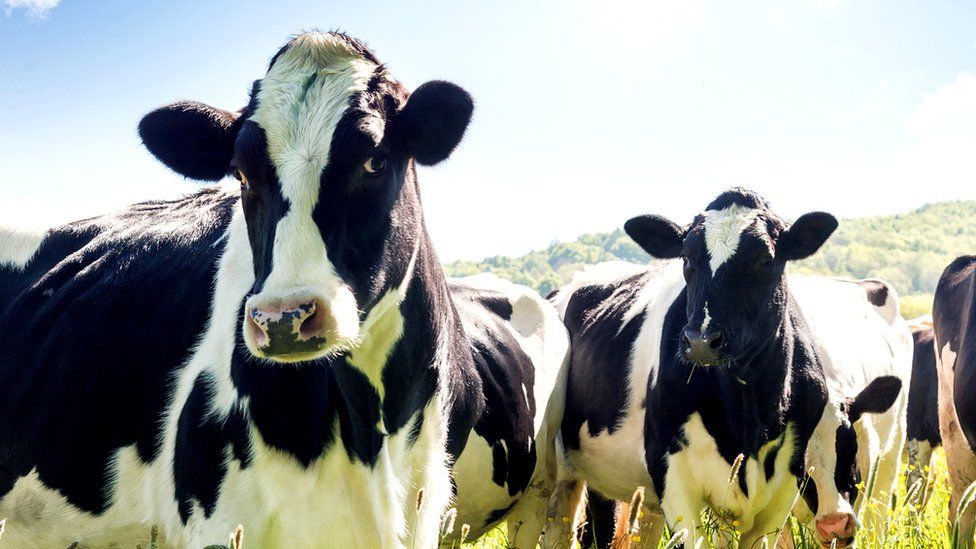
Why cows may be hiding something but AI can spot it

  By Chris Baraniuk Technology of Business reporter Published 22 hours ago Share IMAGE SOURCE, GETTY IMAGES Image caption, Herd animals like...