Friday, 30 March 2012

Cusbitaalkii Dayniile iyo garoonka diyaaradaha yaa gacanta ku haya? (Sawirro).


Written by Administrator on .
Waxaa caawa soo gabagaboobay dagaalkii cuslaa ee ka dhacay degmada Dayniile, iyadoona dagaalkaasi looga adkaaday cadowga iskaashanaya ee Afrikaanta iyo dabadhilifyadooda.

Hayeeshee cadowga Allaah ayaa mar waliba ka been sheega xaqiiqada dagaalka taasi oo ah dhaqankooda iyo diintooda, iyadoona nasiib darro ay tahay kuwa isku sheega warbaahinada afka Somaliga ku hadla ee dadkooda ku marin habaabinaya borobagaanka cadowga.

Afhayeenka Kuffaarta Afrikaanta Beenaale Ankunda ayaa afkiisa ka sheegtay in ay si buuxda u heystaan degmada Dayniile isagoona carabaabay garoonka diyaaradaha iyo Cusbitaalka Dayniile oo uu sheegay in ay qabsadeen.

Haddaba warkaasi ma run baa? Sidoo kale ma run buu ahaa dagaalkan kii ka horeeyay in AMISOM looga dilay 10 oo meydadkii Calamada lagu soo bandhigay ay ahaayeen kuwa Mujaahidiinta, sida Ankunda uu yiri?

Jawaabta su’aalahaasi ka dheeho sawiradan caddeynaya cidda hadda gacanta ku heysa goobaha la sheegay ee degmada Dayniile.


Garoonka Dayniile


Garoonka Dayniile


Isbitaalka Dayniile


Copyright

Thursday, 29 March 2012

Shabaab oo Weerar Gaadmo ah ku Qaaday Kolonyo Ethiopian oo Mareysay Bohol-Bashiir

Muqdisho (RBC) Wararka naga soo gaaraya degmada Luuq ee gobolka Gedo ayaa sheegaya in dagaal kooban uu galabta ka dhacay meel u dhow deegaanka Bhol-Bashiir ee duleedka degmada Luuq ka dib markii weerar gaadmo ah ciidamo ka tirsan Xarakada Al-Shabaab ku qaadeen kolonyo ciidampo Ethiopian ah oo halkaasi marayey.
Weerarka gaadmada ayaa dhacay galabta abaare 4:00 galabnimo sida ay xaqiijiyeen saraakiil ka tirsan ciidamada DKMG Soomaaliya oo ku sugan degmada Luuq.
Ciidamada Ethiopianka ayaa ka soo dhaqaaqay dhanka degmada Yurkud waxayna ku sii jeedeen degmada Luuq iyadoo meesha weerarku ku qabsaday ay ahayd agagaarka Bohol-Bashiir.
Wararka deegaanka laga helayo ayaa sheegaya in hubkaculus la isu adeegsaday dagaal kooban oo labada dhinac dhexmaray iyadoo ciidamada Ethiopianka ay hore u sii wateen safarkooda.
Lama oga khasaaraha ka dhashay weerarka gaadmada ee ay Shabaabka ku qaadeen ciidamada Ethiopianka, inkastoo saraakiisha DKMG ee ku sugan Luuq ay ku gaabsadeen inuusan jirin haba yaraatee wax khasaare ah.
Afhayeen u hadlay Al-Shabaab Sheekh C/casiis abnuu Muscab ayaa caawa idaacadda Al-Shabaab ka sheegay in weerarka gaadmada ah uu mid ay qorsheeyeen ayna khasaare dhimasho iyo dhaawac ku gaarsiiyeen Ethiopianka.  Wuxuu intaa ku daray inay gaadiid dhowr ahna ay Ethiopianka kaga gubeen weerarka gaadmada ah.

Kooxo hubeysan oo xalay weeraray Saldhigga Degmada Huriwaa iyo Dad shacab ah oo siyaabo kala duwan loogu dilay Muqdisho

Khamiis, Maarso 29, 2012 (HOL) — Xoogag hubeysan oo ka tirsan Al-shabaab ayaa xalay weeraray saldhigga degmada Huriwaa ee gobolka Banaadir, iyadoo sidoo kale laba qof oo shacab ah siyaabo kala duwan loogu dilay xalay magaalada Muqdisho.

Laba qof oo dhinacyadii hardamay ka mid ah ayaa la sheegay inay ku dhinteen weerarka saldhigga lagu qaaday, iyadoo maamulka degmada Huriwaa ay sheegeen in weerarku uu ahaa mid gaadmo ah ayna iska difaaceen ciidamadu kooxihii weerarka soo qaaday.
Goobjoogayaal ku sugan degmada ayaa sheegay in dagaalka uu socday dhowr daqiiqo la iskuna adeegsaday hubka noocyadiisa kala duwan, waxaana dadku ay sheegeen in cabsi weyn ay soo wajahday dadka ku nool degmada.
Dhanka kale, kooxo hubeysan ayaa xalay waxay laba qof ku dileen magaalada Muqdisho, iyadoo labada qof mid ka mid ah ay ahayd haweeney lagu toogtay agagaarka isgoyska Baar Ubax ee degmada Hodan, lamana oga sababta labadan qof loo dilay.
Habeennadii lasoo dhaafay ayaa waxaa magaalada Muqdisho ka dhacayay dilal qorsheysan oo ay geysanayaan kooxo hubeysan, inkastoo dowladdu ay ku eedeyso inay ka tirsan yihiin Al-shabaab oo billowday sannadkii hore inay Muqdisho isaga baxdo.
Saraakiisha ammaanka Muqdisho ayaa sheegay inay wadaan baaritaanno ay ku raadinayaa kooxaha ka dambeeya dilalka qorsheysan ee Muqdisho ka dhaca, inkastoo Al-shabaab ay sheegtay inay waddo qorshayaal ay ku beegsanayso saldhigga dowladda iyo kuwa AMISOM ee Muqdisho ku yaalla.

Maxamed Xaaji Xuseen, Hiiraan Online
maxuseen@hiiraan.comMuqdisho, Soomaaliya

Drafting Somalia's Constitution Opens Debate on Religion, Law


Somalia women celebrate as they welcome the implementation of Islamic Sharia law at Konis stadium, in Mogadishu, Somalia, FILE April 19, 2009.
Somalia women celebrate as they welcome the implementation of Islamic Sharia law at Konis stadium, in Mogadishu, Somalia, FILE April 19, 2009. Photo: AP
Gabe Joselow | Nairobi
VOA
March 29, 2012 In a country torn apart by civil war, piracy and terrorism, many hope a new constitution will bring some amount of stability to Somalia.

Since the fall of the last government in 1991, a succession of interim governments have failed to establish rule of law. Millions of people have been displaced or exiled by fighting and famine.

Somalia is now under pressure to produce a draft of a new constitution by April 20, according to the guidelines agreed to in the "Roadmap" to end the donor-backed transitional government and to hold new elections this year.
Prime Minister Abdiwelli Mohammed Ali pleaded with participants at a constitutional conference in February to find a solution to the few challenges remaining.

"Everything in our lives has been and continues to be in transition," he said in prepared remarks at the talks in Garowe. "To me this constitutional process represents the possibility of a new beginning, the possibility for the Somali people to say 'enough' to transitions."

Balancing Act

But crafting a one-size-fits-all constitution for a society deeply divided along clan and family lines, with no allegiance to a central authority, is no easy task. The key is to find a balance between civil law, customary law and Islamic Sharia law.

Because Somalia is wholly Muslim, many agree that elements of Sharia, based on the teachings of the Quran, must serve as a basis for the constitution.

"It's very well and fine to say Sharia is a source of law," said J. Peter Pham, Director of the Michael Ansari Africa Center at the Atlantic Council in Washington D.C. "It's a great slogan, no one is against it in Somalia by and large."

But, Pham points out that Somali culture has always respected the distinction between the "spearman and the priest," - the separation of traditional and religious law. He says tradition usually takes precedence.

"If if was a matter that touched on customary law, dealt with major property, murder, rape, you held a Gurti - an assembly of elders - and they looked at what the precedents were and based on what people had always done, they issued rulings," he said.

Religious law as interpreted by clerics, he says, would traditionally only be used to settle domestic disputes, including issues of marriage and family.

Even during the time of the Islamic Courts Union around 2006, when a coalition of Sharia courts ruled over parts of southern Somalia, Pham says traditional law was more commonly used to settle property and criminal matters.

If Sharia is imposed in Somalia as strictly as it is in some other Muslim countries, he says, "you're begging for trouble."
Prime Minister of the Transitional Federal Government of Somalia Abdiweli Mohamed Ali gestures during a press conference at The Foreign and Commonwealth Office in London, FILE February 23, 2012 .
Prime Minister of the Transitional Federal Government of Somalia Abdiweli Mohamed Ali gestures during a press conference at The Foreign and Commonwealth Office in London, FILE February 23, 2012. AP

Red Lines

The United Nation's role in the drafting process has irked some Somali religious leaders, who fear new rights put in the text will contradict the tenets of Islam.

April Powell-Willingham, head of the joint constitution unit at the U.N. Political Office for Somalia (UNPOS) and U.N. Development Program for Somalia (UNDP) says the perception that the United Nations has commandeered the drafting process to force its own principles onto the Somali people has put the U.N. in a "double-bind."

"We need to keep certain values at the forefront - inclusivity, representation and respect for universal norms," she said. "At the same time, however, the U.N. is accused of having too heavy a footprint. So it’s a very difficult position and a rather circular discussion."

Some attempts to insert an interpretation of Sharia that prohibits women from serving in top elected positions are also causing tension.

Powell-Willingham says the debate centers on a section of the 2010 Consultative Draft Constitution (CDC) that guarantees political rights for women.

"There is some discussion about removing article 1 section 4 of the CDC, which ensures that women shall be represented in all elected and appointed positions at all levels and branches of government, a protection which prohibits women from being banned from public service writ large, but particularly from being banned from serving at the highest levels of government, for instance, as president, prime minister or as judges," she said..

Powell-Willingham says the United Nations is trying to ensure the constitution protects internationally recognized human rights. She says there are a number of "red lines" that the U.N. has drawn - including the death penalty.

Sheikh Abdirashid Ali Noor, a cleric in Nairobi, Kenya, says it is possible for Sharia and civil law to work side by side, only if there are limits.

"It gets a little complicated since democracy gives people excess freedoms, for example, to homosexuals," he said. "If you look at that from a moral point of view it's not good, and the population sees this as too much freedom."

"It is Not Our Constitution"

In drafting the new document, the United Nations says it is drawing on Somalia's past and present constitutions. It is also referencing documents from around the world, including South Africa, Kenya, Indonesia, Malaysia and Spain, adding to the perception that the constitution is not fully "Somali."

"The fact is that in a deeply globalized world, it is often true that Constitution making and democratization is no longer solely a national exercise," said Powell-Willingham. "There are multiple local, national, regional and international influences at play at any given time."

The U.N.'s role is limited to providing technical support and advice.
"We are not in the business of drafting and imposing constitutions on anyone," she stated.

Ibrahim Farah, a Somali analyst and lecturer at the University of Nairobi says the U.N. is not to blame for its heavy role.

"We can forget about the rhetoric a little bit and agree with the concept that the United Nations is good intentioned and that they just want to help Somalia," said Farah. "But because of the lack of visionary nationalistic Somali leadership then, there has been this vacuum, and that's why UNDP ended up writing one for Somalia."

He blames an absence of political will for the Transitional Federal Government's failure to draft a constitution since the TFG was founded eight years ago.

He argues there are plenty of homegrown constitutions to draw on. He notes the autonomous region of Somaliland has its own constitution; Puntland and Galmudug are both working on their own. Even the al-Qaida-linked militant group al-Shabab has a charter of principles.

A National Constituent Assembly of no more than 1,000 members, of which 30 percent will be women, will vote on the draft in May.

But Ibrahim Farah says the assembly's approval might not mean very much to Somali people who feel like they have been left out of the process.

"Even if this 1,000 men and women constitution assembly being put together in the next month or so endorses it," he said. "It is not our constitution and it's never going to be."
Source: VOA News

It is Crucial to “De-Nairobify” Somali Affairs


By Abukar Arman
March 25, 2012

Abukar Arman
For a number of years, Nairobi (Kenya) has been the de facto capital of Somalia after the State has disintegrated into anarchy. It has been where Somalis sought refuge, re-started their lives, and networked with the rest of the world. By the same token, it has been where almost all of the eighteen or so failed “reconciliation” conferences were concocted, and Somalis found the funding and the nourishment for the indigenous political demons that kept them divided and at war with one another for over two decades.
Yet, to this day—at least from the international community’s point of view—all initiatives related to peace, security, humanitarian, and development must be conceived, crafted, and executed via Nairobi; Through a network of international institutions and organizations with sullied reputation of money squandering, laundering, and rewarding corruption with more contracts. And so long as this continues, so too would the status quo.
Like Vienna (Austria) during the Cold War, Nairobi became a magnet that attracts both the positive and the negative. It is a place where a few good apples are found- those Somali patriots who are committed to work to bring an end to the misery of their people. It is also a place where many rotten ones are found- those who callously sellout everything about their country and people. Nairobi is where the buyers meet the sellers. Moreover, the city is one of the major hubs for security experts, “dealmakers” and deal breakers. It is also the center where around a $1 billion that is donated annually on behalf of Somalia is managed and mismanaged. It is where corrupted technocrats and other colorful characters compete for geopolitical strategic advantages or for crude economic exploitation. The city is also the center for a new breed of diplomats known as “gorilla diplomats”.Contiued

Swedish Defence Minister Tolgfors quits over Saudi deal


Sten Tolgfors, September 2011 Sten Tolgfors was criticised in the Swedish press over the Saudi arms deal

Related Stories

Sweden's defence minister has resigned after facing criticism over plans to build a weapons plant in Saudi Arabia.
Sten Tolgfors "resigned at his own request", a spokesperson said.
Swedish public radio revealed the confidential plans for the country's Defence Research Agency to help Riyadh build weapons, including missiles and torpedoes, in early March.
Sweden does not ban weapons exports to Saudi Arabia, but the secretive nature of the plans caused controversy.
Earlier this month Swedish Prime Minister Fredrik Reinfeldt confirmed that an initial deal had been signed with the Saudis in 2005.
'Cover up' Mr Tolgfors defended the decision, saying the plans were in line with military cooperation deal between the two countries.
But he has come under increasing pressure to resign as some of the press and the left-wing opposition accused the government of a cover up.
Although the plant has not yet been built, Swedish radio says Project Simoom began under the aegis of the government in 2007, but was handed to a private company in 2009 when it was felt that the defence agency was "legally hindered" from carrying on with the project.
The company, named SSTI, was then apparently given an export permit to buy equipment for missiles, bombs and other weaponry.
The opposition Green Party is now calling for an investigation into the deal, saying Sweden should not support a "dictatorship" in Saudi Arabia.
Roberta Alenius, a spokeswoman for the prime minister, said Mr Reinfeldt would discuss the reason for his defence minister's resignation at a press conference later on Thursday.

Brazil ex-President Lula's cancer treatment 'a success'


Luiz Inacio Lula da Silva poses with another former Brazilian President, Fernando Henrique Cardoso, at the hospital where he was being treated for cancer (27 March 2012) Lula (R) has been without his trademark beard as a result of his treatment

Related Stories

Former Brazilian President Luiz Inacio Lula da Silva's treatment for throat cancer has been successful, doctors say, with tests showing the "absence of a visible tumour".
Lula, 66, was diagnosed with the cancer in October last year and given chemotherapy and later radiotherapy.
He said on Wednesday he intended to return to active politics.
The former president stepped down with record approval ratings at the end of 2010, after two terms in office.
"I will return to political life because I believe Brazil needs to continue to grow, develop, generate jobs, improve the lives of millions and millions of Brazilians who managed to enter the middle class... as well as those who dream of joining the middle class," he said in a video message.
Brazil's constitution prohibits a third consecutive presidential term, but there had been speculation that he might stand again in 2014 if his successor Dilma Rousseff decided not to seek re-election.
Lula said he had been given "the most important piece of news a human being can receive after a five-month treatment against cancer".

Throat cancer - facts

Precise causes not known, but it is more common:
  • On the vocal cords
  • In men
  • Between the ages of 55 and 65
  • In smokers
  • In those who drink alcohol heavily
"Nuclear magnetic resonance and laryngoscopy exams show the absence of any visible tumour," a statement from the hospital said.
It added that the former president would continue speech therapy, and that his progress would be monitored further.
The AFP news agency quoted Jose Chrispiniano, a spokesman for Lula's foundation the Citizenry Institute, as saying that the cancer was "in complete remission".
Lula, a former smoker, completed three cycles of chemotherapy in December last year, before beginning radiotherapy.

Pope Benedict criticises US trade embargo on Cuba


The BBC's Sarah Rainsford said there was a big rush as the popemobile passed through the crowd

Related Stories

Pope Benedict XVI has criticised the 50-year-old US trade embargo imposed on Cuba, as he ends a visit to the island.
The Pope called for greater rights in Cuba, saying he wanted a society in which no-one was denied basic freedoms.
This aim was not helped by economic measures which "unfairly burden" Cuba's people, he said.
Earlier, Pope Benedict met Cuba's revolutionary leader and former president, Fidel Castro, and celebrated Mass in front of vast crowds in Havana.
The Pontiff made his parting comments in the airport in Havana, in the presence of the current president, Raul Castro.
He said all Cubans should be able to share in "forging a society of wide horizons, renewed and reconciled".
"No-one should feel excluded from taking up this exciting search by the limitations of their basic freedoms, or excused from this by indolence or a lack of material resources - a situation which is worsened when restrictive economic measures, imposed from outside the country, unfairly burden its people," he said.
The US trade embargo, known as the blockade or "el bloqueo" in Spanish, was introduced soon after the 1959 Revolution.

At the scene

The crowd in Revolution Square was a mixture of the devoted and the dutiful, some having been bussed in by local party officials.
When the Pope arrived, he was driven around the square in his glass-sided car as the crowd surged forward to catch a glimpse. Many Cubans are religious, even if the majority are not strict Catholics.
In the Vatican's own subtle way, this has been a chance to bolster its standing on the island while also gently pushing the case for reform.
It is something which cannot come quickly enough for many Cubans who hope that this visit, like that of Pope John Paul II 14 years ago, will bring basic improvements to people's everyday lives.
It was strengthened in 1962, with the support of Cubans who had fled to the United States, after Fidel Castro's Cuba nationalised the properties of American citizens and corporations.
Earlier, Pope Benedict met the revolutionary leader and former president.
The meeting was described by a Vatican spokesman as "animated and cordial", with the two men even sharing a joke about their ages.
According to the spokesman, Federico Lombardi, they discussed Church liturgy and the inability of science to solve all future challenges.
He said Fidel Castro, wearing a track suit, had said he was glad that Pope John Paul II and Mother Teresa of Calcutta had been set on the way to sainthood "because both did a lot for Cuba, especially Mother Teresa, who gave her life for the poorest of the poor".
But it does not appear that the Pope directly raised the political questions that he has been addressing in his sermons.
'Deprived of freedom' In the main public event of his final day in Cuba on Wednesday, hundreds of thousands of Cubans gathered to see Pope Benedict celebrate an open-air Mass in Havana's Revolution Square, with President Raul Castro in the front row
In his sermon, the Pope urged Cubans to search for "authentic freedom".
Hours before the service began crowds of worshippers started to arrive in the plaza waving flags to welcome the pontiff.
When he arrived the Pope was introduced to chants of "Viva Cuba! Viva el Papa!"
One of the many Cubans there, Carlos Herrera, told the Reuters news agency: "I come to hear his words, wise words for Cuban people. That helps us. It gives us unity."
Others suggested they were only there because they had been told to go by their employers or teachers and left before the sermon began.
Pope Benedict XVI meets Fidel Castro in Havana Fidel Castro asked to meet the Pope
The Pope's sermon expanded on the theme that Cuba should build a more open society, based on truth, justice and reconciliation.
During the three-day visit some activists have urged greater intervention from the Church to promote human rights.
When the Pope visited the eastern city of Santiago, he said he had prayed for "the needs of those who suffer, of those who are deprived of freedom, those who are separated from their loved ones".
And when he met President Raul Castro, the pontiff pushed for a bigger role for the Church and asked for Good Friday to be made a national holiday.
Before he arrived in Cuba, the pontiff had expressed concern that communism "does not correspond with reality" and a belief that Cuba needed to find a new economic model.
But he has no plans to meet members of the Cuban opposition, some of whom were barred from leaving their homes ahead of the Pope's visit.

Ukraine rape scandal victim Oksana Makar dies


Oksana Makar Oksana Makar had suffered extensive burns and damage to her lungs

Related Stories

An eighteen-year-old Ukrainian woman has died in hospital, weeks after a brutal sexual assault that prompted a campaign against political corruption.
Oksana Makar was attacked in the southern city of Mykolayiv on 8 March by three men who raped her and tried to strangle her before setting her alight.
Three men were arrested, but two - whose parents had political connections - were released without charge.
They have since been re-arrested, after the case prompted a national outcry.
Interior ministry spokesman Volodymyr Polischuk told a news conference on Thursday that all three men, aged 22 to 24, now faced charges of rape and murder. He said they could face life sentences in jail.
Ms Makar lost consciousness after her attackers abandoned her at a construction site and set fire to her.
She was eventually found the next morning by a stranger and taken to hospital in Mykolayiv with 55% burns.
'Heinous crime'

Analysis

Oksana Makar's murder has prompted Ukrainian society to confront what have become known as "bigwig crimes" - offences committed by the children of public officials and, at times, by officials themselves.
As a rule, they are either given a suspended sentence or escape punishment entirely.
In January, Roman Landik, a member of Luhansk city council and the son of a Ukrainian MP, was sentenced to three years' probation for punching a girl in a Luhansk restaurant.
Protesters across Ukraine are demanding justice and an end to legal abuses by "bigwigs".
President Viktor Yanukovych has instructed Ukraine's attorney general to investigate Oksana Makar's case.
She was transferred to a specialist unit in the eastern city of Donetsk because of the severity of her burns and damage to her lungs.
Doctors at the hospital's burns centre said her heart had stopped because of bleeding in her lungs and she died after repeated attempts to resuscitate her.
Interior Minister Vitaly Zakharchenko has stated that the parents of two of the suspects are former government officials in the Mykolayiv area.
Ukrainian media have shown footage of one of the three suspects describing to police how Ms Makar was attacked in a flat in the city and then wrapped in a blanket and left in a pit.
The victim's mother posted a video of her lying in her hospital bed, in which some of her appalling injuries were visible.
The Kiev Post described the attack as "one of Ukraine's most heinous crimes in recent years".
There have been several protests in Mykolayiv and elsewhere in Ukraine, including Odessa, Lviv and Kharkiv.
The case has led to the Communist Party, which is part of the ruling coalition in parliament, to highlight its call for a return to the death penalty.

Pakistan shootings: Seven killed in Balochistan


map
At least seven people have been killed in shootings in Pakistan's Balochistan province, officials say.
One shooting killed five when gunmen fired on a vehicle going from Hazara Town on the outskirts of the provincial capital, Quetta, to the city centre.
The second attack took place when gunmen targeted a vehicle belonging to the United Nations Food and Agriculture Organisation (UNFAO).
Five were injured in the attacks. No group has said it carried them out.
The victims from the first attack are believed to belong to the ethnic Hazara community who are Shia Muslims. The Shia minority has been the target of sectarian attacks in the Quetta area in recent years.
After the shooting members of the Hazara community held angry protests across the city, closing down markets and forcing traffic off the roads.
The BBC's M Ilyas Khan in Islamabad says that sectarian attacks and attacks against non-governmental organisations are not uncommon in Balochistan, which is home to Islamist militants as well as nationalist insurgents.
The other incident took place in the Mastung area, some 50km (31 miles) south of Quetta, when gunmen attacked an UNFAO vehicle, killing two local employees.
An FAO official in Quetta told the BBC that those killed had been on their way to a UN-funded project in Mastung.
Some local religious groups are known to have launched attacks on non-governmental organisations in this region, saying NGO workers promote mixed gatherings and immorality, our correspondent says.

India army chief says leak of his letter is 'treason'


Gen VK Singh, Delhi, Jan 2012 Gen Singh has been involved in a series of spats with the government

Related Stories

India's army chief General VK Singh has said the leak of his controversial letter on defence supplies to the prime minister amounted to "high treason".
The source of the leak should be found and "dealt with ruthlessly", he said.
In his letter earlier this month, Gen Singh said much of India's defence equipment was "obsolete" and the forces were "woefully short" of weapons.
It is the latest in a series of rows between the army and the government and the letter led to uproar in parliament.
On Wednesday, Defence Minister AK Antony told parliament that the "government is committed to doing all that is necessary to secure the nation".
In his letter, Gen Singh said India's air defence was "97% obsolete", the army lacked the equipment it needed and its entire tank fleet was "devoid of critical ammunition to defeat enemy tanks".
The infantry lacked "night fighting" capabilities and was crippled with "deficiencies of crew-served weapons", the letter added.
'An outrage' "This is an outrage. Official communication with the prime minister, the defence minister or anybody for that matter with the chief of the armed staff is privileged information," Gen Singh said in a statement.
"The leaking of the letter should be treated as high treason. This cynical approach to tar my reputation has to stop.
"The source of the leak has to be found and dealt with ruthlessly," the statement said.
Army tanks in Delhi - 26 January 2004 The military has been on a spending spree to update its weapons
The letter was leaked to the media and reported extensively on Wednesday.
The revelations dominated discussion in parliament on Wednesday with opposition MPs questioning the government over the issue.
Defence Minister Antony said the leak was "a breach of national security" and several MPs demanded that the source of the leak be identified and punished.
Some MPs blamed Gen Singh for the leak and demanded that he be sacked.
In a short statement in the Rajya Sabha, the upper house of parliament, Mr Antony said the government would take "appropriate action" on the letter.
India's armed forces have been attempting a modernisation drive in recent years that has made the country the world's top arms importer.
Analysts say the upgrade has been hampered by delays and a lack of planning.
Bribery allegation The general's letter follows allegations he made on Monday in an interview with The Hindu newspaper that retired Lt Gen Tejinder Singh had offered him $2.7m (£1.7m) to approve the purchase of 600 "sub-standard" vehicles of a "particular make".
Lt Gen Singh has vehemently denied the charges, saying the accusations are "totally false" and he has filed a court case against the army chief.
The defence minister admitted that the army chief had informed him about the bribe offer a year ago and ordered a probe by federal police.
Mr Antony said he did not act earlier on the general's bribery allegation as he had never received a written complaint.
Earlier this year, Gen Singh was involved in an acrimonious row with the government over his retirement age.
The general went to the Supreme Court to have his date of birth as recorded by the military - 10 May 1950 - changed to a year later so that it matched the date on his birth certificate and other documents.
But he dropped the case after the court indicated it could rule against him because he had already accepted three promotions that were based on the earlier date.
Changing the date would have meant that he could retire in 2013 instead of later this year.
Defence analyst Rahul Bedi told the BBC that the age row was a symptom of wider acrimony between the armed forces and the government that has threatened to undermine the defence modernisation drive.

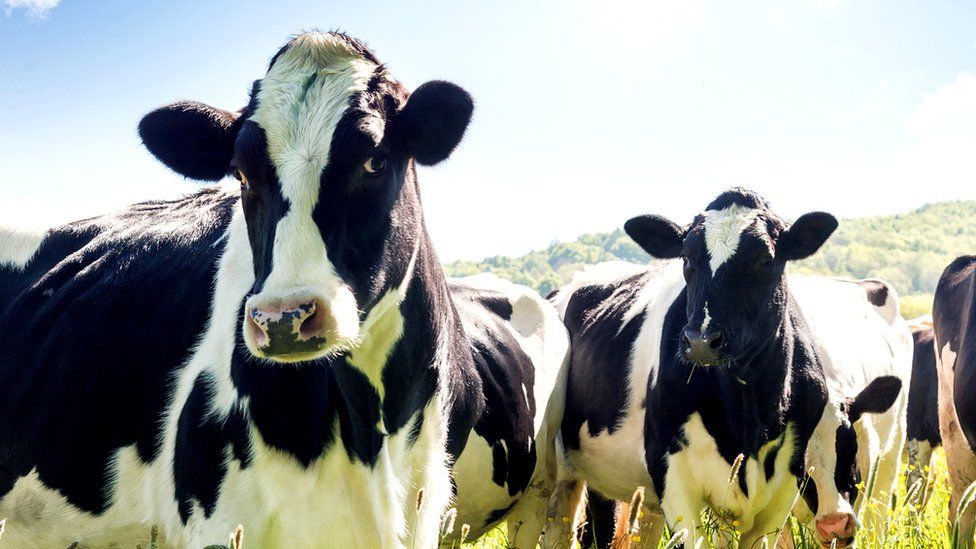
Why cows may be hiding something but AI can spot it

  By Chris Baraniuk Technology of Business reporter Published 22 hours ago Share IMAGE SOURCE, GETTY IMAGES Image caption, Herd animals like...