Wednesday, 18 March 2020

Coronavirus: What India can learn from the deadly 1918 flu


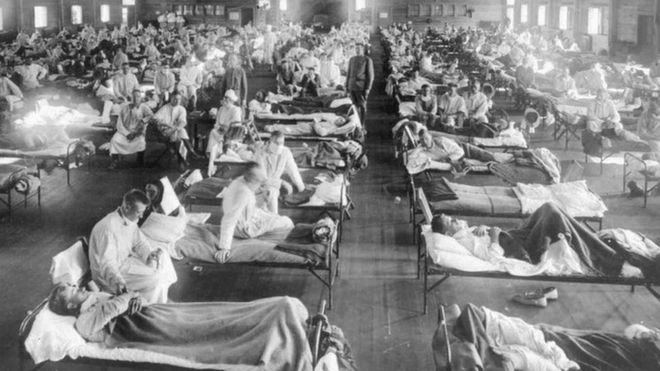
In this 1918 photograph, influenza victims crowd into an emergency hospital at Camp Funston, a subdivision of Fort Riley in KansasImage copyrightNATIONAL MUSEUM OF HEALTH AND MEDICINE
Image captionThe 1918 flu pandemic is believed to have infected a third of the population worldwide
All interest in living has ceased, Mahatma Gandhi, battling a vile flu in 1918, told a confidante at a retreat in the western Indian state of Gujarat.
The highly infectious Spanish flu had swept through the ashram in Gujarat where 48-year-old Gandhi was living, four years after he had returned from South Africa. He rested, stuck to a liquid diet during "this protracted and first long illness" of his life. When news of his illness spread, a local newspaper wrote: "Gandhi's life does not belong to him - it belongs to India".
Outside, the deadly flu, which slunk in through a ship of returning soldiers that docked in Bombay (now Mumbai) in June 1918, ravaged India. The disease, according to health inspector JS Turner, came "like a thief in the night, its onset rapid and insidious". A second wave of the epidemic began in September in southern India and spread along the coastline.
The influenza killed between 17 and 18 million Indians, more than all the casualties in World War One. India bore a considerable burden of death - it lost 6% of its people. More women - relatively undernourished, cooped up in unhygienic and ill-ventilated dwellings, and nursing the sick - died than men. The pandemic is believed to have infected a third of the world's population and claimed between 50 and 100 million lives.
Gandhi and his febrile associates at the ashram were lucky to recover. In the parched countryside of northern India, the famous Hindi language writer and poet, Suryakant Tripathi, better known as Nirala, lost his wife and several members of his family to the flu. My family, he wrote, "disappeared in the blink of an eye". He found the Ganges river "swollen with dead bodies". Bodies piled up, and there wasn't enough firewood to cremate them. To make matters worse, a failed monsoon led to a drought and famine-like conditions, leaving people underfed and weak, and pushed them into the cities, stoking the rapid spread of the disease. 
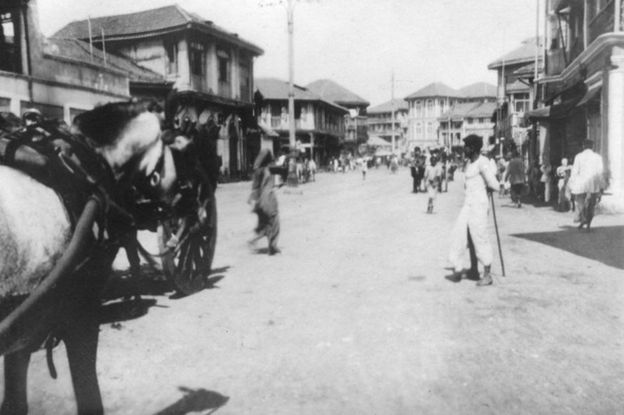
A street in Mumbai (Bombay), India, c1918.Image copyrightPRINT COLLECTOR
Image captionBombay was one of the worst hit cities by the 1918 pandemic
To be sure, the medical realities are vastly different now. Although there's still no cure, scientists have mapped the genetic material of the coronavirus, and there's the promise of anti-viral drugs, and a vaccine. The 1918 flu happened in the pre-antibiotic era, and there was simply not enough medical equipment to provide to the critically ill. Also western medicines weren't widely accepted in India then and most people relied on indigenous medication.
Yet, there appear to be some striking similarities between the two pandemics, separated by a century. And possibly there are some relevant lessons to learn from the flu, and the bungled response to it.
The outbreak in Bombay, an overcrowded city, was the source of the infection's spread back then - this something that virologists are fearing now. With more than 20 million people, Bombay is India's most populous city and Maharashtra, the state where it's located, has reported the highest number of coronivirus cases in the country. 
By early July in 1918, 230 people were dying of the disease every day, up nearly three times from the end of June. "The chief symptoms are high temperature and pains in the back and the complaint lasts three days," The Times of India reported, adding that "nearly every house in Bombay has some of its inmates down with fever". Workers stayed away from offices and factories. More Indian adults and children were infected than resident Europeans. The newspapers advised people to not spend time outside and stay at home. "The main remedy," wrote The Times of India, "is to go to bed and not worry". People were reminded the disease spread "mainly through human contact by means of infected secretions from the nose and mouths". 
"To avoid an attack one should keep away from all places where there is overcrowding and consequent risk of infection such as fairs, festivals, theatres, schools, public lecture halls, cinemas, entertainment parties, crowded railway carriages etc," wrote the paper. People were advised to sleep in the open rather than in badly ventilated rooms, have nourishing food and get exercise. 
"Above all," The Times of India added, "do not worry too much about the disease".
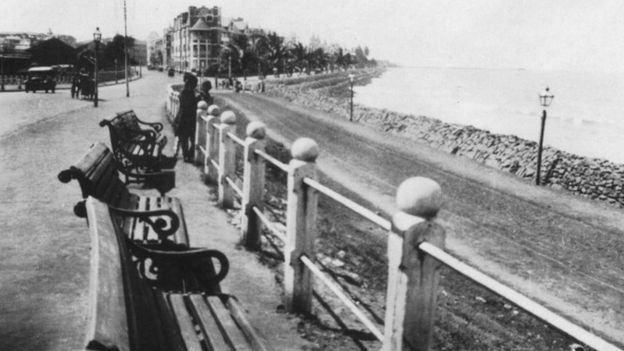
Colaba, Bombay, India, c1918.Image copyrightPRINT COLLECTOR
Colonial authorities differed over the source of infection. Health official Turner believed that the people on the docked ship had brought the fever to Bombay, but the government insisted that the crew had caught the flu in the city itself. "This had been the characteristic response of the authorities, to attribute any epidemic that they could not control to India and what was invariably termed the 'insanitary condition' of Indians," observed medical historian Mridula Ramanna in her magisterial study of how Bombay coped with the pandemic.
Later a government report bemoaned the state of India's government and the urgent need to expand and reform it. Newspapers complained that officials remained in the hills during the emergency, and that the government had thrown people "on the hands of providence". Hospital sweepers in Bombay, according to Laura Spinney, author of Pale Rider: The Spanish Flu of 1918 and How It Changed the World, stayed away from British soldiers recovering from the flu. "The sweepers had memories of the British response to the plague outbreak which killed eight million Indians between 1886 and 1914." 
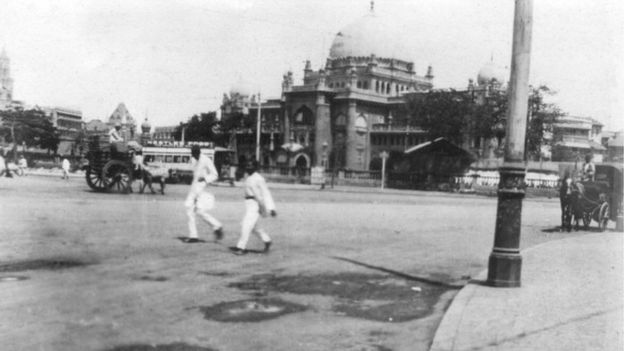
Lady Harding's war hospital, Bombay, India, c1918Image copyrightPRINT COLLECTOR
Image captionThe hospitals in Bombay were overwhelmed by patients
"The colonial authorities also paid the price for the long indifference to indigenous health, since they were absolutely unequipped to deal with the disaster," says Ms Spinney. "Also, there was a shortage of doctors as many were away on the war front." 
Eventually NGOs and volunteers joined the response. They set up dispensaries, removed corpses, arranged cremations, opened small hospitals, treated patients, raised money and ran centres to distribute clothes and medicine. Citizens formed anti-influenza committees. "Never before, perhaps, in the history of India, have the educated and more fortunately placed members of the community, come forward in large numbers to help their poorer brethren in time of distress," a government report said. 
Now, as the country battles another deadly infection, the government has responded swiftly. But, like a century ago, civilians will play a key role in limiting the virus' spread. And as coronavirus cases climb, this is something India should keep in mind.

MRKH syndrome: 'The day I discovered I was born without a vagina'


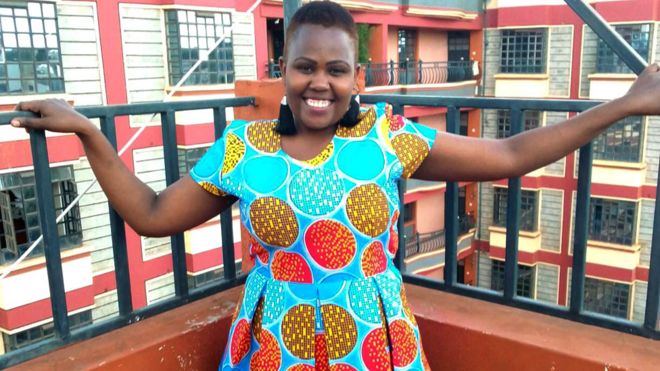
Julian PeterImage copyrightJULIAN PETER
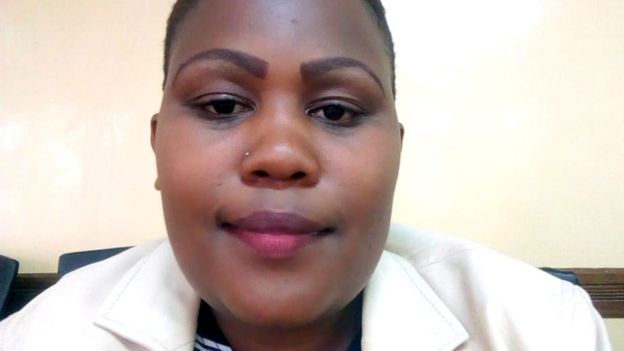
A routine question from her doctor about menstruation set Kenyan Julian Peter, now 29, down a path that led her to discover she was born without a womb, cervix or a vagina. Twelve years on she shared her story with the BBC's Anne Ngugi.
Short presentational grey line
I was born with a condition called Mayer-Rokitansky-Küster-Hauser syndrome (MRKH), where you have no womb or vagina, and you can also find yourself with just one kidney.
A woman who has MRKH can never get periods. 
I don't have a uterus, so I've never had periods. This is the normal that I know, I don't feel bad about it.
People have different feelings about who I am.

'They can say whatever they want'

Someone told me that I should go somewhere to be prayed for. 
Another person said that because I come from Ukambani [a region that is stereotypically linked to witchcraft] then my grandmother had something to do with this.
They can say whatever they want to but what really matters is how I take it. If I were to listen to them it would start affecting me, and I would start thinking that what they were saying was true.
I discovered I had the syndrome when I was a 17-year-old school student.
I went to hospital as I had problem with my legs, which were swollen. The first thing the doctor asked me was when I last had my period. I had never had one.
Julian Peter
Julian Peter
I cried on the first day and the second day and the third, but then I moved on... my priority was to get back to school"
Julian Peter
Presentational white space
They did a scan. The first image indicated that my reproductive tract was closed from the outside. 
I went through an operation to open it, which was not successful. 
I had another scan that showed I had no uterus or vagina, and that was when I was diagnosed with MRKH.
I cried on the first day and the second day and the third, but then I moved on. I was only 17 and quite small, so my priority was to get back to school. 
I was in hospital with my mother, my only parent, and the diagnosis shocked her. I think as a parent there were questions she was bound to ask herself, Essentially she was wondering if she had done something wrong.

'I didn't want the operation'

As I had studied biology, I understood what the doctor was saying that first time. 
I told her that I didn't want to go through with an operation at that point as I wanted to go back to school to complete my education.
Ten years later, I went back to hospital and had a successful operation. 
The type of MRKH that I had meant that I had no vagina, no womb and I only have one kidney. My vaginal canal was not there and it had to be created.
My life is normal as MRKH does not interfere with how I want to live. But for some it is emotionally disturbing and people might need to go to a psychologist to accept the condition.
When you realise the implications of the condition that you have, you have to forget about giving birth to children.
Question mark
Getty Images
MRKH syndrome
Mayer-Rokitansky-Küster-Hauser
  • Characterisedby absence of the vagina, cervix and the uterus
  • Affectsone in 5,000 women
  • Type 1refers to the absence of reproductive organs
  • Type 2refers to the absence of, or abnormality with, a kidney
  • Usually discoveredduring puberty when menstruation does not start 
Source: NHS
Presentational white space
I have had four scans and no ovaries were found, so even retrieving eggs for IVF cannot be done. 
You must accept the way you are. But realising that you are not like other women is difficult, you need someone who you can talk to.
I've met many people here in Kenya with the condition and we share our experiences. I accepted my condition early on and I have accepted myself, so I'm OK.

Explaining to a partner

I have been in relationships. But I don't let things go too far before sitting down with them and letting them know about my condition. 
If they want to accept it they will accept it. But you know, human beings are just human beings. 
A large percentage of the people I have told have gone away. Others accuse me of lying, they think that I am saying it to chase them away. 
Right now I'm not in a relationship, but it's all God's doing.
When it comes to having sex, I had the surgery to reconstruct the vaginal canal in 2018, so it's just over a year after and I am not ready to have sex. 
Neither am I ready to get married. If we wanted to have children we could adopt.
It took me at least 10 years to decide to share my story with the public. 
There are people who do not understand what MRKH is and I want to raise awareness.
Julian PeterImage copyrightJULIAN PETER
Image captionJulian Peter has a support group where people listen and help each other
First of all, I'm advising parents who have babies with such a condition not to accept the operation when your child is young.
Let it happen after they are grown up, when they can understand, because the procedure is complicated and long. 

Advice to parents

It's painful and the child may not understand what's happening. 
As a parent, also do your research, so that when your daughter gets to know about the condition, you are ready to help to fight the stigma they will face. 
I have a support group and I have heard from people with all sorts of challenges. 
There are those who are married, and their in-laws are making demands for children. There is one woman who has been told by her in-laws that she is a man.
So we listen and encourage. What is important is to help each other because this journey can be difficult. 
Presentational grey line
You may want to watch:
Media captionA womb transplant would be "an absolute gift" for Sophie Lewis, who has MRKH meaning she was born without a uterus

Related Topics

Why cows may be hiding something but AI can spot it

  By Chris Baraniuk Technology of Business reporter Published 22 hours ago Share IMAGE SOURCE, GETTY IMAGES Image caption, Herd animals like...