Tuesday, 12 May 2020

Coronavirus: Victoria ticket worker dies after being spat at


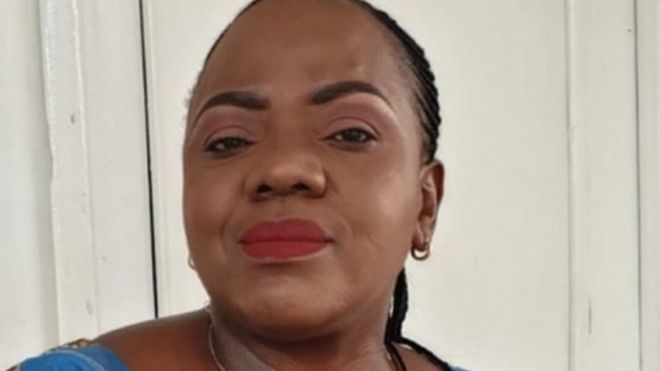
Belly MujingaImage copyrightFAMILY HANDOUT
Image captionTicket office worker Belly Mujinga died of coronavirus in April
A railway ticket office worker has died with coronavirus after being spat at by a man who claimed he had Covid-19.
Belly Mujinga, 47, who had underlying respiratory problems, was working at Victoria station in London in March when she was assaulted, along with a female colleague.
Within days of the incident, both women fell ill with the virus.
British Transport Police said an inquiry had been launched to trace the man who spat at the pair. 
Mrs Mujinga was on the concourse of Victoria station on 22 March when she was approached by the suspect.
Her husband Lusamba Gode Katalay said the man had asked his wife what she was doing and why she was there.
"She told him she was working and the man said he had the virus and spat on her," he added.
Mrs Mujinga was admitted to Barnet Hospital on 2 April and was put on a ventilator. But she died three days later, the Transport Salaried Staffs Association (TSSA), said.

'Caring person'

Mr Katalay said he called his wife on a video app when she was in hospital, but didn't hear from her again.
"I thought she might be asleep, but the doctor phoned me to tell me she had died," he said.
"She was a good person, a good mother, and a good wife. She was a caring person and would take care of everybody."
Ten people attended Mrs Mujinga's funeral, including her 11-year-old daughter. 
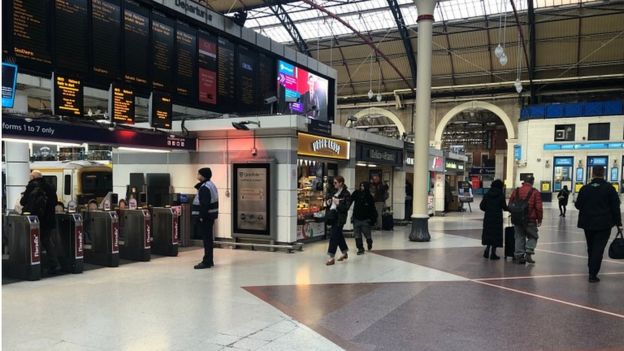
Victoria station
Image captionBritish Transport Police said an investigation had been launched following the incident at Victoria station
TSSA general secretary Manuel Cortes said: "We are shocked and devastated at Belly's death. She is one of far too many front-line workers who have lost their lives to coronavirus."
The union added that there were "serious questions about her death".
"As a vulnerable person in the 'at-risk' category, and her condition known to her employer, there are questions about why she wasn't stood down from frontline duties early on in this pandemic," Mr Cortes said.
Ms Mujinga's employer, Govia Thameslink Railway (GTR), said it "took any allegations extremely seriously" and that it was investigating all claims. 
Angie Doll, of GTR, said: "The safety of our customers and staff, who are key workers themselves, continues to be front of mind at all times and we follow the latest government advice.

Afghan attack: Babies killed as gunmen storm maternity ward


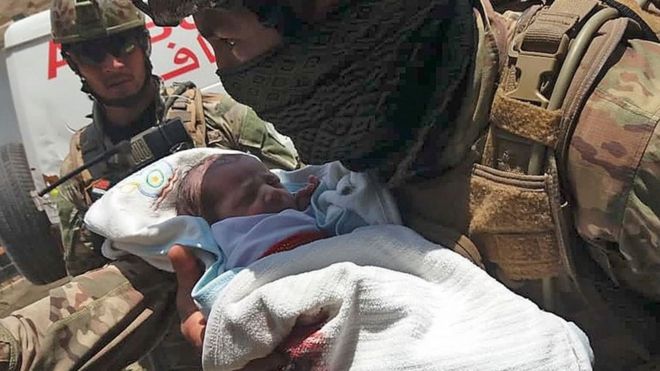
An Afghan security personnel carries a newborn baby from a hospital, at the site of an attack in Kabul on May 12, 2020.Image copyrightAFP
Image captionA soldier carries a baby to safety after militants launched an attack
Two babies and 11 mothers and nurses have been killed in an attack on a hospital in the Afghan capital.
Another 15 people, including a number of children, were injured when several gunmen attacked the Kabul hospital on Tuesday morning, officials said. 
Part of the hospital is run by the international medical charity, Medicins Sans Frontieres (MSF), and some of those working there are foreigners. 
Meanwhile, in the east, an attack at a police funeral has killed at least 24.
Dozens more were injured in that bomb blast and casualty numbers in both attacks could rise. It is not clear who carried out either attack. 
In Kabul, locals heard two blasts, then gunfire. One doctor who fled during the assault, which began at about 10:00 local time (05:30 GMT), told the BBC about 140 people were in the hospital when the gunmen began their attack.
Afghan special forces have rescued 100 women and children, including three foreigners, an official told the BBC.
The attackers, who gained access dressed as police officers, according to news agency Reuters, were all killed by security personnel after a battle lasting hours.
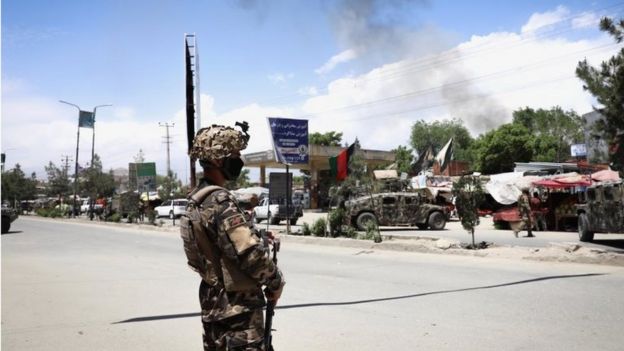
An Afghan soldier stands guard near the scene of an attack at an MSF (Doctors without Borders) clinic in Kabul, Afghanistan, 12 May 2020.Image copyrightEPA
Image captionThe clinic has 100 beds and a number of foreign staff
Images from the scene of the attack showed soldiers carrying one newborn baby to safety, swaddled in a blood-stained blanket. It is not clear if the infant had been injured.
The Dasht-e-Barchi Hospital has a maternity wing run by MSF. Many foreign staff live in a guesthouse behind the hospital building and a doctor who fled the building told the BBC he saw an explosion there too. 
The Taliban, who signed a withdrawal agreement with the United States more than two months ago, have denied involvement. 
In the past, similar attacks on foreign and other civilians in this mostly Shia area of the capital have been attributed to the Islamic State (IS) militant group, which has not yet issued a statement. The group's leader in South Asia and the Far East was arrested in Kabul on Tuesday, with two other high profile members, Afghan intelligence said.
In 2017, IS gunmen disguised as medical staff attacked Kabul's main military hospital, prompting widespread shock and anger and raising questions about security. The authorities later confirmed about 50 people had been killed.
But the Taliban also attack hospitals. Last September, 20 people died after a truck packed with explosives was detonated by militants from the group outside a hospital in southern Zabul province.
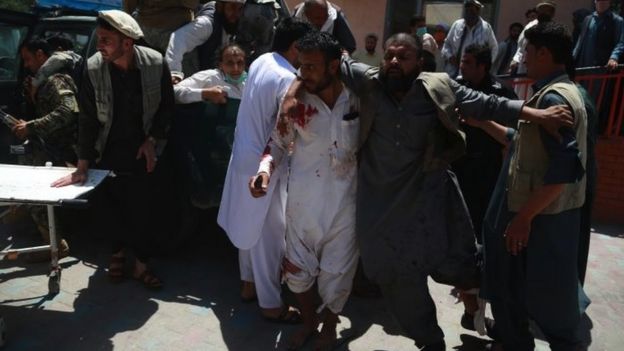
People shift injured victims of a suicide bomb attack to a hospital in Jalalabad, Afghanistan, 12 May 2020Image copyrightEPA
Image captionPeople help those injured during the attack on the funeral to a hospital
In the eastern province of Nangarhar, a member of the provincial council was among those killed in the attack on Tuesday on the funeral procession of a local police commander.
According to survivors, thousands of people had gathered for the funeral. The bomb detonated about half-way through.
Ataullah Khogyani, a spokesman for the governor, said another 68 people were injured. 
Zabat Amir Mohammad, a former member of the Nangarhar provincial council, told local news outlet Sharq TV that "it was difficult to identify" the bodies among the wounded and killed.
The Taliban have denied carrying out the attack, although it remains unclear who was behind it and the group have denied responsibility in the past for attacks they are accused of.
In northern Balkh province, at least 10 people have been killed and as many others injured in an air strike by US forces, reports say. 
Media captionIs peace with the Taliban possible?
Local residents and the Taliban claim the victims were all civilians. But the Afghan Defence Ministry said all those killed were militants.
Since the February peace deal, talks have broken down over a prisoner swap agreed between the US and the Taliban and violence has continued unabated. IS were not part of the negotiations.
The agreement was aimed at ending more than 18 years of war since US-led forces ousted the Taliban from power following the 9/11 attacks on the US, whose mastermind Osama Bin Laden had been given sanctuary by the hardline Islamist group.
Tens of thousands of people, most of them civilians, have been killed in the conflict. Many more have been injured or displaced from their homes.

Friday, 8 May 2020

HRW slams exclusion of Ahmadis from Pakistan minority commission


HRW calls exclusion of Ahmadiyya from commission 'absurd', while sect leaders warn it could lead to greater persecution.
by
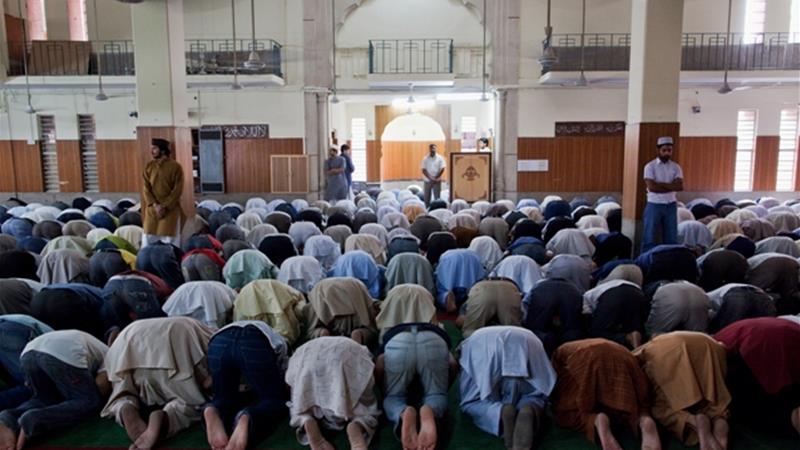
Ahmadis routinely face widespread discrimination in Pakistan, with members of the sect denied service at shops or businesses if they identify themselves [Damir Sagolj/Reuters]
Human Rights Watch (HRW) has termed the Pakistani government's exclusion of members of the Ahmadiyya religious movement from a commission on safeguarding the rights of minorities "absurd", while sect leaders have warned it could lead to greater persecution of members resident in the South Asian country.
"The Ahmadis are among the most persecuted communities in Pakistan and to exclude them from a minority rights commission is absurd," said Brad Adams, Asia director at HRW, a US-based rights group, in a statement on Friday.

More:

"Keeping Ahmadis off the commission shows the extent to which the community faces discrimination every day."
Earlier this week, the Pakistani government established the National Commission on Minorities (NCM), an interfaith body aimed at increasing religious tolerance and addressing issues of persecution in the country of 220 million people.
Pakistan is home to more than half a million Ahmadis, who have been declared "non-Muslim" under Pakistan's constitution since 1974 for their belief in the sect's founder, Mirza Ghulam Ahmad, being a subordinate prophet to Islam's final prophet, Muhammad.
Members of the sect believe they are Muslim, and, as such, a community spokesperson told Al Jazeera they did not wish to be a part of the commission, but that dragging them into the argument had increased threats of violence.
"They never approached us or contacted us about this," said Saleemuddin, the spokesperson.
"We never requested this - our principled stand is the same as before and we will not join such a commission."
Saleemuddin said debate over the issue - an emotive subject for many in religiously conservative Pakistan - had resulted in greater threats to the Ahmadi community.
"What it does is put the community more in danger," he said.
"The campaign that has been launched after that, no one has spoken to the community and we have become even more vulnerable."

'They do not fall in the definition of minorities'

Members of the Ahmadiyya sect were initially part of the government's plans for the commission, but after the religious affairs ministry objected on April 15, their representation was removed.
On May 5, when announcing the official formation of the commission, Information Minister Shibli Faraz said Ahmadis were to be excluded because "they do not fall in the definition of minorities".
The back-and-forth on the issue prompted the religious affairs minister, Noor-ul-Haq Qadri, to accuse Ahmadis of not recognising the constitution, a charge community spokesperson Saleemuddin denied.
"The government's position is clear that it can only include a group or party in the country's constitutional bodies after that group recognises the constitution," Qadri said.
"Declaring your reservations or objections to a certain constitutional amendment, does that make you a traitor?" said Saleemuddin.
"The constitution gives me a right to believe myself to be whatever I am. If you have declared us non-Muslim for the purposes of law and constitution, fine, but I have the right to believe what I am myself."
Ahmadis routinely face widespread discrimination in Pakistan, with members of the sect denied service at shops or businesses if they identify themselves.
Specific provisions of Pakistan's strict blasphemy laws make it illegal for them to refer to themselves as Muslims, or to their places of worship and call to prayer by the equivalent Islamic terms. The country has also seen numerous targeted attacks against members of the community.
Saleemuddin warned that fiery debate over the issue on nationally aired television news channels risked inflaming tensions further.
"Day by day, life is becoming even more difficult for us," he said.
"We are so restricted socially, and anyone who is branded an Ahmadi it becomes impossible for them to live [in that area] ... if they need to do a business, go for groceries, or anything."
Asad Hashim is Al Jazeera's digital correspondent in Pakistan. He tweets @AsadHashim.
In Pakistan, a rally against an Ahmadi mosque
THE STREAM
In Pakistan, a rally against an Ahmadi mosque
SOURCE: AL JAZEERA NEWS

Why cows may be hiding something but AI can spot it

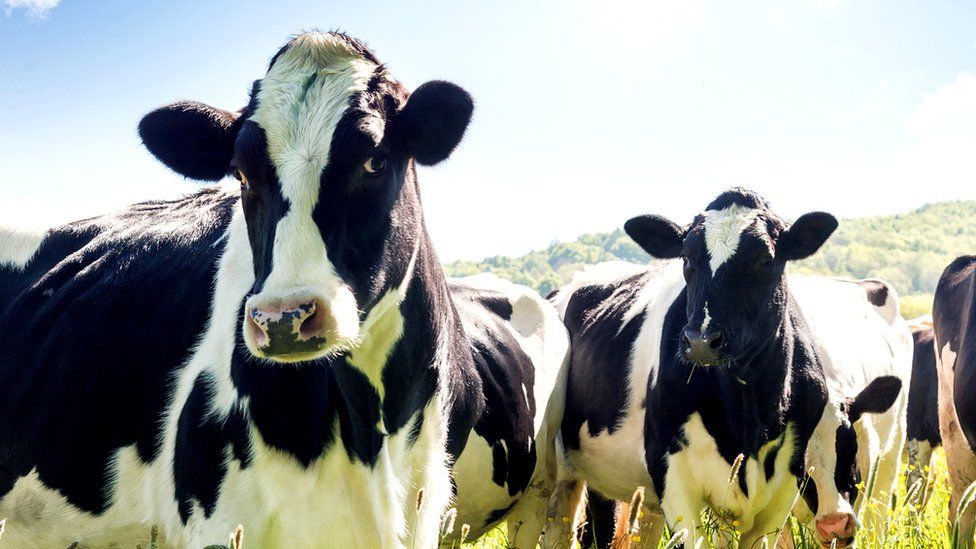
  By Chris Baraniuk Technology of Business reporter Published 22 hours ago Share IMAGE SOURCE, GETTY IMAGES Image caption, Herd animals like...