Tuesday, 12 May 2020

Coronavirus: Madagascar President Rajoelina hits out at tonic 'detractors'


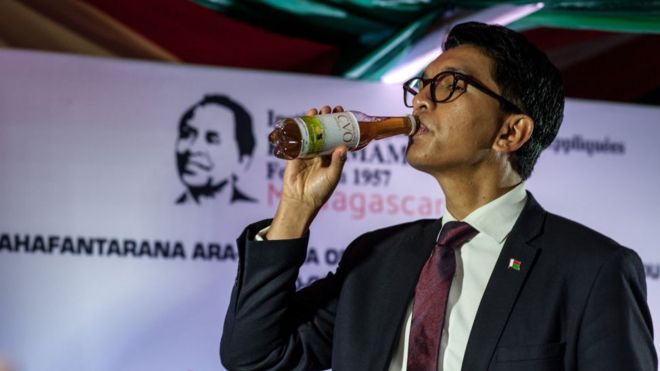
Andry RajoelinaImage copyrightAFP
Image captionMr Rajoelina says if a European country had manufactured the tonic the West's reaction would be different
Madagascar's President Andry Rajoelina has said criticism of an untested herbal tonic that he is touting as a treatment for Covid-19 shows the West's condescending attitude towards Africa. 
The World Health Organization (WHO) has warned against using untested remedies.
Mr Rajoelina's tonic has not gone through clinical trials.
The African Union has also said it wanted to see the scientific data on the "safety and efficacy" of the product, known as Covid-Organics.
"If it was a European country that had actually discovered this remedy, would there be so much doubt? I don't think so," Mr Rajoelina said in an interview with French news channel, France 24 and RFI.
Madagascar has reported 193 Covid-19 cases and no deaths. 
The tonic was tried out on fewer than 20 people over three weeks, a presidential aide told the BBC, when the product was first launched last month - which is not in line with WHO guidelines on clinical trials.
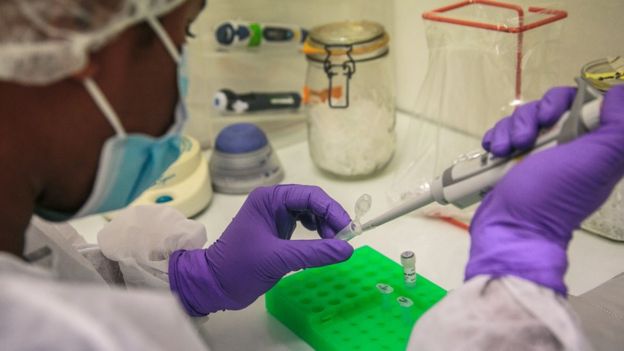
Institut Pasteur laboratory workers perform PCR (Polymerase Chain Reaction) tests to determine whether patients are positive for the new COVID-19 coronavirus, in Antananarivo, April 23, 2020Image copyrightAFP
Image captionUntil a vaccine is found, the WHO says testing and contact tracing is the best way to contain the virus
Despite the reservations, several African countries, including Nigeria, Guinea-Bissau, Equatorial Guinea and Liberia, have already ordered Covid-Organics, which is produced from the artemisia plant - the source of an ingredient used in a malaria treatment - and other Malagasy plants.
WHO has said Africans deserved access to medicines that have gone through proper trials even if they are derived from traditional treatments.
In the television interview, Mr Rajoelina said "African scientists... should not be underestimated."
But there is no peer-reviewed data to show that Covid-Organics is effective.
A meeting of 70 experts on African traditional medicine has agreed that clinical trials for all medicines must be carried out, the WHO's Africa region has tweeted.

line
There has also been warning from experts that the drink could give people a false sense of security which could lead people to expose themselves to the virus.
Last week, more than $8bn (£6.5bn) was pledged to help develop a coronavirus vaccine and fund research into the diagnosis and treatment of the disease.
Dozens of research projects trying to find a vaccine are currently under way across the world.
Most experts think it could take until mid-2021, about 12-18 months after the new virus first emerged, for a vaccine to become available.

Presentational grey line

You may also be interested in:

Media captionCoronavirus: How Covid-19 is affecting remittances to Africa
Presentational grey line
Several African countries acted swiftly in trying to prevent the spread of coronavirus by imposing lockdowns or curfews. But these are now beginning to be lifted as governments try to balance health and economic interests.
The easing of the lockdowns has added urgency to the need to find treatments.

Coronavirus lockdown: Two hotels demolished in Nigeria 'for breach of rules'


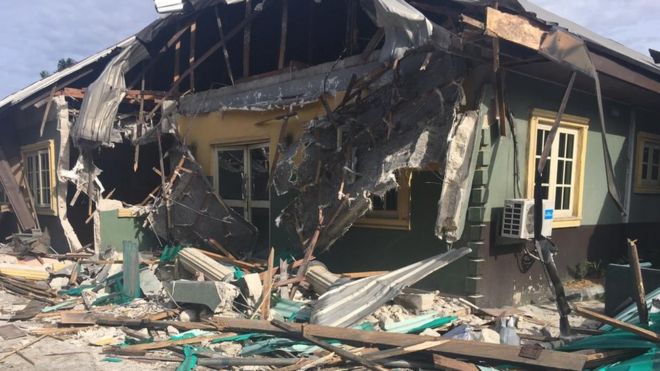
demolished building
Image captionProdest Home after the bulldozers ripped through part of the building
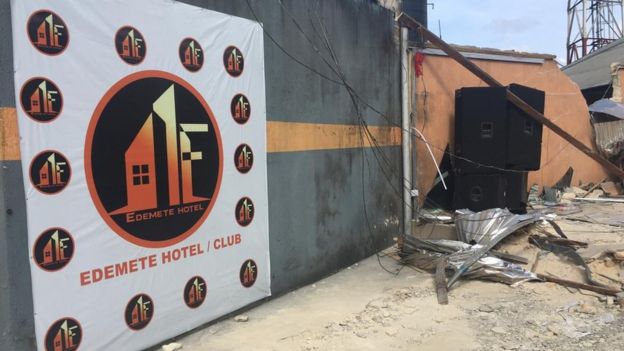
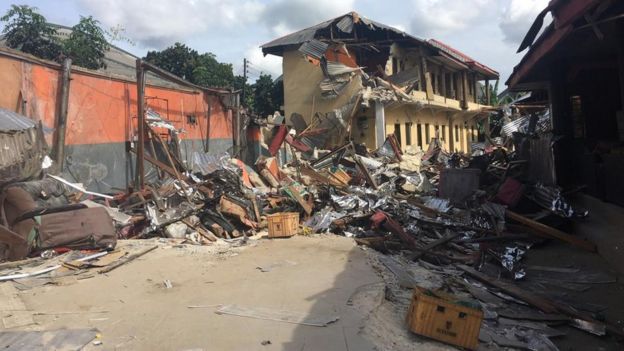
The authorities in Nigeria's oil-rich southern Rivers state have demolished two hotels over an alleged breach of lockdown rules intended to contain the spread of coronavirus.
State Governor Nyesom Wike, who supervised the tearing down of Edemete Hotel and Prodest Home on Sunday, said the operators had flouted an order that hotels should be closed.
He said that people who had tested positive for the virus had been found in hotels across the state. But he did not say if anyone who had Covid-19 had been staying in either of the demolished hotels.

'We refused to pay bribe'

The managers of both businesses have been arrested, but the owner of Prodest Home has denied that his hotel was open.
"The hotel was not operating and 70% of the staff had been sent away," Gogorobari Promise Needam told the BBC.
"There were only three people on ground.
"[Officials] came in and were asking for bribe, they said they would let us operate if we gave them money but we said we were not operational so had no money to give," he said.
The Rivers state government denies the accusation.
demolished building
Image captionEdemete Hotel also had a night club within its premises
The state currently has 15 active cases of the virus and has recorded two deaths.
A lockdown was imposed on the state capital, Port Harcourt, last Thursday.
Nigeria has more than 4,300 confirmed cases of coronavirus overall, with the commercial capital, Lagos, at the epicentre. But a lockdown that was imposed there, and in some other states, at the end of March has been partially eased.
Legal experts have told the BBC that the actions of the Rivers state governor could be challenged in court.

Strict lockdown

But the state government says Mr Wike signed an executive order granting him the power to enforce the lockdown. 
The state has been criticised for its strict lockdown rules, which ordered markets and places selling food to shut down. 
Doctors, pharmacists and other essential workers have also reported that they have been harassed and in some cases arrested for breaching the lockdown.
The authorities have erected barriers on the main highway on its eastern border to enforce a ban on interstate travel, accusing security personnel of smuggling in people under the cover of darkness.
Officials are also planning to auction vehicles seized from those who violated the lockdown.
Only those who receive a special pass, personally issued by the governor, are allowed to move.
demolished building
Image captionIt is not clear if there were guests staying at Edemete Hotel
But, it seems only those in government house have the document outlining the exact provisions of the executive order as residents of the state told the BBC they are not aware of it.
State officials did not respond to the BBC's request for a copy of the order.

'Abuse of office'

Lawyer Ahmed Abass told the BBC that an executive order cannot give the governor powers to demolish a building.
"An executive order is made by the president or governor in furtherance of existing laws," he said adding that it cannot go beyond the constitution, which guarantees a fair trial.
"What [Mr Wike] should have done was to have arrested the [hotel owners], taken them to court and the court would have prosecuted them," he told the BBC.
He described the governor's actions as "executive recklessness and an abuse of office".
Nigeria operates a federal system of government and states can make certain laws for their jurisdiction.

You may also like:

Mr Wike personally moved around in the first three days of the lockdown to monitor compliance and said he was satisfied that people were obeying.
In one incident, captured on video, he ordered the arrest of two people out on the road and asked that they be taken directly to an isolation centre.
In another video he said medics were abusing their privilege as essential workers, accusing male doctors of using the opportunity to visit their girlfriends.
More than 200 people were arrested on the first day of the lockdown and taken to an isolation centre. A mobile court later convicted 170 of them with fines up to 50,000 naira (£103, $128).
The BBC's Karina Igonikon in Port Harcourt says people have been struggling under the strict lockdown rules and that might have influenced the state government's decision to ease it on Sunday.
The governor announced that people are permitted to go out on Tuesday and Wednesday this week for "some fresh air" and to replenish supplies.

Why cows may be hiding something but AI can spot it

  By Chris Baraniuk Technology of Business reporter Published 22 hours ago Share IMAGE SOURCE, GETTY IMAGES Image caption, Herd animals like...