Saturday, 4 August 2012

Saudi woman athlete makes headlines


Wojdan Shaherkani fights Melissa Mojica during their judo match at the London Olympics (3 August 2012) Wojdan Shaherkani competed in the +78kg category of the judo competition

Related Stories

Wojdan Shaherkani has been making headlines.
She became the subject of worldwide media attention when it was announced that she would be one of the first two Saudi female athletes to compete at the Olympics.
But this was soon overshadowed by a row over her hijab - a head covering that many Muslim women wear - that meant she was at risk of not taking part at all.
The International Judo Federation initially said Shaherkani would not be allowed to wear a headscarf during the competition due to safety concerns.
A spokesman said that in Judo athletes used strangleholds and chokeholds and that wearing a hijab could be dangerous.
But that was a deal-breaker for the Saudi Arabian Olympic Committee.

“Start Quote

She's 16 years old... I don't know how she's handling all of this”
End Quote Noor al-Sajan Saudi law student
The Saudi authorities had agreed to send women to the games on condition that they agreed to wear Islamic clothing, including headscarves.
The team had threatened to withdraw Shaherkani from the competition before an agreement was finally reached with the IJF that the 16-year-old would fight wearing a special headscarf in order to comply with both safety issues and the Saudi dress code.
"Working with the International Olympic Committee (IOC), a proposal was approved by all parties. The solution agreed guarantees a good balance between safety and cultural considerations," the IJF said in a statement.
Shaherkani competed on Friday in the +78kg category. She was easily defeated by a Puerto Rican fighter in a judo bout that lasted only 82 seconds.
'Western influence'
As the debate raged over whether Shaherkani should be allowed to take part, her father, Ali, insisted: "I would never put my religion or my daughter's hijab on the line, even if it meant missing out on the Olympics."
Wojdan Shaherkani at the London Olympics (3 August 2012) The IJF, IOC and Saudi Olympic committee agreed on a special headscarf for Shaherkani
Noor al-Sajan, a 19-year-old law student living in the Saudi capital, Riyadh, said Mr Shaherkani's remarks did not stop him and his daughter being the subjects of fierce criticism at home.
"There are some who have been very resentful of the fact that she is competing and have been taking it out on her family," she said.
"They've been saying: 'Oh, he is taking his daughter to the Olympics. He's not man enough.'
"Some have also been attacking their racial background, saying: 'They are not from Saudi, they don't represent us.'
"She's 16 years old. I don't know how she's handling all of this. I think it's really hard."
Abdullah Qassem, a Saudi businessman living in Jeddah, said he personally had no problem with Saudi women participating in sports, but he feared that they could be influenced by Western culture.
"The fear is that the women would go [to the Olympics] and expose their bodies," he explained.
"Yes, this time the Saudi women are covering [their bodies], but who's to say that they won't copy the European women and start dressing like them?"
'Prostitutes of the Olympics'
Even the appearance of Shaherkani and the second Saudi female athlete in London, Sarah Attar, along with their male counterparts in the opening ceremony last Friday earned them an Arabic hashtag on the social networking website, Twitter, which translates as "prostitutes of the Olympics".
It was not long before the hashtag was trending on Twitter, but Noor al-Sajan said it was being used to the athletes' benefit.
Sarah Attar and Wojdan Shaherkani at the opening ceremony of the London Olympics The Saudi athletes' appearance at the opening ceremony was criticised
"Activists have turned the hashtag around. They decided to use it to write positive things about the athletes since the hashtag was already viral," she said.
Ironically it worked, and hundreds of tweets were written in support of Shaherkani and Attar.
"Give Saudi women both the Olympic torch and the keys to the car," said one tweet, referring to the ban on women driving in the Gulf kingdom.
Another tweet said: "Even though Saudi allowed women to be in their Olympics team - the degrading of women lives on with this hashtag."
Despite the controversy Ms Sajan remains optimistic. Saudi Arabia, after all, is a country where women are still fighting for their right to drive and go anywhere without being chaperoned.
"I think it's a great milestone for Saudi women. The Olympics is one the biggest international sports events," she added.
"If the community here sees that it's OK for women to play sports, maybe that would make it easier for women to play professionally here."

Syria crisis: UN Assembly condemns Security Council


A man weeps at a mass burial in Jdeidet Artouz, near Damascus, 1 August This man was mourning relatives said killed by government forces near Damascus
The UN General Assembly has voted by a big majority to condemn its own Security Council for failing to end the unrest in Syria as fighting rages.
It passed a non-binding resolution, which also condemns the Syrian government's use of heavy weapons, by 133 votes to 12 with 31 abstentions.
The move came after the resignation of UN-Arab League envoy Kofi Annan and the failure of his six-point peace plan.
Government forces backed by tanks have launched a new assault in Damascus.
Shelling also continued on Friday in Syria's largest city, Aleppo.
Activists say more than 20,000 people - mostly civilians - have died in 17 months of unrest.
'Proxy war'
The General Assembly resolution expresses "grave concern" at the escalation of violence in Syria and deplores "the failure of the Security Council to agree on measures to ensure the compliance of Syrian authorities with its decisions".

Analysis

The resolution condemning the Syrian government and calling for a political transition is not legally binding, but its Arab and Western sponsors see the overwhelming "Yes" vote as proof that they have world opinion behind them, despite the deadlock in the Security Council, which they harshly criticised.
Even so, the massive majority came at a price: the text had to be watered down in an attempt to win over many states, dropping explicit calls for Bashar al-Assad to step down and for member states to support Arab League sanctions.
And even though the opposition was small, it again included China and Russia. Moscow opposed the resolution as unbalanced, making clear that it believes the UN is taking one side in a civil war. So the General Assembly intervention will do nothing to bridge the fundamental divides in the Security Council, and may widen them.
"The first step in the cessation of violence has to be made by the Syrian authorities," the resolution said.
Saudi Arabia, the driving force behind the resolution, had urged the Assembly to maintain its moral and humanitarian values by approving the motion.
Syria's envoy, Bashar Jaafari, reacted to the vote by saying his government still supported Mr Annan's six-point plan.
Accusing Saudi Arabia and Qatar of having undermined the plan before coming out in support of it, he said: "You cannot be a fireman and an arsonist at the same time."
UN Secretary General Ban Ki-moon said the conflict in Syria had become a "proxy war" and called on powers to overcome their rivalries in an effort to end the violence.
"The acts of brutality that are being reported may constitute crimes against humanity or war crimes," he said.
Russia and China have blocked three attempts in the UN Security Council to impose sanctions against Damascus.
In Moscow on Friday, a delegation of Syrian ministers held talks on exporting crude oil to Russia in exchange for refined oil products, and also asked for a hard currency loan for their country. There was no immediate comment from Russian officials.
'Build-up'
Meanwhile, fighting raged in the Tadamon district of Damascus for a second day.
Eyewitnesses and activists say government forces used dozens of tanks and armoured vehicles to attack what is seen as the rebels' last stronghold in the capital.
Cannot play media. You do not have the correct version of the flash player. Download the correct version
Thwaiba Kanafani of the Free Syrian Army tells the BBC's Richard Galpin tells the training is ''very important'' for those with no army background
At least 15 people were reported killed when mortars hit the nearby Palestinian refugee camp at Yarmouk late on Thursday.
Hamas, the Palestinian group in power in the Gaza Strip, described the attack as a heinous crime - the Syrian government and rebels blamed one another.
Fighting has also continued in Aleppo, where government forces have been trying to reclaim areas seized by the Free Syrian Army (FSA) in the past two weeks.
UN peacekeeping chief Herve Ladsous told the Security Council that UN observers in Aleppo were seeing "a considerable build-up of military means, where we have reason to believe that the main battle is about to start".
One FSA fighter, Thoebah Knafane, told BBC News that winning Aleppo would "open the whole northern part of Syria" for the opposition.
Fighters, she said, were being trained in both Syria and Turkey and she personally had been instructed in using an M16 assault rifle and a pistol.
Cannot play media. You do not have the correct version of the flash player. Download the correct version
The result of the vote was announced by UN General Assembly President, Nassir Abdulaziz al-Nasser
The FSA has issued a statement denying responsibility for the public killing of alleged government loyalists in Aleppo on Tuesday and condemning the shootings, video of which was posted online.
Separately, Russia's defence ministry has denied that a group of naval landing ships it is sending to the Mediterranean on exercises plans to call at its base in the Syrian port of Tartus.
In another development, Alistair Burt, UK Foreign Office minister for the Middle East, confirmed to the BBC that the UK would be providing further communications equipment to the opposition in Syria in the next month.
US media say US President Barack Obama has signed a covert order authorising support for Syrian rebels

Aala Sheekh oo Shakhsiyaad Cusub Ku Soo Biireen, Xulufada Gaas oo Boosas Muhim ah Lumiyey Iyo Kala Iibsiga Kuraasta Baarlamaanka (Warbixin)

Muqdisho (RBC) Meel adag ayuu soo gaaray dagaalka qabow ee ka dhex socda madaxda musharixiinta ah ee DKMG Soomaaliya ee ku loolamaya kursiga madaxweynaha, waxaana dhanka kale isbedelaya xaaladaha siyaasadeed saacadba saacada ka dambeysa.
Madaxweyne Shariif oo ugu cad cad musharixiinta kale ee dawlada dhexdeeda ayaa hadda waxay isku soo dhowaadeen saaxiibkiis Shariif Xasan iyadoo sida muuqatana ololahooda ka dhigay mid hal dhinac u socda, taasoo ka dhigan in labada nin ay hal RUUX u rabaan kursiga madaxweynaha ee loo ordayo.
Aala Sheekh VS xulufada Gaas
Dagaalka ugu adag wuxuu beryahan dhexmarayaa kooxda Aala Sheekh oo ah xulufo kal iyo niyadba ku taageersan madaxweyne Shariif, ayna ka mid yihiin wadaadii hore iyo xubnihii isbahaysiga dib u xoreynta ee Asmara iyo xulufada raysul wasaare C/weli Gaas. Labada dhinac wuxuu mid waliba bannaanka keenay awoodiisa inkastoo kooxda Aala Sheekh ay kasbatay xubno cusub si ay ugu adeegsato ololaheeda kursiga madaxtinimada.
Xubnaha cusub ee ku soo bioiray kooxda Aala Sheekh ayaa la siiyey kuraas baarlamaanka si ay Agoosto marka doorashada ay dhacayso codka u siiyaan madaxweyne Shariif [aabaha Aala Sheekh]. Waxaana xusid mudan in halkii kursi ee mudane baarlamaan lakala siisanayo lacag u dhexeya $15,000 doolar illaa $20,000 doolar taasoo la siinayo odayaasha beelaha.
Xubnaha illaa hadda ku soo biiray Aala Sheekh waxaa ka mid ah;
Mustaf Dhuxulow
1- Mustaf Dhuxulow: Waa wasiir hore iyo mudane hore oo ku jiray baarlamaanka Soomaaliya kana yimid Isbahaysigii Asmara. Kadib loolan adag oo uu gacan ka geystay madaxweyne Shariif wuxuu Mudane Dhuxulow booska kaga guuleystay C/qaadir Xuseen Jaahweyn (wasiirka warfaafinta ee hadda) oo ay isku beel yihiin.
Jaahweyn waxaa uu ka tirsan yahay xulufada raysul wasaare Gaas, waxaana xusid mudan in dagaal adag uu horey u dhexmaray isaga iyo madaxweyne Shariif [Akhri khilaafkii Jaahweyn iyo Shariif], markaas haddii uu baarlamaanka cusub galo way iska cadahay in codkiisa uusan ku tashan doonin Sheekh Shariif taasi darteed ayaa keentay in madaxweyne Shariif uu Ugaaska beesha Murusade ka iibsado booska Jaahweyn laguna bedelo Mustaf Dhuxulow.
2- Suldaan Mustafe Xaaji: Waa soddoga madaxweyne Shariif oo wuxuu dhalay Faadumo Mustafe (xaaska labaad ee Sheekh Shariif). Suldaan Mustafe waxaa la siiyey kursiga kaliya ee baarlamaanka ay ka heshay beesha 12-ka Koofi ee Banaadiriga. Kursiga xildhibaanimo ee beeshan waxaa horey ugu fadhin jiray Garweyne Kuulow Aweys oo hadda laga qaaday.
Garweyne Kuulow wuxuu dhowaan Raxanreeb u sheegay in qeybtii beeshiisa ee baarlamaanka cusub uu go’aan ka gaaray madaxweyne Shariif isagoo sheegay inuu soddigiis ku bedelay si uu codka Agoosto u siiyo isaga. Akhri wareysiga Garweyne
3- Eng Axmed Abuubakar: Waa mulkiilaha telefishanka UNIVERSAL, kana soo jeeda beelaha Banaadiriga. Eng Axmed iyo telefishankiisaba waxay beryahan olole fiican u sameynayeen siyaasadda Madaxweynaha iyadoo telefishanka laga joojiyey musharixiinta kale ee tartanka ku jira. Iyadoo laga faa’ideysanayo fursadaas ayaa madaxweyne Shariif Eng Axmed ku daray baarlamaanka cusub, sida Raxanreeb ay ka heshay xubin ka tirsan guddiga farsamada ee xulista baarlamaanka oo magaca Eng Axmed loo gudbiyey, nagana codsaday inaan magaciisa la shaacin.
Eng Axmed Abuubakar horey uguma jirin siyaasadda, kamana mid ahayn xulufada Aala Sheekh, laakiin taageerada isaga iyo telefishankiisa u sameeyeen madaxweynaha ayaa keentay in booska baarlamaanka lagu abaalmariyo, isaguna taasi bedelkeeda codkiisa waxaa leh Sheekh Shariif.
4- Ina Axmed Cumar Jees: Waa siyaasi da’ yar. Si codka looga helo, ayaa madaxweynuhu u iibiyey kursiga baarlamaanka. Waxaase xusid mudan in ugaaska beesha Maxamed Subeyr oo uu ka soo jeedo intuu lacagtii qaatay haddana booskii diiday inuu siiyo Axmed Maxamed Cumar Jees illaa hadase dooda way socotaa, oo AMA LACAGTA AMA KURSIGA ayey mareysaa.
5- C/qaadir Xaaji Cali Luga Dheere: Wuxuu horey u soo noqday wasiir ku xigeenka wasaarada dekedaha iyo gaadiidka. Waxa uu ka soo jeedaa beesha Looboge ee Sheekhaal, waxaa la xaqiijiyey in kursigiisa uu helay kadib markii uu taageero ka helay madaxweynaha, sida Raxanreeb ayu u sheegeen xubno beesha ka mid ah iyo guddiga farsamada ee xulsta baarlamaanka intaba.
Cabdirashiid Xiddig
6- C/rashiid Xiddig: Waxa uu horey u ahaan jiray wasiir ku xigeenka gaashaandhiga xukuumadii Farmaajo iyo mudane baarlamaan, wuxuuna kasoo jeeda beesha Muqaabul ee Ogaadeen. Booskiisa isaga ayaa iibsaday oo cidna lacagta kama bixin laakiin wuxuu xiriir fiican la leeyahay Sheekh Shariif sidaa darteedna codka waxaa uu siinayaa Shariifka, sida Raxanreeb ay u sheegeen ilo wareedyo ku dhow beesha iyo guddiga farsamada ee baarlamaanka.
Waxaa kaloo taageerada ololaha madaxweynaha kaalin mug leh ka qaadaneysa hay’adda CRD “Xarunta Cilmibaarista iyo Horumarinta” oo uu madax ka yahay Jibriil Ibraahim Cabdulle oo madaxweynaha saaxiib yihiin isku beelna ka soo jeedaan. CRD waxay bixineysaa maalgelinta shirarka ololaha madaxweyne Shariif iyo kharaasdka saxaafadda la siinayo, sidaasi waxaa Raxanreeb u sheegay shaqaale ka tirsan CRD.
Iibsiga baarlamaanka
Illaa hadda waxaa xog na soo gaareysa ay sheegeysaa in 160 xildhibaan oo ka mid ah 275 mudane ee baarlamaanka cusub la soo xulay kuwaasoo dhanka labada Shariif u codeyn doona. Tirada ka harsan baarlamaanka ayaa iyaguna maalmaha soo socda la filayaa in loo gudbiyo guddiga farsamada ee xulista baarlamaanka oo ah guddi ay magacaabeen lixda saxiixayaasha qariirada ‘roadmap’.
Arimahan waxaa ka walaacsan deeqbixiyaasha iyo Qaramada Midoobay oo sheegaya in shuruudo adag ay hor yaalaan doorashada soo socota, waxaana walaacaasi ugu weyn kii uu Wakiilka Qaramada Midoobay Augustine Mahiga shalay sida bareerka ah uga sheegay xafladii xiritaanka shirkii ansixinta dastuurka. Akhri walaaca Danjire Mahiga
Musharixiinta kale ee dooneysa inay u tartamaan kursiga madaxtinimada ayaa sidoo kale marar badan ka dhawaajiyey hab dhaqanka lagu soo xulayo mudanayaasha cusub ee baarlamaanka kuwaasoo sheegay in haddii aanay beesha caalamka soo faragelin sida wax ku socdaan ay khasaare ku dambeyn doonaan dadaaladii loo soo galay hirgalinta geedi socodka nabadda dalka.

DIGNIIN SAWIRO NAXDIN LEH: Qaraxyada Ismiidaaminta Ah Ee Maanta Ka Dhacay Xarunta Golaha Ansixinta Dastuurka


Share

Thursday, 5 July 2012

Kenya closes seven more exploration deals


Mon Jul 2, 2012 11:51am GMT

By Kelly Gilblom
NAIROBI (Reuters) - Kenya has issued exploration licences for seven of its remaining 12 petroleum blocks, a senior Kenyan official said on Monday, as the hunt for oil and gas in east Africa heats up.
Martin Heya, Kenya's petroleum commissioner, said Italy's Eni snapped up three offshore blocks last week, marking its entry into Kenya, while France's Total agreed to terms on a fourth offshore block.
North American companies Rift Energy, ERHC Energy and Pacific Seaboard Investments each signed licensing agreements for one onshore block each.
Foreign interest in Kenya's petroleum blocks has surged since British explorer Tullow Oil announced Kenya's first oil discovery in March, one in a series of major hydrocarbon finds in east Africa that has made the region a hot spot for oil and gas exploration.
"We signed seven blocks in one week. Eni signed three (offshore) blocks, L21, L23 and L24," Heya told Reuters in an interview.
"Things have been going very well ... we've been very busy."
Heya said since the Tullow oil strike Kenya had begun demanding more favourable terms, increasing the cost of exploration for investors.
"They were not very happy about that," said Heya. "But we are no longer a frontier country. You pay an arm and a leg for a license," he said.
Heya did not provide specific figures on licensing fees.
The high cost of exploring off Kenya's coastline in waters plagued by Somali pirates has meant it has been major multinational firms showing interest in the blocks.
ENI'S SHARES CLIMB
Total's Block L22 and Eni's L21, L23 and L24 are all in a cluster starting about 100 kilometres off Kenya's northeast coast in deep water.
"With this operation, Eni further strengthens its leadership in the Sub-Saharan region where it is already present ... with an operated overall production of 450,000 barrels of oil equivalent per day and a rapidly growing exploration activity," Eni said in a statement.
At 1056 GMT Eni's shares were up 0.77 percent, outperforming the country's main index, which was up 0.27 percent.
However, the blocks lie in a contested area at the centre of a dispute between Kenya and Somalia. The two coastal nations disagree over the location of their boundary line in the Indian Ocean.
The row between Kenya and Somalia threatens to upend some exploration rights that Kenya has granted to oil and gas companies, which have already started exploring in the area.
Heya said Nairobi had reassured explorers the blocks would remain Kenyan.
The onshore blocks signed by Kenya last week included coastal blocks L19 and L20, licensed by Rift Energy and Pacific Seaboard Investments, respectively. Near Tullow's discovery in northwestern Kenya, ERHC Energy signed a production sharing contract for Block 11A.
Heya said offshore Block L25 was under negotiation with Norwegian state oil company Statoil and a Qatar-based company was negotiating for offshore Block L26 and onshore Block L14.
Kenya has only five unlicensed blocks remaining out of a total 46 oil and gas exploration blocks.

Talyaaniga oo ku soo biiray Boobka Badda Soomaaliya (Blocks L21, L23, L24 oo ah Gudaha Soomaaliya oo Kenya heshiis shidaal baaris kula gashay shirkadda ENI)


Kenya ayaa shaaca ka qaaday in saddex aag oo cusub ay heshiis shidaal sahamin kula galeen shirkadda laga leeyahay dalka Talyaaniga ee ENI. Saddexda aag oo kala ah Blocks L21, L23 iyo L24.
Sida ku cad khariidadda (eeg lifaaqa) iyo xogta uu soo ururiyey dublomaasiga Soomaaliyeed, Bashiir Sh. Maxamed, aaggaga ay ilaa hadda Kenya heshiiska kula gashay shirkadaha shidaal sahaminta, isla markaasna gudaha ugu jira dhul-badeedka Soomaaliya, waxaa kamid ah:
  • Anadarko: Block L5,
  • Total : Block L22
  • ENI (Talyaani): Block L21, L23, L24
  • Statoil (Norway): Block L26
Eeg Khariidadda (PDF) -(lifaaq)
Sidoo kale waxaa Kenya heshiis shidaal sahamin aagga L22 kula gashay shirkadda TOTAL.
Warbixin ay July 2, 2012 qortay hay’adda wararka ee Reuters waxay aagaggasi ku tilmaantay in ay dhacaan dhul ay “isku hayaan” Kenya iyo Soomaaliya., ayadoo adeegsatey kemedda “Dhulka Muranku ku jiro”, taas oo ah oraahdii ay Kenya dooneysey markii ay heshiiska Is-faham la saxiixatay DFKMG.
Warbixinta Reuters waxay sheegatay in guddoomiyaha ama madaxa Kenya u qaabilsan Batroolka oo magaciisu yahay Martin Heya uu yiri “Waxaa Nairobi (xukuumadda Kenya) ay shidaal sahamiyaasha u xaqiijisay in aagaggaasi ay ku negaan doonaan (ahaan doonaan) dhul ay Kenya leedahay” (Heya said Nairobi had reassured explorers the blocks would remain Kenyan.)..
Dhanka Soomaaliya, DFKMG ayaa u muuqata mid dadaal weyn ugu jirta sidii badda Soomaaliya muran loo sii gelin lahaa si mustqabalka ay faraha uga baxdo sidii NFD, taas oo markhaanti ay ka tahay warbixinada heshiisyadaas iyo qaabka madaxda Kenya u hadlayaan oo madaxada DFKMG iska indha saabayaan.
Dhanka kale waxaa jira in qodobo kamid ah dastuurka ay DFKMG dooneyso in ay dhaqan geliso ay muujinayaan in dhulka Soomaaliya muran la gelin karo.
“Dhulka Jamhuuriyadda Federaalka Soomaaliya ee khilaafka soohdimaha caalamig ka dhasha in xallintooda loo maro tub nabadeed iyo iskaashi…” waa farqad lagu siyaadiyey qodobka 7aad ee Dastuurkii lagu soo saxiixay Nairobi Jimacadii June 22, 2012 AKHRI…
  • Blocks L21, L23 and L24: Questi blocchi sono all’interno delle acque territoriali della Somalia, informi che per gli italiani.
Aaggagga Khariidada ka muuqda, iyo sida ku cad warbixinta Dublomaasiga, waxay muujinayaan in ay gudaha ugu jiraan dhulbadeedka Soomaaliya, gaar ahaan aagagga Blocks L5, L21, L23, L24, L22, L26.
Warbixinadda shirkadda Talyaaniga ah ee heshiiska la gashay Kenya (aaggaga gudaha ugu jira dhulka Soomaaliya), waxay soo baxeen xilli uu Magaalada Roma shir kaga qayb gelayo ra’iisul wasaaraha DFKMG C/weli Gaas iyo guddoomiyhii hore ee baarlamaanak DFKMG.
Dalalka kale aaggaas danaynaya waxaa kamid ah Norway oo lug weyn ku lahayd heshiiskii Is-fagarad ee soo bilowday 2009.
Dhanka Norway, Waxaana jira heshiis qarsoodi ah oo DFKMG iyo Norway dhexmaray oo ku saabsan sidii dad Soomaaliyeed oo gaaraya 1422 qof si khasab ah loogu celin lahaa Soomaaliya, dadkaas oo Norway galay 2011, sidaas waxaa shaaca ka qaaday jariidad ka soo baxda Norway.
Jariidadu waxay sheegtay in heshiiskaasi si qarsoodi ah u dhex maray DFKMG iyo Norway, ”Toddobaadkii hore waxaa Oslo uu kulan qarsoodi ah ku dhexmaray xogyahay guud ee xukuumadda Norway iyo wasiirka arrima gudaha ee Soomaaliya C/samad Macallin Maxamuud”.


  • Blocks L21, L23 and L24: Questi blocchi sono all’interno delle acque territoriali della Somalia.
Qoraalka Reatures waxaa ka mid ahaa:
Kenya closes seven more exploration deals
“We signed seven blocks in one week. Eni signed three (offshore) blocks, L21, L23 and L24,” Martin Heya, Kenya’s petroleum commissioner, told Reuters in an interview.
“Things have been going very well … we’ve been very busy.”
Heya said since the Tullow oil strike Kenya had begun demanding more favourable terms, increasing the cost of exploration for investors.
“They were not very happy about that,” said Heya. “But we are no longer a frontier country. You pay an arm and a leg for a license,” he said.
Total’s Block L22 and Eni’s L21, L23 and L24 are all in a cluster starting about 100 kilometres off Kenya’s northeast coast in deep water.
“With this operation, Eni further strengthens its leadership in the Sub-Saharan region where it is already present … with an operated overall production of 450,000 barrels of oil equivalent per day and a rapidly growing exploration activity,” Eni said in a statement.
At 1056 GMT Eni’s shares were up 0.77 percent, outperforming the country’s main index, which was up 0.27 percent.
However, the blocks lie in a contested area at the centre of a dispute between Kenya and Somalia. The two coastal nations disagree over the location of their boundary line in the Indian Ocean.
The row between Kenya and Somalia threatens to upend some exploration rights that Kenya has granted to oil and gas companies, which have already started exploring in the area.
Heya said Nairobi had reassured explorers the blocks would remain Kenyan. (Martin Heya is Kenya’s petroleum commissioner).
Full story read at reuters website
Faafin: SomaliTalk.com // Halkudheg:
________
. Afeef: Aragtida maqaallada iyo faallooyinka waa kuwo u gaar ah qorayaasha ku saxiixan

Wednesday, 4 July 2012

Somalia: UN and partners note roadmap progress, voice concern over missed deadlines


4 July 2012 –
While noting progress, the international group that brings together the United Nations and its diplomatic partners in support of efforts to restore peace and stability in Somalia today expressed concern over the missing of deadlines which form part of the process of ending the country's current transitional governing arrangements on 20 August this year.
In a communiqué issued in Rome, Italy, today, following its 22nd meeting, the International Contact Group (ICG) on Somalia “reiterated its firm determination” that the transitional arrangements end on the agreed date, and welcomed progress made in reaching agreement on a final draft constitution for the country.

The two-day meeting, which ended on Tuesday, was chaired by the Secretary-General's Special Representative and head of the UN Political Office for Somalia (UNPOS), Augustine Mahiga. Asides from representatives of the international community, those attending included Speaker Sharif Hassan Sheikh Aden of Somalia's Transitional Federal Parliament, Prime Minister Abdiweli Mohamed Ali of the Transitional Federal Government (TFG) and representatives of the Somali regions of other Somali regions and groups.

After decades of warfare, Somalia has been undergoing a peace and national reconciliation process, with its Transitional Federal Institutions currently implementing the so-called Roadmap for the End of Transition in Somalia, devised in September last year, which spells out priority measures to be carried out before the current transitional governing arrangements end in August.

“The ICG noted progress in many areas of the Roadmap, and called for the remaining tasks to be completed on time. For the time being, the focus is rightly on ending the Transition on schedule,” the communiqué stated.

“But the Group invited the next Government of Somalia within sixty days of its formation to set out its priorities and associated resource requirements with a view to securing international
support,” it added. “As a first step, the Group agreed to hold a preliminary, high-level discussion on emerging priorities in the margins of the United Nations General Assembly in September.”

In February, the ICG had called for a new draft constitution to be completed by mid-April, noting how it would pave the way for the establishment of a new, smaller and more representative parliament and elections for the positions of Speaker, his or her deputies, and the President. The final draft constitution will now go to the National Constituent Assembly for provisional adoption.

The repeatedly missed deadlines which drew the ICG's concern included those for the opening and closing of the National Constituent Assembly, the selection and induction of the new Federal Parliament, and the election of the Speaker and his or her deputies, and the President. The ICG also called for the immediate activation of various committees, as well as a Roadmap Signatories Coordination Office.

“With regard to the Federal Parliament, the Group welcomed the need for the new body to meet Somali people's expectations, especially in terms of the quality and commitment of its Members, gender balance, more effective working practices and ability to hold the executive arm of government to account,” the communiqué noted.

“A joint legislative work-plan should be developed between the new Parliament and Government, including with a view to strengthening the legislative framework for the promotion and protection of human rights and transitional justice,” it added.

The ICG also offered to assist in building support inside Somalia for respect for all human rights and the rule of law.

In relation to security, the ICG commended recent military advances by the UN-backed African Union Mission in Somalia (AMISOM), TFG forces and their allies, including Ethiopia, in “response to continuing aggression” by the Al Shabaab militant group, which controls parts of Somalia, primarily in its south-central regions.

While acknowledging AMISOM's improvement in the protection of civilians, the ICG called upon all actors to ensure protection of civilians, with particular attention to women and children.

The ICG called for unimpeded access for humanitarian assistance by all persons in need. Despite Somalia's official lifting out of famine earlier this year, the situation is still fragile and could be reversed without continued international aid, according to the UN Office for the Coordination of Humanitarian Affairs (OCHA).

Until last year, most of Somalia's capital, Mogadishu, was, for several years, riven by a fluid frontline dividing the two sides – Al Shabaab fighters and troops belonging to the TFG, with the latter supported by AMISOM forces. Displaced by fighting and drought elsewhere in the country, some 184,000 people have sought humanitarian relief in the city.

Since the Al Shabaab withdrawal from the capital's central parts in August, the frontlines have been pushed back to the city's surrounding area. However, the use of roadside bombs, grenades and suicide bombers still take place, as do outbreaks of fighting.

In late May, AMISOM and TFG troops pushed into the Afgooye corridor, outside of Mogadishu. At the time, OCHA said that while civilian casualties from the operation appeared to be light, the operation led to the reported displacement of some 18,000 people.

In its communiqué, the ICG also welcomed the adoption of the UN Security Council's resolution 2036, which expanded the operations and support package for AMISOM and raised its troop ceiling from 12,000 to a maximum of 17,731. The unanimously adopted resolution also called on Member States and regional and international organizations to provide additional equipment, technical aid and funding to the enlarged force.

South Africa has offered to host the next meeting of the ICG on Somalia in early 2013.


News Tracker: past stories on this issue

Syria-Turkey tension: Assad 'regrets' F-4 jet's downing


A Turkish Air Force F-4 war plane (file image) The Turkish F-4 plane went down in the Mediterranean and both pilots are missing
Syrian President Bashar al-Assad is quoted as saying he regrets "100%" that a Turkish jet was shot down after entering Syrian airspace.
In an interview with Turkey's Cumhuriyet newspaper, he argues that the plane was flying in an area previously used by Israel's air force.
The plane went down in the Mediterranean last month and the two pilots have not been found.
The incident has heightened tensions between the two countries.
Last week, Turkish PM Recep Tayyip Erdogan condemned Syria's action and described the neighbouring country as a "clear and present threat".
Turkey's border areas were reinforced with rocket-launchers and anti-aircraft guns on Friday.
It has also emerged that the Turkish air force scrambled fighter jets on Monday for the third day in a row after Syrian helicopters were said to have approached the border.

Analysis

In saying that he "regrets the incident 100%", Syrian President Bashar al-Assad is seeking to reduce tensions with Turkey and turn the page on an episode that risked bringing the two countries to the brink of war.
However, this falls well short of an apology. President Assad is still sticking to Syria's story that the plane was engaged in Syrian airspace, something the Turks dispute.
Mr Assad sought to deflect criticism by saying that the plane was flying at low level "in an air corridor used three times in the past by the Israeli air force". The soldier who shot it down, he said, had no radar and could not know to which country the plane belonged.
But did this really look like an Israeli attack? And surely somebody in Syria's comprehensive air defence network was monitoring the plane on radar.
In his Turkish interview, Mr Assad appears to try to cool the dispute, saying Syria had not and would not bolster its military presence, regardless of the actions of Mr Erdogan's government.
"We will not allow (the shooting down) to turn into open combat between the two countries," President Assad is quoted as saying.
In other developments:
  • Turkish media reported late on Monday that another 85 Syrian soldiers, including 14 senior officers, had defected across the Turkish border. It is one of the biggest groups of army defections since the March 2011 uprising in Syria began
  • Syria is practising a widespread policy of state-sanctioned torture with an "archipelago of torture centres", a Human Rights Watch report says
  • UN human rights chief Navi Pillay has said that both Syrian government forces and the opposition have been involved in operations that harmed civilians
  • At least 78 people were killed in violence throughout Syria on Monday, opposition activists reported
  • Clashes were reported on Tuesday in suburbs of Damascus and government forces were operating in the cities of Deraa and Deir al-Zour, the Local Co-ordination Committees (LCC) activist group said
  • UN observers visited the Damascus suburb of Douma on Tuesday, which was recaptured days earlier by government forces. They turned back for security reasons. Although their mission in Syria is officially suspended, they carry out humanitarian visits to assess the effect of the crisis on civilians
  • A picture released by activists purportedly showed the burial of more than a dozen people killed by Syrian forces in Douma

“Start Quote

I would never wish this on any plane but an enemy one. And in the case of a Turkish plane I am saying 100%, 'If only this had not happened' ”
End Quote Bashar al-Assad Syrian president
Cumhuriyet says that during its interview - carried out over two-and-a-half hours in Damascus on Sunday by Ankara bureau chief Utku Cakirozer - the Syrian leader was adamant that the plane's identity had become clear only after it was brought down.
"We want to think of it as a pilot's error and we would consider this an isolated incident," he is reported as saying. "I say 100% 'if only we had not shot it down'."
The soldier who opened fire on the F-4 Phantom had no access to radar, he says, pointing out that the same route was used in the 2007 Israeli bombing of a site in north-eastern Syria.
The UN's nuclear agency later said the site was very likely a nuclear reactor under construction.
Downed Turkish jet: the two accounts
Map of conflicting routes of Turkish jet downed by Syria
Syrian version Turkish version
  • 11:40 local time (08:40 GMT): F-4 spotted flying at altitude of 100m (330ft), 1-2km (0.5-1 nautical miles) from Syrian coast
  • Surprise meant no time to give warning
  • Air defences engaged aircraft about 1km (0.5 nautical miles) from coast; it crashed into sea 10km (5 nautical miles) west of village of Om al-Tuyour
  • Tail wreckage shows jet was hit by anti-aircraft gun, which has a maximum range of 2.5km (1.3 nautical miles)
  • Approx 10:28 local time (07:28 GMT): F-4 leaves Erhac airbase in Malatya province and flies south-west over Hatay province
  • 11:42: jet mistakenly enters Syrian airspace near Latakia at altitude of 61m (200ft) at speed of 300 knots
  • 11:47: leaves after Turkish radar operator warning - no Syrian warning
  • 11:56: jet hit 24 km (13 nautical miles) from Syrian coast at altitude of 7,400ft (2.2km) by heat-seeking or laser-guided missile.
  • 11:58: crashes into th

Syria opposition fails to overcome differences in Cairo


Meeting of Syrian opposition groups in Cairo (3 July 2012) Correspondents say the outcome of the meeting will frustrate opposition supporters inside Syria
Syrian opposition groups have agreed on a general plan for the way forward in the country at a meeting in Cairo that exposed their deep divisions.
Delegates set out how a transitional period would work and what they would do if they managed to oust President Bashar al-Assad.
But they failed to reach an agreement on forming a unified body to represent them in negotiations with world powers.
At one point scuffles broke out when a Kurdish delegation walked out.
In Syria, at least seven people were reportedly killed on Wednesday.
The UK-based Syrian Observatory for Human Rights said four civilians had died in Maarat al-Numan in Idlib province, and that there had been clashes south of Damascus near a branch of Air Force Intelligence.
The Local Co-ordination Committees, an activist network, put the nationwide death toll at 60, including 12 people in Deraa and 13 in Idlib.
Meanwhile, the pressure group Human Rights Watch (HRW) has accused the Jordanian authorities of discriminating between Syrian nationals and Palestinians fleeing the violence.
HRW said in a statement that interviews with Syrian and Palestinian refugees indicated that Jordan had "forcibly returned some newly arriving Palestinians from Syria and threatened others with deportation".
Jordanian Information Minister Sameeh Maaytah dismissed the allegations as "totally baseless".
'Scandal'
The BBC's Jon Leyne in Cairo reports that Syria's opposition is notoriously divided, so it is hard to say whether the agreements or the disagreements which emerged from the meeting in the Egyptian capital were more significant.

“Start Quote

We are a people as we have language and religion, and that is what defines a people”
End Quote Morshed Mashouk Syrian Kurdish National Council
A final statement read by opposition leader Kamal al-Labuani said delegates "agreed that the political solution has to start by the fall of the regime represented in Bashar al-Assad and the icons of his power and calls for an immediate halt of violence committed by the Syrian regime".
In one document, the delegates set out their plans for a transitional period, including an interim government and parliament. This had been called for by the Action Group for Syria, a body representing world powers.
They also outlined how they would reform the armed forces, set up a commission to investigate crimes against the Syrian people, and dissolve the ruling Baath Party, whose members would be allowed to help run the country as long as they did not have "hands stained with blood".
A second document said the new post-Assad Syria would have a "republican, democratic, civilian, pluralistic" system of government. They also pledged to support economic and social justice.
However, the major point of disagreement was over the powers to be granted to a committee that would act as a single point of contact for the international community, recalling Libya's National Transitional Council.

Action Group for Syria agreement

  • All parties must recommit to sustained cessation of armed violence and immediately implement UN envoy Kofi Annan's six-point peace plan
  • Transitional government formed on basis of mutual consent; can include officials serving under President Assad and opposition members
  • Syrians will determine future of their country; all groups allowed to join national dialogue process
  • Constitutional order and legal system to be reviewed; changes subject to popular approval
  • All parties must engage genuinely with Mr Annan to work towards a Syrian-led settlement
The main opposition coalition, the Syrian National Council (SNC), reportedly insisted that it should act solely as a co-ordinating body without any leadership powers.
Earlier on Tuesday, there were scuffles, punches were thrown and women wept when a Kurdish group stormed out of the meeting after an argument over whether the Kurds should be recognised as a minority within Syria.
"We will not return to the conference and that is our final line. We are a people as we have language and religion and that is what defines a people," said Morshed Mashouk, a leading member of the Syrian Kurdish National Council.
Some delegates shouted "scandal, scandal" as the Kurds left, while one young activist alleged: "This is a faked withdrawal seeking to make the conference fail."
One activist group, the Syrian Revolution General Commission (SRGC), had earlier pulled out, saying it refused to engage in "political disputes which play with the fate of our people and our revolution".
Our correspondent says all this will frustrate opposition supporters inside Syria, and their allies outside, and provide comfort to President Assad.
However, it could be argued that the Cairo meeting was largely irrelevant, as events in Syria build a terrible momentum of their own, he adds.

German gunman 'kills hostages in Karlsruhe eviction'


Cannot play media. You do not have the correct version of the flash player. Download the correct version
The area around the block was sealed off by police
A gunman and four hostages have died in a siege in the German city of Karlsruhe, police say.
The man, said to be facing eviction for not paying his rent, had barricaded himself in his flat with the hostages.
After smelling smoke, police stormed the flat where they found the bodies. All five are said to have died of gunshot wounds.
As well as the gunman, a bailiff and a locksmith died, along with the flat-owner and a prospective tenant.
The hostage-taking began when officials arrived on Wednesday morning to evict a man from a block of flats in the city in south-west Germany.
At about 09:00 local time (07:00 GMT), several shots rang out and police were called.

“Start Quote

I am deeply shocked by the deaths of five people, including a bailiff working as a justice official for Karlsruhe district court”
End Quote Rainer Stickelberger Baden-Wuerttemberg Justice Minister
Police spokesman Fritz Bachholz said: "Initial reports indicated that some people were injured, others were saying they were dead."
An area around the block in the Nordstadt area was sealed off and hundreds of police officers were deployed. A school and a kindergarten nearby were evacuated.
The BBC's Stephen Evans in Berlin says it is unclear whether or not police had made contact with the hostage-taker before the shootings.
'Thick smoke'
Special forces eventually moved in. German media said that initially four bodies, including the gunman, were discovered in the flat on the top floor of the building. It then emerged that a woman's body had also been found.
She was thought to be the hostage-taker's partner, unconfirmed reports said.
The smoke was so thick in the flat that "you couldn't see your hand in front of your eyes", a police spokesman was quoted as saying.
Police believed the gunman was a hunter who possessed several weapons.
"I am deeply shocked by the deaths of five people, including a bailiff working as a justice official for Karlsruhe district court," Baden-Wuerttemberg's Justice Minister Rainer Stickelberger said, according to Bild website. It was an "incomprehensible act," he added.

Bodies of Turkish jet crew shot down by Syria found


Air Force Lieutenant Hasan Huseyin Aksoy Air Force Lieutenant Hasan Huseyin Aksoy was one of two airmen found
The bodies of the crew members of a Turkish jet shot down by Syria last month have been found.
Turkey's TRT television said the two airmen were found on the Eastern Mediterranean seabed by a US deep-sea exploration vessel, according to AP.
The F-4 Phantom jet was shot down on 22 June after Syrian authorities claimed it had violated their airspace, a claim disputed by Turkey.
Syrian President Bashar al-Assad said he regretted the incident.
The Turkish military named the crew members as Air Force Captain Gokhan Ertan and Air Force Lieutenant Hasan Huseyin Aksoy, according to Reuters news agency.
The military did not say precisely where the bodies were found and said the wreckage of the plane itself had not yet been spotted, reports AFP.
Turkey's deputy prime minister claimed on 26 June a search-and-rescue aircraft looking for the downed F-4 had also been shot at, although had not been brought down.
The incidents have increased tensions between the two countries.

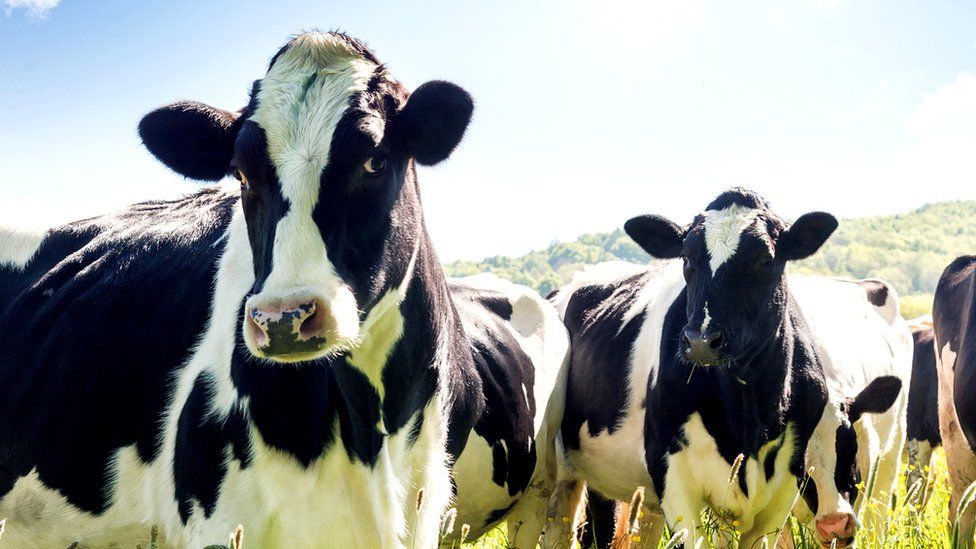
Why cows may be hiding something but AI can spot it

  By Chris Baraniuk Technology of Business reporter Published 22 hours ago Share IMAGE SOURCE, GETTY IMAGES Image caption, Herd animals like...