Tuesday, 30 June 2015

South Sudan conflict: Army 'raped and torched girls'


  • 7 hours ago
  •  
  • From the sectionAfrica
Families with malnourished children wait to receive treatment at the Leer Hospital, South Sudan, on July 7, 2014.
More than 40% of South Sudan's population is in need of food aid
South Sudan's army and allied militias "abducted, torched and gang-raped girls" during fighting against rebel forces, a UN report says.
Investigators found that at least 172 women and girls were abducted and subjected to sexual violence, it added.
One woman was "dragged out of her hut and gang-raped in front of her three-year old child", the report said.
The government denies its army has committed atrocities but says it will study the report.
The UN Mission in South Sudan (Unmiss) said abuses during the 18-month civil war had reached a new scale of intensity and horror in recent fighting in the oil-producing Unity State.
"Survivors spoke of a campaign against the local population that killed civilians, looted and destroyed villages," the report said.
"Some of the most disturbing allegations compiled by Unmiss human rights officers focused on the abduction and sexual abuse of women and girls, some of whom were reportedly burnt alive in their dwellings," it added.
null
South Sudan's army has been battling rebels since 2013
The report added that in one incident, a woman was made to hold red-hot coals in her hands in an attempt to force her to reveal the whereabouts of rebel fighters.
President Salva Kiir's spokesman Ateng Wek Ateng told the BBC he did not believe that troops would commit atrocities against their own people.
However, he said the allegations contained in the report were "too serious to ignore".
The government would study the report, and take appropriation, he added.
The military launched a major offensive against rebel forces in April, with fierce fighting in Unity state's northern Mayom district, once a key oil producing area.
The civil war began in December 2013 after Mr Kiir accused his sacked deputy Riek Machar of plotting a coup.
Mr Machar denied the allegation, but then formed a rebel army to fight the government.
Various efforts to mediate an end to the conflict in South Sudan, the world's newest state, have failed.
Earlier this month, a UN humanitarian co-ordinator in the country, Toby Lanzer, was expelled by the government.
Reports say he was kicked out for highlighting the plight of those caught in the conflict.

Monday, 29 June 2015

Houthis call for “national partnership” government


Yemeni Socialist Party says will not join
Yemenis line up to buy Yemeni food called "sambusa" during the Muslim holy fasting month of Ramadan in the capital Sana’a, on June 28, 2015. (AFP Photo/Mohammed Huwais)
Yemenis line up to buy Yemeni food called “sambusa” during the Muslim holy fasting month of Ramadan in the capital Sana’a, on June 28, 2015. (AFP Photo/Mohammed Huwais)
Sana’a, Asharq Al-Awsat—The Houthi movement currently in control of large parts of Yemen is seeking to form a “national partnership” government composed of different Yemeni political factions.
A statement by the group on Sunday said it was currently looking into forming “a government based on national partnership between all the political factions that took part in the Geneva talks.”
“There are currently ongoing talks with most of the political groups . . . in Yemen, especially Southern groups,” Hamza Al-Houthi, a senior member of the group and a member of its Politburo, said in the statement.
The Houthis, backed by Iran and Yemen’s former ousted president Ali Abdullah Saleh staged a coup in February, deposing internationally recognized President Abd Rabbuh Mansur Hadi. This came almost five months after the group’s militias overran the capital Sana’a precipitating a political crisis in the Arabian Peninsula’s poorest country that continues until now.
The Houthis, other Yemeni political groups, and members of Hadi’s government met in Geneva earlier this month for UN-sponsored peace consultations. However, both sides failed to reach any agreement during the talks due to the Houthis not abiding by a UN resolution stipulating their withdrawal from areas under their control and ceasing all hostilities against civilians.
Hadi requested Saudi Arabia and its Arab allies to intervene in Yemen to restore the recognized political authority in the country. A Saudi-led coalition has targeted the group in an aerial campaign since March 26.
Houthi militias are also fighting on the ground across the country against volunteer groups loyal to Hadi as well as fighters from the Southern separatist group Al-Hirak.
A Yemeni political source, speaking to Asharq Al-Awsat on condition of anonymity, said Yemeni political groups were unlikely to answer the Houthi calls to form a government, as they were currently more concerned about the dire humanitarian situation in the country.
“The Houthi statement hinted that some factions within the Southern Al-Hirak movement would join this proposed government. But they know full well that the main factions [within] Al-Hirak, which are led by people with a long history of struggle, will never be on the side of the [Houthi] militias who are killing Southerners daily,” the source said.
Al-Hirak and other Southern groups call for the reinstatement of the former Republic of South Yemen, which came to an end in 1986 with the formation of the modern Republic of Yemen.
Meanwhile, Abdul Rahman Al-Saqqaf, the secretary-general of the Yemeni Socialist Party, told Asharq Al-Awsat his party would not be joining any government with the Houthis.
“We are abiding by the UN resolution, which stipulates that no one political side takes any steps or procedures unilaterally. This move [by the Houthis] is in violation of the UN resolution and will create more problems than lead to stability,” Saqqaf said.
“These political factions the Houthis are referring to will not include the Yemeni Socialist Party. This proposed government will probably only include the Houthis, the General People’s Congress party led by Saleh, and other small political groups that barely carry any political weight. No party that respects its history and itself will participate in this government

Saturday, 27 June 2015

Fatwa on fasting in Ramadan during the UK summer


UPDATE 1st Ramadan 1436 / 18 June 2015: Bismillah al-Rahman al-Rahim
1. There seems to be unnecessary fuss and controversy about this scholarly and practical discussion: disagreement is not disunity; a healthy discussion is not “fitnah.” A reminder: this is not a new fatwa – it was issued by Sheikh Muhammad Abduh 100 years ago, and re-iterated by Sheikh Mustafa al-Zarqa’, a leading 20th-century jurist.  The fatwa also applies to most of Europe – see below.
2. A senior Hanafi UK mufti informed me recently that medieval Hanafi jurists gave a similar fatwa, after Muslims travelled to Northern Europe including Rus (Russia).  Ibn Fadlan (Hollywood’s “Thirteenth Warrior”) famously travelled to Scandinavia, so Muslims were aware of these issues going back centuries.
3. A junior UK mufti has recently claimed that previous fatwas only applied to places where sunrise and sunset do not occur, i.e. “lands of the midnight sun.” This is simply not true: Sheikh Zarqa’ explicitly stated that the fatwa applies to lands with a latitude higher than 45 degrees (which includes most of Europe and all of Canada, Alaska and some Northern US states – as a quick glance at a map will show; it only excludes Spain, Portugal, Southern France (roughly, Bordeaux or further south), Italy etc.), whilst the “lands of the midnight sun” begin at 66.5 degrees (in the Arctic and Antarctic Circles, during their respective summers).  This is because of the earth’s tilt of 23.5 degrees, first measured by the Abbasid astronomers at the Bayt al-Hikma (House of Wisdom) in Baghdad, 11-12 centuries ago: 23.5 degrees away from the Equator gives us the Tropics of Cancer and Capricorn; whilst 23.5 degrees away from the poles (90 – 23.5 = 66.5) gives us the Arctic and Antarctic Circles.
Have a happy and blessed Ramadan, with positive and pure thoughts, words and deeds!
ORIGINAL ARTICLE:
Bismillah.
1. A number of people have asked me since last year about the excessive length of fasting during UK summer months.
2. This has included those new to the practice of fasting, elderly and middle-aged people, who wish to fast but simply cannot manage the very long days. Since last year, I’ve heard reports of such people in hospital, as well as of children falling seriously ill, due to fasting more than 18 hours per day.
3. The day length in London during a midsummer Ramadan is almost 17 hours *sunrise-sunset*. Since there is no agreed beginning of dawn, the dawn-sunset timings vary from 19 to 20.5 hours.
4. The day length increases as we go further north, especially in Scotland and Northern Ireland.
a) E.g. I visited Dublin in June 2000: sunset prayers at the Dublin Islamic Centre (Clonskeagh Mosque) were held at 10.30pm, followed by night prayers at 12am and dawn prayers at 2am. Assuming dawn at 1am, this gives a 21.5-hour dawn-sunset fast.
b) On the other hand, I visited Stockholm in December 1999: sunrise was at 10.30am and sunset at 3.30pm. In winter there, the dawn-sunset fast is barely 6-7 hours, whereas it is 9-10 hours in the southern UK.
5. To reduce the fasting length, note that some of the Sahaba (Prophet’s Companions), including Hudhayfa bin al-Yaman, and Successors ate until sunrise or just before. Tabari and Ibn Kathir mention numerous narrations proving this under Qur’an 2:187, although both of them reject the practice based on a literalist reading of the verse (they lived in moderate climes). Ibn Hazm also approves the practice in his Al-Muhalla.
6. The jurists have discussed this matter for high latitudes (anything over 45 degrees, being halfway between the equator and poles, according to Mustafa Zarqa’.). As Sheikh Muhammad Abduh, Grand Mufti of Egypt, mentions in Tafsir al-Manar, classically they mentioned two possibilities to follow more moderate timings:
a) follow timings of the lands of revelation, viz. Mecca and Medina (Hijaz) – throughout the year, the dawn-sunset fast here is 12-15 hours
b) follow timings of the nearest “moderate land”
Abduh adds, “Both of these are valid, since it is a matter of judgment (ijtihad), and there is no unequivocal text (nass) about it.”
7. Note that following timings of the nearest “moderate land” is similar to following timings of the nearest “moderate time” in your own land, e.g. spring or autumn timings, when the days and nights are approximately of equal length.
8. Abduh is not alone in the above fatwa: he is quoting from centuries of earlier jurists. After him, his fatwa has been echoed by Muhammad Hamidullah, Mustafa Zarqa, Sayyid Tantawi, Jad al-Haqq, and Ali Gomaa amongst others. Texts and discussions of these fatwas may be found on the internet, e.g. see http://alrukn.com/long-fasts-fiqh/
9. The above fatwa implies partially decoupling fasting from dawn/sunset.
10. The spirit of fasting is clearly “from morning until evening” and to focus on its inner aspects, without hair-splitting about external matters.
11. The famous Qur’anic passage about fasting 2:183-7 begins and ends with taqwa (God-consciousness), and includes the memorable wisdom, “God wishes ease for you, not hardship … that you complete the course, magnify God for guiding you, and that you give thanks.”
This verse is in fact the basis of the numerous hadiths about making matters in religion relatively easy and not difficult, of the classical Hanafi principle of istihsan (attaining goodness, even if opposed to analogical reasoning) along with 39:17-18, cf. the first page of Kitab al-Istihsan in Al-Mabsut of al-Sarakhsi, and of contemporary jurists’ emphasis on taysir (easing matters), part of the Prophetic spirit and one of the principles of jurisprudence.
12. In exceptional circumstances, the Prophet (peace be upon him) understood that “morning” and “evening” were relative to people’s habits and culture.
Hadith: Safwan bin Mu’attal, who as a virgin was caught up with Aisha, Mother of the Believers, in the scandalous rumours that rocked Medina after the Mustaliq expedition, eventually got married. His wife once came to the Prophet and complained about her husband on three counts. (The Prophet defended and made excuses for him regarding all three matters.) One of these was that “he does not get up for the dawn prayer, and only offers it after sunrise when he rises.” When the Prophet asked him about this, he replied that his people or tribe customarily rose after sunrise, and not at the crack of dawn. The Prophet’s wise answer was, “In that case, pray when you wake up.” (Fa idha-stayqazta fa salli, a sound hadith in the Sunan, rated as authentic by Albani in his evaluation of the hadiths of Mishkat al-Masabih.)
Thus, for example, those who work night-shifts, working throughout the night and sleeping during the day, should fast during the night. This is because night has become day for them and vice-versa. The Qur’an that encourages fasting during the day also states that night is for sleep whilst the day is for work (e.g. 78:9-11).
13. An Azhari sheikh recently suggested to me that 12 hours’ fasting was sufficient, based on the average length of a day over a whole year: this is true of the sunrise-sunset day, for every place on earth. If we use dawn-sunset instead, we get 13-14 hours’ fasting. Note that this approach implies keeping a similar-length fast irrespective of the season in which Ramadan falls: in the winter, fasting would be much longer than the dawn-sunset timing, and some of us do follow that approach. This has an element of “continuous fasting” (sawm al-wisal, where fasting continues by night) about it: the Prophet practiced this regularly for several days at a time, but disallowed it for his followers, unless they were sure they could manage it.
14. I am reliably informed that Muslims in Norway use a 14-hour fasting timetable in the summer.
15. A case may be made for 16-hour fasts, based on Imam Ghazzali’s view that the maximum a person should sleep at night is a third of the day and night, i.e. 8 hours.
16. Insisting that those unable to complete long fasts should make them up at another time is practically equivalent to moving Ramadan out of the summer and into the seasons of autumn, winter or spring.
CONCLUSION / FATWA
All Praise belongs to God. Peace and Blessings be upon the Messengers of God.
1. Those who wish to follow dawn-sunset timings of 18-21 hour fasts and can do so safely, are free to do so.
2. Those who find this genuinely unbearable, or are convinced of the non-literalist approach of “morning to evening” rather than the literalist “dawn to sunset”, may wish to fast for 12 or preferably 14-16 hours, beginning from dawn, sunrise or even their usual morning meal (breakfast!). Such moderate timings are based on the fatwas of jurists over many centuries for high latitudes.
3. Whatever length a person fasts, they should not feel superior to others. The spirit of Ramadan and fasting includes God-consciousness, patience, perseverance, gratitude, prayer, worship, charity, generosity, humility, self-purification, self-development, helping others, mercy, compassion, forgiveness, lowering the gaze (of the eyes from lustful glances and of the heart from other than God)  and the remembrance and love of God.
May Allah, the One and Unique having Infinite Beautiful Names, bless all of humanity during this month, and shower upon us its internal and external grace.
Sheikh Dr. Usama Hasan (London, UK)
1st Ramadan 1435 / 29th June 2014 (updated: 4th Ramadan 1435/ 2nd July 2014; 11th June 2015)
Download a 2-page PDF of this fatwa here: Fasting in the UK summer

Sunday, 21 June 2015

Lebanon PM: I fear for Lebanon and everything in it


Tammam Salam discusses Lebanon's ties with Saudi Arabia ahead of a high-level visit to Riyadh
Lebanese Prime Minister Tammam Salam in Beirut, in February 2015. (Asharq Al-Awsat)
Beirut, Asharq Al-Awsat—Lebanese Prime Minister Tammam Salam has cautioned that now is not the time for political bickering among his country’s parties and that consensus is desperately needed to steer Lebanon away from crisis.
The small Mediterranean republic has been without a president for more than a year as its many factions fail to agree on a consensus figure for the position.
The Lebanese prime minister spoke to Asharq Al-Awsat ahead of an important visit to Saudi Arabia. Salam stressed the importance of relations between Beirut and Riyadh, calling for even greater cooperation between the two countries in a number of fields, particularly security and military.
The Lebanese prime minister is visiting Saudi Arabia accompanied by Interior Minister Nihad Mashnouq, Foreign Minister Gebran Bassil, Defense Minister Samir Moqbel, Health Minister Wael Abu Faour and Youth and Sports Minister Abdul-Muttaleb Al-Hinawi.
Salam was received by Saudi officials on Tuesday in Riyadh and is expected to meet Custodian of the Two Holy Mosques King Salman Bin Abdulaziz on Wednesday morning.
Asharq Al-Awsat: What can you tell us about your forthcoming visit to Saudi Arabia?
Tammam Salam: This is a normal visit and confirms the constant communication between Lebanon and the Kingdom of Saudi Arabia and the historic and close relationship between our two countries. It would be correct to say that there is constant and ongoing monitoring and follow-up, particularly in light of Saudi Arabia’s care and commitment towards Lebanon and many of our ongoing issues. Therefore, the people of Lebanon are grateful for the efforts of Saudi Arabia. So the visit will not just aim to strengthen Saudi-Lebanese relations, but to explore everything that can be done to strengthen this relationship further and ensure the benefit and interest of both Saudi Arabia and Lebanon.
Q: This visit comes at a critical time in the Middle East, with conflict raging in a number of countries, not least Syria and Yemen. What is your view of the situation in the region?
There can be no doubt that the situation in the region is a subject of major concern, particularly regarding issues such as security, stability and counter-terrorism. Saudi Arabia is leading a clear and unambiguous war against terrorism and the harm it does our religion, nations and region. Therefore, we must support this process because the Arab world has its position and future and this is something that we must strengthen and support. This is something that we can do by putting forward a clear vision in coordination with all Arab states via the Arab League, as well as through bilateral relations.
The Arab people want to ensure their dignity and continuity. At the same time, they want to live in peace, stability and tranquility. Therefore, we need to see agreements between Arab states today to ensure this.
Q: Speaking of joint Arab efforts to ensure regional security and stability, the Arab League is moving forward on an initiative to launch a joint Arab military force. What is Beirut’s position on this?
This is still under discussion by Lebanon’s military leadership. The military leadership has already held two meetings to discuss this while a third meeting is scheduled to take place in the next ten days to clarify and agree on a draft formula for this force and a number of issues regarding how it will be formed and defining its role. All of this is still under discussion. This initiative was put forward at the most recent Arab League summit and we must give it the required attention to strengthen the role of joint Arab security during this unstable time.
Q: What can you tell us about some Lebanese parties, such as Hezbollah for example, seeking to cast doubt on Saudi-Lebanese ties?
Lebanon, as you know, is a democratic state and every political party is free to express its opinions and views on domestic, regional and international issues. However, let me confirm once again, and despite what you might have heard from some parties, that Lebanon enjoys a deep and close relationship with Saudi Arabia. What I would like to express to the Kingdom of Saudi Arabia at this point is clear: We thank King Salman Bin Abdulaziz for his support of Lebanon and the Lebanese people. The Kingdom has always been committed to providing Lebanon with unprecedented moral and material support, and we can add military support, to strengthen its legitimate bodies and our nation’s sovereignty.
Q: Regarding Saudi military support for Lebanon and its military, have you now begun to feel the effect of this on the ground?
Yes, the Saudi military assistance is coming at just the right time and the Lebanese military and security apparatus are in dire need of this, particularly in light of the ongoing situation on the ground that we are facing in terms of the presence of terrorism and terrorists. This is also helping to strengthen Lebanon’s national institutions, which is having a direct effect on domestic unity.
Q: It has been more than a year since former president Michel Suleiman left office. Although your government continues to operate, a number of state institutions have reached breaking point. Is your government under threat of implosion?
Lebanon is immune [from any such implosion] due to our commitment to the policy of consensus between all people and parties and which can be seen in the compromise agreements that political parties have taken during this difficult time. We will ensure Lebanese unity by continuing to pursue this policy and remaining committed to our institutions and legitimacy as guaranteed by the constitution. So long as we remain committed to national unity and can move beyond our differences, we will ensure that Lebanon is protected and safe.
At the same time, we must acknowledge that we are in the midst of a political crisis that is worsening the longer we are unable to elect a new president and this presidential vacuum continues. This, in turn, leads to a semi-suspended legislature which, of course, affects the executive branch of power. If this continues, this will play an increasingly negative effect that will not assist efforts to preserve Lebanon’s internal unity in the face of the threats against it.
Q: Do you fear for the future of the Lebanese government?
I fear for Lebanon and everything inside it. The awareness and understanding [of the government] is at stake. As everybody knows, there is a political conflict taking place that includes certain names and parties which, I believe, is far removed from the implementation of the policy of consensus that is needed today. There is no room today for political bickering and conflict, for one party to score points at the expense of the other . . . Instead what is required today is to hold firm to the policy of consensus which enabled the formation of a government 18 months ago, and which should enable the election of a new president. This consensus, at this difficult time, is the only way out of the political crisis that we find ourselves in.
This is an abridged version of an interview originally conducted in Arabic.

Wednesday, 17 June 2015

‘Evicted Bachelors Returning To Same Homes Will Be Deported’


Firemen toil to tackle the fire in Hawally
KUWAIT CITY, June 11: Deputy Director General for Planning Affairs at Kuwait Municipality and leader of the team in charge of evicting bachelors from family residential areas Eng Ahmad Al- Manfouhi has confirmed the eviction of bachelors from 54 percent of buildings found to have violated the law and 224 warnings were issued to the concerned landlords, reports Al-Seyassah daily.
Al-Manfouhi made the announcement during the team’s meeting at the Capital Governorate Headquarters recently in the presence of Assistant Undersecretary for Public Security Major General Abdul- Fatah Al-Ali, Deputy Director General for Farwaniya and Jahra Municipalities Affairs Eng Ahmad Al-Huzaim, representatives of governorates, Public Authority for Civil Information, Ministry of Electricity and Water, Director of Legal Affairs in the Municipality Advisor Mohammad Al-Jasser, and several other top officials at the Municipality.
He urged the officials not to relent in their efforts during Ramadan to ensure they issue warnings and put stickers on violating buildings for easy eviction after Ramadan.
He asked the representatives of governorates to send letters to their respective mayors, notifying them about the eviction of bachelors from family residential areas.
He said this will help them identify the actual number of violators and deal with bachelors who might return after eviction. He added the team will coordinate with the Ministry of Interior to deport erring expatriates, asserting the law must be strictly enforced on everyone.

Saturday, 13 June 2015

Mount Kinabalu 'nudist' Eleanor Hawkins due home


  • 1 hour ago
  •  
  • From the sectionDerby
Eleanor Hawkins
Eleanor Hawkins is "preparing for the worst" her dad said
A British woman jailed for taking her clothes off on a mountain in Malaysia has left Borneo ahead of returning to the UK later.
Eleanor Hawkins, 23, from Derbyshire, was among a group of 10 people who stripped before taking photographs at the peak of Mount Kinabalu on 30 May.
She admitted public indecency, along with three other western tourists, and was imprisoned for three days.
All four have now left the island, the BBC has confirmed.
Noor Alam Khan Abdul Wahid Khan, the immigration department director of the Malaysian state Sabah, told the BBC Hawkins left Kota Kinabalu for Kuala Lumpur at 17:35 local time (10:35 BST) on Malaysia Airlines.
The other three, Dutch national Dylan Snel, 23, and Canadian siblings Lindsey, 23, and Danielle Peterson, 22, left earlier on Saturday for Kuala Lumpur.
The group on Mount Kinabalu
Images of the group at the top of Mount Kinabalu were posted on social media
Hawkins, whose sentence was back-dated to reflect time already served, was also fined 5,000 Malaysian ringgit (£860/$1,330) on Friday.
She and her co-accused all admitted a charge of "committing an obscene act in public".
Hawkins, who is from the Derbyshire village of Draycott, said she had been "stupid and disrespectful".
Prosecutors said the four tourists, along with six others, climbed the peak to enjoy the sunrise on 30 May and then challenged each other to take off their clothes and pose for photographs.
The move caused widespread offence in the region and was regarded as the cause of a magnitude 5.9 earthquake near the mountain, which is considered sacred.
The earthquake, on 5 June, killed 18 people, including children, and left hundreds more stranded.
Sabah state deputy chief minister Joseph Pairin Kitingan blamed it on the travellers showing "disrespect to the sacred mountain".
line

Why is Kinabalu considered sacred?

Malaysia's Mount Kinabalu is seen among mists from the Timpohon gate check point a day after the earthquake in Kundasang, a town in the district of Ranau on 6 June 2015
  • Sabah's Kadazan Dusun tribe believe the mountain houses the spirits of their dead ancestors
  • The name Kinabalu is derived from the tribe's phrase "Aki Nabalu", which means resting place of the dead
  • Climbers are told by guides, many of whom are Kadazan Dusun, to treat the mountain with respect and to refrain from shouting, screaming or cursing at it
  • Every December the tribe conducts a ritual called the Monolob to appease the spirits and allow climbers to continue visiting the mountain
  • A priestess, called a Bobolian, makes an offering of seven white chickens accompanied by seven chicken eggs, betel nuts, tobacco, limestone powder, and betel plant leaves. The Bobolian leads a chant and the chickens are then slaughtered, cooked, and given to the ceremony participants
  • In the past, this ceremony was conducted before every ascent, and climbers used the cooked meat as rations for their journey

Sweden royal wedding: Sofia Hellqvist becomes real-life princess


  • 13 June 2015
  •  
  • From the sectionEurope
Prince Carl Philip of Sweden (right) and his fiancee Sofia Hellqvist at the Nobel banquet at the Stockholm City Hall on 10 December 2014.
Prince Carl Philip of Sweden and Sofia Hellqvist met through mutual friends
Former model Sofia Hellqvist is marrying Sweden's Prince Carl Philip in a lavish ceremony in Stockholm on Saturday.
It is the first time a Swedish commoner has become a princess of Sweden in centuries.
"It's a real Cinderella story," says royal expert Roger Lundgren.
But like the fairytale, this royal love story has not always run smoothly.
News of the couple's relationship in 2010 caused quite a stir.

Tattoos and topless photos

The prince's new girlfriend was known for appearing in the popular Swedish reality show Paradise Hotel in 2005, which saw young, scantily-clad singles compete to stay in a luxury hotel the longest.
She had also posed topless with a boa constrictor for the men's magazine Slitz.
And her tattoos and belly button piercing raised some eyebrows, with reports that the royal palace may have asked her to have them removed ahead of the weekend's wedding.
Sofia Hellqvist (left) and Louise Gottlieb (centre) arrive at a private dinner on the eve of the wedding of Princess Madeleine and Christopher O'Neill hosted by King Carl XVI Gustaf and Queen Silvia at The Grand Hotel on 7 June 2013 in Stockholm, Sweden.
Ms Hellqvist (left) has changed her image since she met Prince Carl Philip in 2010
"When Carl Philip and Sofia first met I think that many people were critical to her, because of her background and the fact that she had done those bikini-shots and had been part of a reality show," says Johanna Lejon, royals reporter for the newspaper Svensk Damtidning.
Meanwhile Catarina Hurtig, the journalist who first broke the news of the couple's relationship, says: "At first there was quite a lot of fuss about her.
"Perhaps it was quite normal [behaviour] for a Swedish teenager, but maybe not a very appropriate history when falling in love with the prince."
But both experts say that attitudes towards her have changed over the years.
"Sofia has shown... that she is not in this relationship for fortune and fame," says Johanna Lejon.

Yoga instructor

Ms Hellqvist, 30, herself has said she does not regret anything about her past, although she would not make all the same decisions again.
Meanwhile, the royal palace has set about highlighting her other achievements.
We now know that after her stint on Paradise Hotel, Ms Hellqvist spent time in New York where she studied accounting and became a yoga instructor, helping to set up a yoga centre.
Prince Carl Philip of Sweden and Sofia Hellqvist attend the Opening Ceremony of the FIS Nordic World Ski Championships at the Lugnet venue in February 2015 in Falun, Sweden
The couple have become increasingly popular in Sweden
In 2009, she worked as a volunteer in Ghana, and the next year she co-founded the organisation Project Playground, which helps vulnerable children and young people in South Africa.
The previous focus on the raunchier elements of her past caused a "big problem" for the royal house, says Catarina Hurtig.
So the palace turned its attention on transforming her image, she says. "Her charitable work has been great for the royal house to focus on."
A team of stylists also helped prepare her for her new life, replacing the fake tan with classic outfits and swept-back hairstyles.
Prince Carl Philip of Sweden (right) and his fiancee Sofia Hellqvist arrive at the Nobel banquet at the Stockholm City Hall on 10 December 2014.
Ms Hellqvist has been accompanying the prince more frequently at formal events
Catarina Hurtig says they took inspiration from Prince Carl Philip's mother, Queen Silvia.
Born in Germany, the queen also does not have blue blood, but has gone on to become popular among the Swedish public.

Commoner

It may be down to King Carl XVI Gustaf's own choice of spouse that Prince Carl Philip - who is third in line to the throne - has been able to wed who wants.
The prince, 36, must get permission from the king to marry a commoner, and his great uncles lost their royal titles and succession rights when they went ahead with a wedding without it.
Swedish Prince Carl Philip poses with former model Sofia Hellqvist in the garden of the Stockholm Palace, on 27 June 2014 during a press statement to announce their engagement.
The couple announced their engagement in June 2014
King Carl XVI Gustaf has given each of his three children, who have got married within five years of each other, his blessing.
Carl Philip's elder sister, Crown Princess Victoria - the next in line to the throne -married her personal trainer, Daniel Wesling, in Stockholm in 2010.
Grey line

Commoners who married royalty

Britain's Catherine the Duchess of Cambridge (R) and Britain"s Prince William, Duke of Cambridge (L) visit The Stephen Lawrence Centre in Deptford to tour the facility and meet Charitable Trust members, London, Britain, 27 March
The Duchess of Cambridge (right) and Prince William will not be at Saturday's wedding, but Prince Edward and the Countess of Wessex will be attending
  • Princess Lilian and Prince Bertil of Sweden: Welsh model Lilian Davies was already married when she met Prince Bertil of Sweden in London in 1943. The couple fell in love but due to objections from the prince's father they only married 30 years later
  • Kate Middleton and Prince William: The Duchess of Cambridge's middle-class background was the subject of vast media interest ahead of her wedding to Prince William in 2011
  • Letizia Ortiz Rocasolano and Prince Felipe of Spain: When Letizia Ortiz Rocasolano married Prince Felipe in 2004, she become the first commoner in Spanish history to be in line to become queen
  • Queen Rania of Jordan and King Abdullah II: A doctor's daughter, Queen Rania worked for Citibank and Apple before her royal wedding
  • Charlene Wittstock and Prince Prince Albert II of Monaco: The former South African swimmer met the prince at a swimming event in Monaco in 2000
Grey line
Roger Lundgren, royal expert and editor of Kungliga Magazine, says that like in the UK, the younger royals have taken the spotlight from older members in recent years.
And the glamorous couples will no doubt attract the cameras yet again this weekend.

Royal duties

Ms Hellqvist's past career choices are "not a problem" for the liberal Swedish public, Roger Lundgren says, and her experience with the media may well help her in her new role.
Meanwhile Catarina Hurtig says Ms Hellqvist has also helped her future husband to be more comfortable with publicity.
Grey line

Sweden's royal family

The Swedish Royal family, from left Prince Daniel, Crown Princess Victoria, King Carl Gustaf, Queen Silvia, Prince Carl Philip, his fiancee Sofia Hellqvist and Princess Madeleine pose for a photograph during a reception at the Royal Palace during the National Day of Sweden celebrations in Stockholm Saturday, June 6, 2015
The Swedish Royal family pose for a photograph for the National Day of Sweden earlier this month
  • King Carl Gustaf and Queen Silvia, above centre
  • First in line to the throne - Crown Princess Victoria, above left, with husband Prince Daniel
  • Prince Carl Philip, above right, with Sofia Hellqvist
  • Princess Madeleine, far right
Grey line
The new princess is expected to devote most of her time fulfilling her royal duties once married, and many hope she will be a role model for future generations.
"The royals have a lot of money and a lot of help with everything from cleaning their castles to taking care of babies, so they should be doing good things in the world and their country," says Catarina Hurtig.
Opinion polls have shown the Swedish royal family's popularity waning in recent years, particularly following a scandal in 2010 over claims the king had visited strip clubs.
But with as many as half a million people expected to line the streets of Stockholm on Saturday, the monarchy is still popular among many.
Fans say Ms Hellqvist - along with her story - has played a big part in this, arguing that she has changed the way people in Sweden view them.
"She is a small town girl and comes from a normal background, just like any of us," says Johanna Lejon.
"The fact that she is now becoming a member of the royal family says a lot about the Swedish king and the queen. They seem, and are, very open to change."

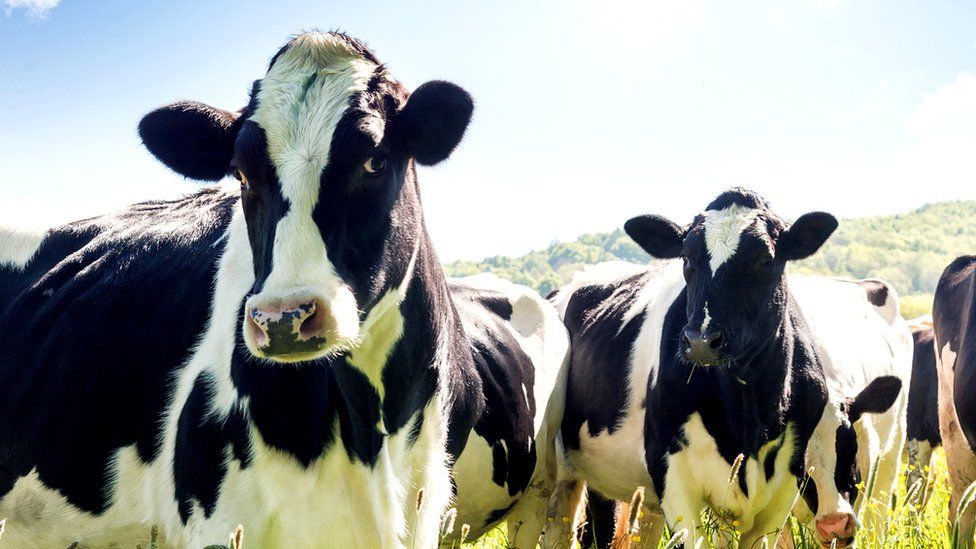
Why cows may be hiding something but AI can spot it

  By Chris Baraniuk Technology of Business reporter Published 22 hours ago Share IMAGE SOURCE, GETTY IMAGES Image caption, Herd animals like...