Thursday, 19 September 2019

Israel Made the Attack on the Saudi Oil Fields

Bob Moriarty

Israel Made the Attack on the Saudi Oil Fields 
Special Opinion Piece

Source: 
Bob Moriarty posits his theories on the attack on Saudi oil refinery.
As any fan of detective books or shows knows well, when you observe a crime you must first ask yourself, "Who benefits?" The Latin is Cui Bono? Literally to whom is it a benefit?
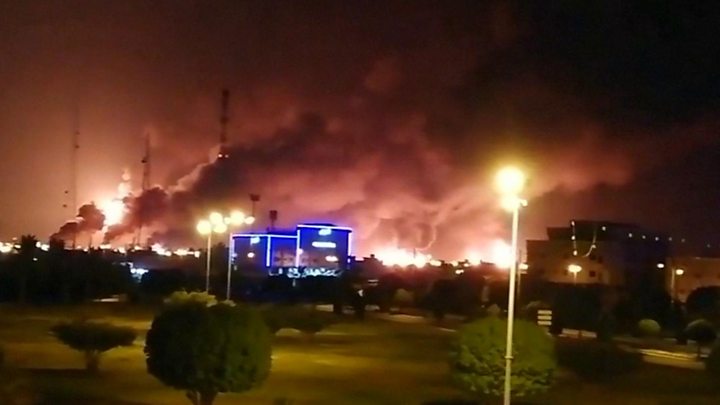
On Saturday September 14th someone fired missiles or sent armed drones against Saudi oil facilities reducing world oil production by 5% and Saudi production by 50%. The beleaguered Houthis group at war by Saudi Arabia in Yemen quickly claimed credit for the attack.
While the Houthis have used armed drones in attack mode previously against the Saudi's, those flights were bee stings compared to the sophistication and breath of success in the latest attack. 
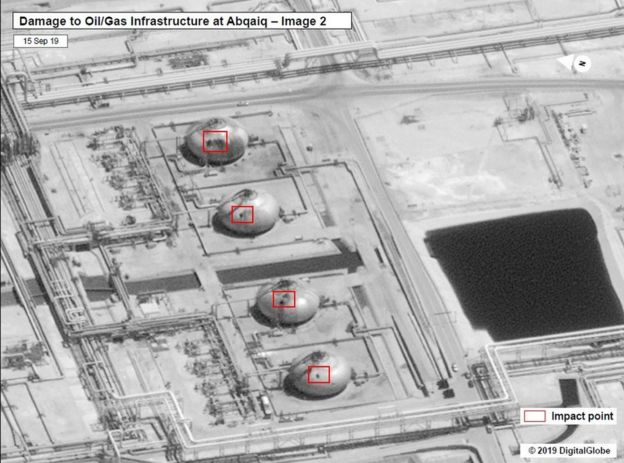
The BBC calls the latest events "a different order of magnitude altogether." There were seventeen different points of impact on the Abqaiq facility. What ragtag poorly armed enemy could possibly conduct such as remarkably complex attack?
Since the recent long past sell-by date demise of John Bolton, Donald Trump's current attack Chihuahua, Mike Pompeo, promptly insisted Iran was behind the attack.
But how does Iran benefit by starting World War III? Are they so fucking stupid that they would wave a red flag in front of the nuclear armed U.S., nuclear armed Israel and Saudi Arabia run by a snowflake who thinks cold blooded murder is just about right when his feelings are hurt.
Israel has been threatening Iran with destruction since at least 1982 with the publication of the Yinon Plan. The document is remarkable in its candor for the Zionist plan for the destruction of the Middle East. "Every kind of inter-Arab confrontation would prove to be advantageous to Israel at least in the short term," Yinon suggested. 
Anyone believing the latest false flag operation of Israel is not designed to stir up conflict in the Middle East between Arab neighbors either cannot read or cannot think. This threat has been in print for the world to read for thirty-seven years.
For those who didn't get it at first glance, the mostly dual national Neocons wrote a position paper for Benjamin Netanyahu in 1996 by Richard Perle called the "Clean Break." 
The coldblooded nature of the document can only be appreciated in hindsight by recalling recent historical events causing the deaths of millions of innocents and the largest refugee problem since the end of WW II by the evil actions of Israel advocating for a state of constant conflict.
"Rather than pursuing a 'comprehensive peace' with the entire Arab world, Israel should work jointly with Jordan and Turkey to "contain, destabilize, and roll-back" those entities that are threats to all three."
Israel managed to con the U.S. into expending the blood of their children and gold from their treasury for the best part of nineteen years conducting a "roll-back." All for the benefit of Israel.
Not yet satisfied with the cold-blooded nature of their plans, the Neocons issued another position paper prior to the events of 911 they called "Rebuilding America's Defenses." 
By this time the same mostly dual national Zionists called their conservative think tank, The Project for the New American Century. If anyone realized that the organization probably should have come under Truth in Advertising laws, the think tank would have more accurately been referred to as The Project for the New Israeli Century because it had nothing to do with America and everything to do with Israel.
In yet another remarkably blood drenched comment, the author stated, "Further, the process of transformation, even if it brings revolutionary change, is likely to be a long one, absent some catastrophic and catalyzing event – like a new Pearl Harbor."
Remember the attack on Pearl Harbor in December of 1941? That was the surprise attack on the Naval Base in Hawaii that was no surprise at all and resulted in the deaths of almost 3,000 American servicemen and dragged the US into World War II.
So would it be accurate to suggest that 911 was the "catastrophic and catalyzing event" the PNIC group so desperately desired to take place? 
After all, at the very least Israel knew all about it. They sent a team of Mossad spies "to document the event." Again, almost 3,000 Americans died as a series of military adventures began that would bankrupt the US and cause the deaths of millions in the Middle East.
But in my three score and thirteen years I have learned that the simplest answer is almost certainly the most accurate answer. Israel does not need to convince the U.S. to destroy Iran on their behalf. The U.S. has been in an undeclared state of war against Iran for decades. All for the benefit of Israel.
There is a better and less complex answer. That has to do with an election on September 17th, 2019. If Benjamin Netanyahu wins another term in office he can stay out of jail for corruption a little longer.
Would Netanyahu stoop to front running an election by ordering the IDF to conduct a missile/drone attack on his good friends in Saudi Arabia that could easily ignite Armageddon?
Sure. Why not? It's Americans and Iranians who would die. He doesn't give a rat's ass about them. Especially if it keeps him out of jail a little longer.
Actually pulling the pin on nuclear hand grenades would be especially stupid. But he doesn't care.
Bob Moriarty
President: 321gold
Bob and Barb Moriarty brought 321gold.com to the Internet almost 16 years ago. They later added 321energy.com to cover oil, natural gas, gasoline, coal, solar, wind and nuclear energy. Both sites feature articles, editorial opinions, pricing figures and updates on current events affecting both sectors. Previously, Moriarty was a Marine F-4B and O-1 pilot with more than 832 missions in Vietnam. He holds 14 international aviation records.

Tuesday, 17 September 2019

Saudi oil attacks: Why does the US hide oil underground?


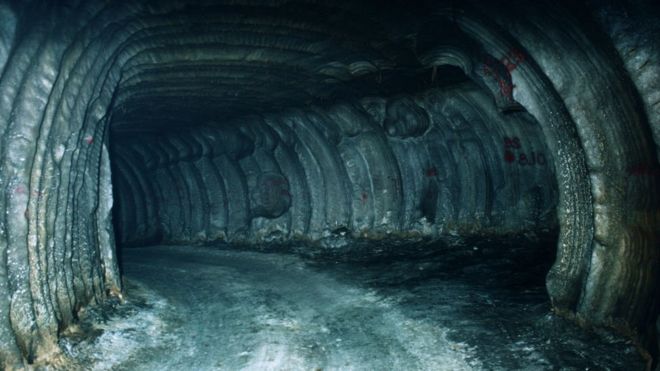
A tunnel under Louisiana, part of the Strategic Petroleum Reserve in the USImage copyrightGETTY IMAGES
Image captionA huge volume of oil is stored in caverns beneath Louisiana and Texas
In the wake of the attacks on key Saudi Arabian oil infrastructure, American officials have been talking about drawing on a huge emergency stash of oil kept in the United States.
As oil prices spiked, President Donald Trump tweeted they could use the oil "to keep the markets well-supplied". 
The oil he was referring to amounts to more than 640 million barrels which are stored in salt caverns beneath the states of Texas and Louisiana. The idea of holding these "strategic reserves" dates back to the 1970s. 
All members of the International Energy Agency have to hold the equivalent of 90 days' worth of petroleum imports, but the US stockpile is the largest emergency store in the world.

Why was it set up?

US politicians first came up with the idea of an oil stockpile in the early 1970s, after an oil embargo by Middle East nations caused prices to skyrocket around the world. 
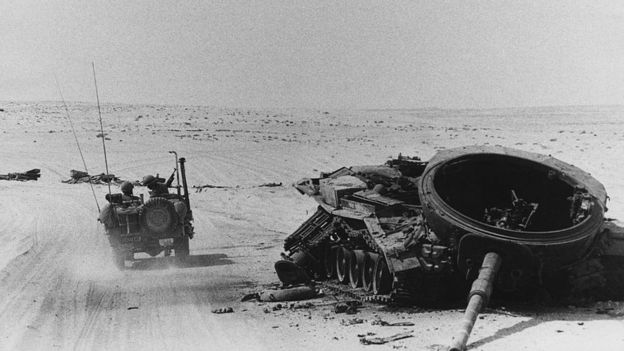
Members of the Organization of Arab Petroleum Exporting Countries - including Iraq, Kuwait, Qatar and Saudi Arabia - refused to export oil to the US because it supported Israel in the 1973 Arab-Israeli War.
An Israeli tank driving past a destroyed tank in October 1973Image copyrightGETTY IMAGES
Image captionThe embargo came as a result of the Arab-Israeli War of 1973, also called the Yom Kippur War
The war lasted just three weeks in October that year. But the embargo - which also targeted other countries - lasted until March 1974, causing prices to quadruple worldwide from about $3 to nearly $12 per barrel. 
Pictures of cars queuing up at petrol pumps in affected nations became some of the defining images of the crisis.
The US Congress passed the Energy Policy and Conservation Act in 1975. It established the Strategic Petroleum Reserve in the event of another major supply problem. 

What is the reserve?

At present, there are four sites where oil is stored: near Freeport and Winnie in Texas, and outside Lake Charles and Baton Rouge in Louisiana.
Each site has several man-made salt caverns up to a kilometre (3,300ft) underground where the oil is stored. This is far cheaper than keeping it in tanks above ground, and safer - the chemical composition of the salt and the geological pressure prevents any oil from leaking out.
The largest site at Bryan Mound near Freeport has a storage capacity equivalent to 254 million barrels of oil. 
The reserve's website says that on 13 September there were 644.8 million barrels of oil held in these caves. 
According to the US Energy Information Administration, Americans used 20.5 million barrels of petroleum a day on average in 2018 - meaning there's enough oil to keep the country going for about 31 days. 

How does it work?

Physical constraints mean only a small amount of oil can be moved from the caves each day, meaning even if there is presidential authority to release oil it would take nearly two weeks to hit the markets. 
Moreover, the oil is all unrefined. It would need to be processed into fuel before it would be useful for cars, ships and airplanes.

Has it been used often?

It was last used in 2011, when disruption caused by the Arab Spring uprisings prompted IEA member states to release a combined total of 60 million barrels of oil to reduce disruption to energy supplies.
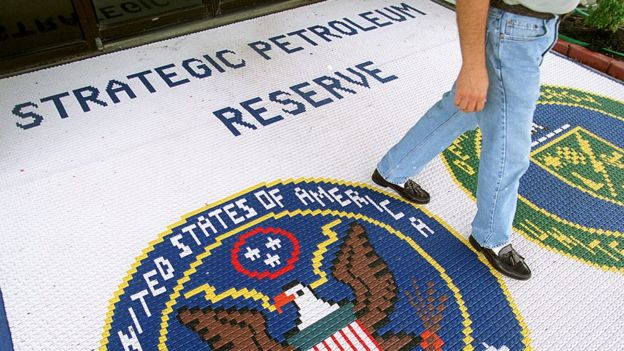
A mat on the floor welcomes people to the Strategic Petroleum Reserve headquarters in TexasImage copyrightGETTY IMAGES
Image captionThe US has millions of barrels of oil stored in underground salt caverns near the Gulf of Mexico
However, the US has sold off large numbers of barrels on a few occasions. President George H W Bush authorised its use during the Gulf War in 1991, while his son George W Bush allowed the sale of 11 million barrels in the wake of Hurricane Katrina.
But the usefulness of keeping such a huge reserve at a time when US energy production is booming has been questioned. Some in Washington have even recommended getting rid of it completely. 
A report by the Government Accountability Office suggested just that in 2014, saying it could lower prices at the pump for US consumers. In 2017 the Trump administration mooted selling off half the stockpile to help tackle the federal deficit.
Under President Bill Clinton, 28 million barrels were sold off in 1997 as part of a move to reduce the deficit.

Saudi oil attacks: Drones and missiles launched from Iran - US


Media captionAbqaiq has the world's largest oil processing plant
The US has reportedly identified locations in Iran from which drones and cruise missiles were launched against major Saudi oil facilities on Saturday.
Senior US officials told media outlets that the locations were in southern Iran, at the northern end of the Gulf.
Saudi air defences did not stop the drones and missiles because they were pointed southwards, to prevent attacks from Yemen, they added.
Iran denies involvement in the attacks, which disrupted global oil supplies.
Yemen's Iran-aligned Houthi rebels said they had launched the drones that struck the Abqaiq oil processing plant, the world's largest, and the Khurais oilfield.
They have launched attacks into Saudi Arabia before, but US officials said on Sunday they believed the drones and missiles did not originate from the south or south-west, and instead were launched from the north or north-west.
Iranian President Hassan Rouhani has called the attack a reciprocal act by the "Yemeni people".
Oil prices soared 20% after the attacks, at one point reaching $71.95 (£57.53) a barrel. But they have since pared their gains as it appeared market disruption would not be as bad as feared. 
On Tuesday, Saudi Arabia's energy minister said supply was back to the level it was before the attacks. State oil company Aramco has managed to partially restart work at the damaged facilities, and the kingdom promised to make up the difference from its strategic reserves - with oil production expected to be fully back online by the end of the month, the minister said.
Brent crude - the international benchmark used by traders - was trading at about $65.41 (£52.28) after the announcement.

What has the US said?

President Donald Trump said on Monday it looked like the attacks had come from Iran, and US officials said they were gathering evidence to prove it.
A senior US official told CBS News that a US team had been on the ground at Abqaiq and identified specific drones and missiles used in the attacks. 
This wreckage will be analysed and used to present "a very compelling forensic case" that Iran was responsible, the report says.
Vice-President Mike Pence said on Tuesday the US was "evaluating all the evidence", and that Secretary of State Mike Pompeo was en route to Saudi Arabia "to discuss our response". 
He added: "The United States of America will take whatever action is necessary to defend our country, our troops, and our allies in the Gulf. You can count on it."
Damage shown on oil and gas infrastructure at Abqaiq in Saudi ArabiaImage copyrightUS GOVERNMENT / DIGITAL GLOBE 
Image captionOne of the US government's satellite images showing damage at the world's biggest oil-processing facility
Iranian Foreign Minister Javad Zarif tweeted that "Yemeni victims" were responsible for the attacks, saying that blaming Iran would not change the situation and saying the US was "in denial".
Ending the war was the "only solution for all," he added.
And in a televised address, Iran's Supreme Leader Ayatollah Ali Khamenei dismissed talks "at any level" with the US, saying any dialogue could only happen if the US "takes back its words and repents" after withdrawing from the Iran nuclear deal. 
Earlier this year, President Trump unilaterally pulled the US out of the landmark agreement that had limited Iran's nuclear programme in exchange for the lifting of economic sanctions.
Presentational grey line
Analysis box by Jonathan Marcus, defence correspondent
This is the strongest claim yet from the Americans that the attacks against the Saudi oil facilities were launched from Iran itself.
No corroborating evidence or intelligence has yet been provided. But if true, it takes the Gulf crisis to a more dangerous level and it demonstrates a new threshold of brinkmanship by the Iranian authorities. It also raises the question: what response, if any, is required?
For past US presidents the security of oil supplies in the Gulf was an absolute priority. But for the "locked and loaded" Donald Trump, for all his bluster and apparent affinity with the Saudi royal family, this is not necessarily the case. There is no treaty relationship between Washington and Riyadh, and the Saudis are increasingly unpopular on Capitol Hill.
The arguments for a response run both ways. If Iran's alleged escalation is not met by firm action, it might only embolden Tehran to go further. But the attacks have demonstrated Saudi Arabia's extraordinary vulnerability. In any protracted conflict it would be very much in the line of fire. 
For the White House this is a strategic dilemma with no easy answers.
Presentational grey line

What happened in the attacks?

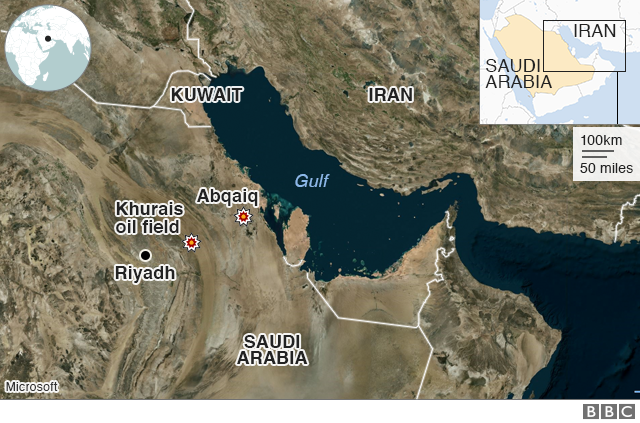
The attacks targeted Abqaiq - run by the Saudi state oil company, Aramco - and the Khurais oilfield.
Khurais is the closest of the targets to the Yemen border, but is still a considerable 770km (480 miles) away.
A map showing Saudi oil strikes
US officials said there were 19 points of impact on the targets, which could have come from a mix of drones and cruise missiles.
The Houthis have repeatedly launched rockets, missiles and drones at populated areas in Saudi Arabia, attacks which have left at least four civilians dead.
The conflict in Yemen escalated in March 2015, when the Houthis took control of much of the west of the country and forced President Abdrabbuh Mansour Hadi to flee abroad.
Soon after, Saudi Arabia and its allies launched an air campaign in a bid to restore Mr Hadi's government. 
The UN says at least 7,290 civilians have died and 80% of the population - 24 million people - need humanitarian assistance or protection, including 10 million who rely on food aid to survive.
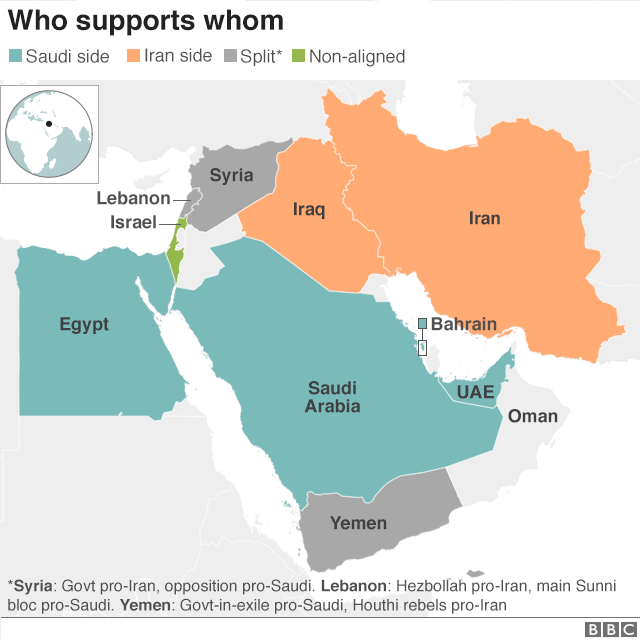
Map showing who supports whom
Presentational white space

Why cows may be hiding something but AI can spot it

  By Chris Baraniuk Technology of Business reporter Published 22 hours ago Share IMAGE SOURCE, GETTY IMAGES Image caption, Herd animals like...