Tuesday, 16 October 2012

Somalia: No Sovereignty without Security


A Somali soldier stands guard at the Dadaab refugee camp on Aug. 15, 2011, in Dadaab, Somalia, where thousands of Somalis wait for government assistance. (Photo: homeros, Shutterstock.com)

For more than two decades, Somalia's sovereignty has been in limbo—or in an utterly defunct status. Though there are many causes, one stands: volatile security. No nation can claim, or (as in Somalia's case) reclaim, its sovereignty while dependent on another country, coalition or peace-building force for security. And though road-based security has been a top priority, it has been an objective made difficult by the many hurdles along the way.
Rebuilding the national security apparatus of a country like Somalia, which became brain-drained and resource-drained by protracted war, is not an easy task. This task is even more difficult when there is a constant struggle with certain elements within the international community, which I refer to as the Ghost-lords, over whether or not there is an urgent need to rebuild the Somali National Security apparatus.
Since January 2007 when AMISOM (the African Union peacekeeping force to Somalia) was assembled, the international community has spent almost all of the funds appropriated to restore and sustain security in Somalia on that force. Though their record might not be immaculate, as some of their past tactics were rightly criticized by human rights organizations, by and large AMISOM has done an exceptional job in helping the Transitional Federal Government (TFG) establish a strong foothold and restore security. That said, their long-term presence does inadvertently demoralize the Somali soldiers, make the rebuilding of the Somali National Army and other security apparatuses a lesser priority, and undermine the case to reclaim the sovereignty of the Somali state. 
More than the huge pay and total cost disparity between AMISOM and Somali soldiers—the former's monthly cost per soldier being roughly 23 times the latter—the demoralizing factor comes from consistently late soldier salaries ($100 per month) that are funneled through AMISOM. Since its initial six-month security-focused mandate, AMISOM has morphed into a jack of all trades. Despite the unfair coverage Somali soldiers get from media, they are the real infantry force of AMISOM-led operations. They are the ones who suffer the most casualties. And because of the U.N. arms embargo and financial constraints, they possess neither heavy arms nor armored trucks, neither bulletproof vests nor enough ammunition. They don't even have appropriate communication devices, as they rely on a few cell phones, and, unlike their partners, when wounded in battle, they don't get emergency evacuation or get flown out of the country for medical care.
In a tragic irony, their foes—who often outgun them—describe their disadvantage and misfortune as being worse than sa'abooley. This is Somali slang that means those who rely on the palm of their hands. It is a term that developed during the lawless era of Mogadishu when groups of marauding gangs or criminals would roam around the city for a game and bring along a few of their patsies who have no guns of their own to act as de facto human shields in the hope of inheriting the guns of those who get killed, either from their friends or from the other side.
Every conference held, every appeal made to the international donors and every resolution sought through the U.N. Security Council has been mainly about strengthening AMISOM, enhancing its pay scale, prolonging or broadening its mandate. In these meetings and conferences, Somali military officials and experts are seldom, if at all, invited to offer their own assessments.
The man currently leading the Somali army, General Abdulqadir Ali Dini, has received his military trainings both in the United States and the former Soviet Union. He was the commander of the Commandoes Unit of the Somali National Army before the collapse of the state. He is a man held in high regard, as he refused to participate in clan-based civil strife and be morally responsible for the blood of many innocent people. Since he was appointed to his current post almost two years ago, the national army has undergone tangible transformation in terms of discipline, integration, loyalty and clan balance.
Of course, when it comes to sustainable security, there is no quick fix, especially when rebuilding a defunct army from the ground up. Sustainable security could be attained only through a highly trained and well-equipped local army. Foreign forces can be of help in the short-term, when there is a strategic plan to scale them down as the local army's competence improves. Currently, there is no apparent effort to rebuild the Somali security apparatus with the right training, equipment and resources to gradually replace AMISOM. Lip service is all there is.
A few weeks ago, the commander of the police force, General Sharif Sheekhuna Maye, threatened to resign out of frustration because the meager salaries for his force never come on time due to certain questionable bureaucratic processes set by the United Nations Political Office for Somalia and AMISOM. Is such condition conducive to building a police force willing to deploy and establish law and order in newly liberated areas far from their comfort zone? Instead of addressing this kind of concern, the African Union approved a police force contingent to join AMISOM to police liberated areas. Also, the United States, Britain and France have declared their commitment to provide enhanced trainings—to AMISOM Special Forces, that is.
Against this backdrop and a number of other issues, Somalia is trying to reclaim its sovereignty as an independent nation state. And that very desire has been the carrot that the Ghost-lords dangled in front of a nation eager to emerge out of its transitional status by August 2012.
Meanwhile, the international community is pushing a controversial draft constitution to replace the one ratified in 1961, though, among other problems, this document does not define what constitutes the legal boundaries of the Somali state. And this could sow the seed for a perpetual inter-Somali territorial conflict.
Sovereignty is necessary to establish the rule of law, to govern independently, to protect the nation's values, territorial integrity and unity, and to mobilize for defense against internal and external threats. The more the process for Somalia to reclaim its sovereignty is delayed, the more al-Shabaab, who just carried out their latest suicide bomb in Dhusa Mareeb, will be emboldened, and the more the TFG and the post-August government will be discredited.
Abukar Arman is Somalia's special envoy to the United States and a widely published political analyst.

How do sexual abusers cover their tracks?


Jimmy Savile poses by a portrait of himself, painted by a friend, in 1965
As allegations mount against Sir Jimmy Savile, more and more people are asking how he was able to act with apparent impunity. How do predators escape detection?
Jimmy Savile has been described as an expert at "hiding in plain sight". He was the eccentric who seemingly joked openly about his sex life, the knight who surrounded himself with children and spent part of his life living in hospitals.
But despite this, Savile's alleged sexual abuses went uninvestigated in his lifetime.
Scotland Yard says it is following up 340 lines of inquiry following complaints of abuse and sexual assault by Savile.
And yet Savile was hardly a furtive figure, hiding in the shadows.
His 1974 autobiography boasts of having taken home an "attractive" runaway from a remand home before he handed her to the police. As columnist Hugo Rifkind observed in The Times: "It was right out there, in plain view, and nobody wanted to see."

Jerry Sandusky

Former Penn State assistant football coach Jerry Sandusky is put in a car the Centre County Courthouse after being sentenced in his child sex abuse case
  • Former Penn State assistant football coach convicted of child abuse
  • Convicted in June of 45 counts of molesting boys
  • Sentenced this month to 30 to 60 years in prison
  • In a New Yorker profile, Malcolm Gladwell wrote "Sandusky was a hugger and a grabber and a cut-up"
  • In his 2000 autobiography Touched, Sandusky wrote "I enjoyed pretending as a kid, and I love doing the same as an adult with these kids - pretending has always been part of me"
In a 2000 BBC interview with Louis Theroux, Savile said he told journalists he didn't like children to put newspapers "off the hunt".
Equally, a persona forged on a love of children can be a common disguise for a sexual predator.
Journalist Malcolm Gladwell wrote in the New Yorker how former football coach Jerry Sandusky concealed years of grooming and sexual abuse behind his "loveable goofball" personality and a life that was "all about the kids".
According to David Wilson, professor of criminology at Birmingham City University and a former prison governor, the allegations against Savile "match the classic profile of a predatory paedophile operating within institutional structures that support their fantasy life".
Not only do such offenders tend to be adept at hiding their crimes, they will often use their social status to deter complaints against them.
"Sexual abusers can hide behind their position," says Christiane Sanderson, a counsellor and expert on child sexual abuse.
"If someone is in a position of authority, or if they have become a pillar of the community, it is very difficult for victims to come forward. They will be afraid of repercussions and the reprisals in terms of whether they will be believed."

“Start Quote

Abusers are often very clever at making their victims feel complicit”
Christiane SandersonChild abuse expert
Sanderson draws on comparisons with the Catholic Church and the cover-up of sexual abuse in Ireland.
"There is a record to say that people did try to come forward and try to actually make some allegations and they were not believed because it was so difficult to believe that somebody with such status, power and authority would abuse this power and sexually abuse," she says.
While academics are keen to stress that there is no stereotype for a sex offender, there are common techniques employed by abusers to cover their tracks.
It is often the case that they will draw on their power and position, the fear that their victims have, and the shame and guilt that victims feel.
Just as Savile reportedly did, many abusers tell their victims that they will not be believed if they ever tell anyone what has happened to them.
"Abusers use a combination of fear and threats, they cover their tracks by telling the victim that it's their fault," says Sarah Nelson, a specialist researcher in childhood sexual abuse, from the University of Edinburgh.
"Everyone who has spoken about the Jimmy Savile case talks of feeling ashamed. Abusers are often very clever at making their victims feel complicit, that it was partly their fault."
Nelson adds that the careful choice and grooming of the victims is another way in which abusers can attempt to conceal their behaviour.
Victims are often vulnerable, handpicked by someone who has a sense of power over them.
The scale of the abuse in the Rochdale sex ring, and the subsequent review of the work of the local agencies who were tasked with safeguarding the children, has highlighted this.
Rochdale after the arrest of men accused of grooming girls
Nine men were jailed in May for grooming girls as young as 13, but in many cases the victims, often from troubled backgrounds, were initially assumed to be "engaging in consensual sexual activity" or even involved in prostitution.
"The grooming took place in public for years," says Nelson.
"They went to cafes and restaurants. They were giving them presents, drinks, acting like their boyfriends before these girls were passed on to be abused, but they chose stigmatised girls, girls who were already in trouble or considered delinquent.
"They were categories of victims that the public didn't care much about."
If such exploitation is to be prevented, experts agree that victims and potential victims must be given a voice.
"We have a culture which used to want children to be seen and not heard," says Wilson, who once ran the sex offenders unit at HMP Grendon and has conducted extensive research into both victims and perpetrators.
"Lately we've been more tolerant of children speaking but we don't always listen to them."
Correctly, he says, inquiries into Savile will focus on why so many institutions enabled and ignored his alleged behaviour.
"But for me, the key issue is that we allow children the space to speak - and that we listen to what they tell us," Wilson says.

Radovan Karadzic denies Bosnia war crimes


Radovan Karadzic: "I should have been rewarded for all the good things I've done"

Related Stories

Former Bosnian Serb leader Radovan Karadzic has said he should be rewarded for "reducing suffering", not accused of carrying out war crimes.
Beginning his defence at his trial in The Hague, he said he was a "tolerant man" who had sought peace in Bosnia.
Mr Karadzic was arrested in Belgrade in 2008 after almost 13 years on the run.
He faces 10 charges of genocide and crimes against humanity during the war in the 1990s, including the Srebrenica massacre and the siege of Sarajevo.
More than 7,000 Bosniak (Bosnian Muslim) men and boys were killed at Srebrenica in the worst single atrocity in Europe since the end of World War II.
During the 44-month siege of Sarajevo more than 12,000 civilians died.
Mr Karadzic, 67, went on trial at the International Criminal Tribunal for the former Yugoslavia (ICTY) in October 2009.

“Start Quote

He appears utterly without self-doubt - as, indeed, he was two decades ago”
'Truth will grow stronger'
He began his lengthy personal statement by saying he had done "everything within human power to avoid the war and to reduce the human suffering".
Speaking calmly, Mr Karadzic said he was a "mild man, a tolerant man with great capacity to understand others".
He had stopped the Bosnian Serb army many times when it had been close to victory, he said, had sought peace agreements, applied humanitarian measures and honoured international law.
He insisted that there had been no history of conflict between ethnic groups until Serbs came to feel increasingly threatened by growing power amongst Muslims in Serbia.
"Neither I, nor anyone else that I know, thought that there would be a genocide against those who were not Serbs," he said.
He criticised media coverage of the war as biased and disputed the official number of victims of the war, saying the true figure was three to four times less. More than 100,000 people were killed, according to official figures.
"As time passes this truth will be stronger and stronger, and the accusations and the propaganda, the lies and hatred, will get weaker and weaker," he said.
Market atrocities

Charges against Karadzic

  • Ordered or planned genocide of Bosnian Muslims (Bosniaks) and Bosnian Croats to permanently remove them from territories of Bosnia-Hercegovina
  • Persecuted Bosniaks and Bosnian Croats and responsible for "acts of extermination and murder"
  • Masterminded the massacre of more than 7,000 Bosniak men and boys at Srebrenica in 1995
  • Responsible for siege of Sarajevo in 1992-95, in which 12,000 civilians died
  • Took UN peacekeepers and military observers hostage
One of the accusations faced by the former Bosnian Serb leader is that he adopted a military strategy of using snipers and shell attacks on the civilian population of Sarajevo.
Mr Karadzic said that every shell that had fallen on Sarajevo "hurt me personally", but he complained that an attack on a street market in February 1994 had been a "shameless orchestration".
While some people had clearly been killed, the former Bosnian Serb leader said "we also saw android mannequins being thrown onto trucks, creating this show for the world".
The blast left 68 people dead and eyewitnesses described seeing people being torn apart by the explosion.
Mr Karadzic said an investigation - conducted by Col Andrey Demurenko, the Russian chief of staff of the UN peacekeeping force - into a second attack on the same market in 1995 had concluded that Serbs "would not have fired the shells in that incident".
Having called the colonel as his first witness, Mr Karadzic said the findings of his report had been "rejected as a source of information" as they went "in an unwanted direction".
sniper alley
The 28 August attack left 34 people dead and many more wounded and Col Demurenko suggested that it was almost impossible that a mortar round could have been used to target a small market, particularly a market that had already been hit.
"The chance that a mortar shell would hit such a small single street... is one in a million. It's virtually impossible," Col Demurenko told the court, insisting that no such mortar fire had happened.
The two market attacks in 1994 and 1995 were among the bloodiest episodes of the Sarajevo siege. An earlier Hague war crimes trial found that the second incident was caused by a 120mm mortar.
The session was adjourned after Col Demurenko's testimony.
The BBC's Anna Holligan, at The Hague, says many survivors and relatives of the war's victims have travelled from Bosnia to see the trial of the man they hold most responsible for their suffering deliver his statement.
Each of Mr Karadzic's statements were met with cries of dismay, disgust and disbelief from the public gallery, says our correspondent.
In June, Mr Karadzic had one charge of genocide - related to the forcible expulsion of hundreds of thousands of non-Serbs from towns and villages in Bosnia - dismissed. But he failed in his attempt to have the other charges against him dropped.
Former Bosnian Serb army commander Ratko Mladic is also on trial at The Hague.

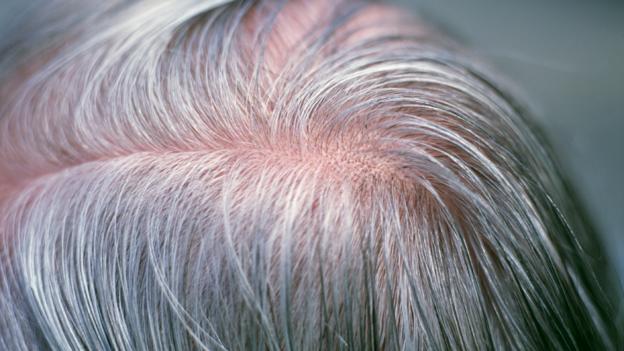
Can stress turn your hair grey overnight?


Can stress turn your hair grey overnight?
(Copyright: Science Photo Library)
It’s a common tale, even said to have happened to Marie Antoinette. But as Claudia Hammond finds out, it is difficult to get to the root of the problem.
In 1982, a pilot called Captain Eric Moody was all ready for quiet overnight flight from Kuala Lumpur to Perth. The sky was clear and the crew were happy because they had some extra Malaysian satay that night. But as they flew over Java, an engine failed. And then another and another. Minutes later there were no working engines left. In his calmest pilot’s voice Moody made an announcement: “Good evening ladies and gentlemen, This is your captain speaking. We have a small problem. All four engines have stopped. We are doing our damnedest to get them going again. I trust you are not in too much distress.” 
Eric Moody also showed little sign of being terrified as he managed to make an emergency landing at Jakarta airport – later he discovered that a plume of ash from a volcano had knocked out all four engines. But within six months of the incident he noticed that the tip of his quiff had turned white. Within a year the rest of his hair had done the same.  
Captain Moody is not alone. The same thing is said to have happened to several historical figures, but in a far shorter time frame. When the French queen, Marie Antoinette was led to the guillotine at the age of 37, her hair is said to have turned white the night before in anticipation of her execution. The English lawyer Sir Thomas More, who was later canonised, was executed in the Tower of London in 1535, and again his hair was reported to have turned white before his death.
These are good stories, but are they scientifically possible? Can hair really turn white overnight? Is there a physiological process through which extreme stress can cause hair to change colour this fast?
Sudden loss
Hair gets its colour from two types of melanin pigment – eumelanin which dictates how dark the hair is, and pheomelanin which determines how red or yellow it is. As we age, the cells in hair follicles stop producing these pigments and the resulting hairs are colourless. Eventually, the overall effect of a combination of coloured and colourless hair, especially in people with dark hair, is grey.
The process behind this is not well understood. One study showed that hair naturally greys through the same chemical used to bleach hair from bottles. The idea proposed from studies in mice is that melanin-making cells produce hydrogen peroxide, which is normally broken down by an enzyme called catalase. However, production of the enzyme drops as we age, and the build-up of hydrogen peroxide blocks melanin production.
The medical name for the sudden whitening of the hair is canities subita. The best explanation for it is not that the hair changes colour, but that the pigmented hairs fall out. A condition called alopecia ariata causes the hair shed suddenly, resulting in bald patches. It is thought to be caused by an auto-immune response, where the body’s defence system turns on itself. It can be exacerbated by stress, which could account for the association of white hair with terrifying experiences. In some cases the white hairs are unaffected by the condition.
So a severe shock could trigger hair loss, but with only the coloured hairs falling out, leaving someone who already has some grey with a whole head of white hair. Or perhaps the immune response might target the pigment-producing system, which would explain why those no follicles no longer producing coloured hair are unaffected.
Shock spot
This explanation might well account for cases like that of Captain Moody. His hair took a year to turn completely white. The overnight cases like Marie Antoinette’s are harder to explain. She was imprisoned for a year, so perhaps she was denied hair dye in captivity and by the time she appeared in public again at her execution with her hair cut short her grey roots had grown out.
But this doesn’t explain other anecdotal tales, for instance in young people who would have so few white hairs that if all their darker hair fell any white hairs remaining would be very sparse. Then there’s a more recent case study of a 54-year-old woman in Switzerland who had a small patch of hair loss. She was given steroids, which treated the hair loss successfully, but within a few weeks all her hair had turned white, even though she had not had a frightening experience and had stopped losing her hair.
Last year, a study from a research group led by no less than one of this year’s recipients of the Nobel prize in Chemistry, Robert Lefkowitz, offered some clues. They outlined a mechanism through which a hallmark of chronic stress causes DNA damage in mice that could lead to conditions like greying hair.
The puzzle of whether your hair can turn grey sounds like a simple one for medical science to solve, but it’s not. Ultimately, to study exactly what happens you would need to examine the hair before and after a shocking incident, carefully assessing its colour and thickness. Life-threatening situations are not only rare, but unpredictable and no ethics committee is going to let you induce a sufficiently terrifying experience in a lab volunteer. 
Yet there is something about the idea of hair changing colour through shock that is fascinating. Maybe it’s the idea that the body reveals more than we think, that underneath the impressive calmness which allowed Captain Moody to save the lives of 247 passengers, his body was telling a different story. 
If you would like to comment on this article or anything else you have seen on Future, head over to our Facebook page or message us onTwitter.
You can hear more Medical Myths on Health Check on the BBC World Service.
Disclaimer
All content within this column is provided for general information only, and should not be treated as a substitute for the medical advice of your own doctor or any other health care professional. The BBC is not responsible or liable for any diagnosis made by a user based on the content of this site. The BBC is not liable for the contents of any external internet sites listed, nor does it endorse any commercial product or service mentioned or advised on any of the sites. Always consult your own GP if you're in any way concerned about your health.

Planet with four suns discovered by volunteers


Gas giantThe new planet - a gas giant - is about six times the size of Earth

Related Stories

Astronomers have found a planet whose skies are illuminated by four different suns - the first known of its type.
The distant world orbits one pair of stars which have a second stellar pair revolving around them.
The discovery was made by volunteers using the Planethunters.orgwebsite along with a team from UK and US institutes; follow-up observations were made with the Keck Observatory.
A report on the Arxiv server has been submitted to the Astrophysical Journal.

“Start Quote

Computerised attempts to find things [in the data] missed this system entirely. That tells you there are probably more of these that are slipping through our fingers”
Dr Chris LintottOxford University
The planet, located just under 5,000 light-years away, has been named PH1 after the Planet Hunters site.
It is thought to be a "gas giant" slightly larger than Neptune - more than six times the radius of the Earth.
"You don't have to go back too far before you would have got really good odds against one of these systems existing," Dr Chris Lintott, from the University of Oxford, told BBC News.
"All four stars pulling on it creates a very complicated environment. Yet there it sits in an apparently stable orbit.
"That's really confusing, which is one of the things which makes this discovery so fun. It's absolutely not what we would have expected."
Binary stars - systems with pairs of stars - are not uncommon. But only a handful of known exoplanets (planets that circle other stars) have been found to orbit such binaries. And none of these binary systems are known to have another pair of stars circling them.
Keck ObservatoryFollow-up observations were made with the Keck facility on Mauna Kea
Asked how this planet remained in a stable orbit whilst being pulled on by the gravity of four stars, Dr Lintott said: "There are six other well-established planets around double stars, and they're all pretty close to those stars.
"So I think what this is telling us is planets can form in the inner parts of protoplanetary discs (the torus of dense gas that gives rise to planetary systems).
"The planets are forming close in and are able to cling to a stable orbit there. That probably has implications for how planets form elsewhere."

Kepler Space Telescope

Infographic (BBC)
  • Stares fixedly at a patch corresponding to 1/400th of the sky
  • Looks at more than 155,000 stars
  • Has so far found 2,321 candidate planets
  • Among them are 207 Earth-sized planets, 10 of which are in the "habitable zone" where liquid water can exist
PH1 was discovered by two US volunteers using the Planethunters.org website: Kian Jek of San Francisco and Robert Gagliano from Cottonwood, Arizona.
They spotted faint dips in light caused by the planet passing in front of its parent stars. The team of professional astronomers then confirmed the discovery using the Keck telescopes on Mauna Kea, Hawaii.
Founded in 2010, Planethunters.org aims to harness human pattern recognition to identify transits in publicly available data gathered by Nasa's Kepler Space Telescope.
Kepler was launched in March 2009 to search for Earth-like planets orbiting other stars.
Visitors to the Planet Hunters website have access to randomly selected data from one of Kepler's target stars.
Volunteers are asked to draw boxes to mark the locations of visible transits - when a planet passes in front of its parent star.
Dr Lintott points out: "Computerised attempts to find things [in the data] missed this system entirely. That tells you there are probably more of these that are slipping through our fingers. We've just stuck a load of new data up on Planethunters.org to help people find the next one."
Searching for such systems, he said, was "a complicated test to hand a computer", adding: "We're using human pattern recognition, which can disentangle that reasonably well to see the important stuff."
Since December 2010, more than 170,000 members of the public have participated in the project.

Somalia’s New Government: Is it a Case of Islamist Coming through a Backdoor Channel?


Oct 15, (WDN) The current Indian Ocean Newsletter (October 6, 2012) carries poignant news analysis on the power architecture of the new leadership of Somalia. Under the title of “Somalia: President’s Inner Circle,” the Indian Ocean asserts that the top echelon of Hassan Mohamud’s Villa Somalia is dominated by “members of several Islamic groups close to Muslim Brotherhood, particularly the strain that took power in Egypt after last year’s “Arab Spring.”

At the top of echelon, there are about five Islamists who are part and parcel of the inner circle of President Hassan.

Farah Sheikh Abdiqadir Mohamed.  According to the Indian Ocean Newsletter, Farah, a member of the Hawiye/Shiikhaal (actually, Farah is neither Shikhaal nor Hawiye but a member of the Reer-Aw-Hassan clan) was responsible for managing and designing the victorious election of Hassan Mohamoud by the newly-seated Somali Parliament.  Farah is a hard-core Al-Islah and is singly responsible for handling the international linkage of Al-Islah to the world-wide movement of Muslim Brotherhood.  “Farah was responsible to channel sizable funds, reportedly from Kuwait, which helped to finance Hassan Sheikh Mohamud’s campaign,” the article contends.

Four more members of the president’s circle include: Abdikarim Hussein Guled, Omar Sheikh Ali Idris, Mohamed Nuur Ga’al and Mohamed Ahmed Abtidoon.  These four individuals are members of Damul Jadid (New Blood).  New blood is a faction that deserted Al-Islah and joined the Union of Islamic Courts (UIC) in 2006.  Abdi Karim Hussein Guled (Hawiye/Habar Gidir/Sacad) was until recently an advisor to the former President, Sheikh Sharif Sheikh Ahmed.  Omar Sheikh Ali Idris (ARS), a former official of the Union of Islamic Courts, was until recently an ambassador to Doha.  He had in the past joined ARS of Somalia, a group based in Asmara (Eretria) which advocated an armed opposition to the former Somali Transitional Federal Government led by the late Abdullahi Yusuf.  He is responsible for Damul Jadid’s group for its Qatari -based Islamic groups. 


Last but not least is Mr. Mohamed Ahmed Abtidoon, who was also a former UIC official who recently joined President Hassan’s Damul Jadid group. 

The fourth player in the inner circle of Hassan’s power architecture is Mohamed Nuur Ga’al (Hawiye/Murursade) and he is an active member of civil societies in Mogadishu and a hard liner Islamist.

Finally, the article concludes to say: “The men all have a common ideological base that is not far removed from the al Shabaab radical Islamists, but consider themselves moderates as they refuse armed action.”  If the Indian Ocean’s timely analysis holds water, then Somalia is in the deep throats of radical Islamic coup.  What is not clear is how the Western powers that had initially welcomed the Hassan administration with open arms would swallow this newly discovered bitter pill.
WardheerNews

Copyright © 2012 WardheerNews.com

Why cows may be hiding something but AI can spot it

  By Chris Baraniuk Technology of Business reporter Published 22 hours ago Share IMAGE SOURCE, GETTY IMAGES Image caption, Herd animals like...