Tuesday, 21 January 2014

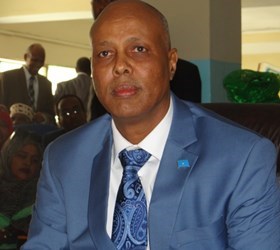
Abdiweli Gaas and Villa Somalia: A Cautionary Note

abdiwali_Puntland2
January 11, 2014
By Hassan M. Abukar Dr. Abdiweli Gaas surprised many with his victory as the new president of the regional…

Baarlamaanka oo cod aqlabiyad ah ku Ansixiyay Xukuumadda Cusub ee Soomaaliya (SAWIRO)

 
Talaado, Janaayo 21, 2014 (HOL) — Xildhibaannada baarlamaanka Soomaaliya ayaa goor dhow cod aqlabiyad ah ku ansixiyay xukuumadda cusub ee uu soo dhisay dhawaan ra’iisul wasaaraha Soomaaliya, iyadoo ay ogolaadeen inta badan xildhibaanadii kulanka ku sugnaa.
Warkii oo dhan

Somalia: Commentary on the new Cabinet


January 21, 2014


 From the beginning, the daily leaks about the selection process of the new Cabinet (Council of Ministers) of Somalia headed by Prime Minister (PM) Abdiweli Sheikh Ahmed havebaffled both Somalis andforeign observers of the Somali politics. The parliament debated a motion on the exclusion of former members of the voted out cabinet from the new cabinet. The media reported disagreements, confusion, exhaustion, and disastrous arrangement for the announcement of the new Cabinet made around 2:30 AM Mogadishu local time on Friday morning- an important holiday for Muslims.

The formality and the timewereweird, unprecedented, and unwise way of managing such an important political event. So far, it is not clear the reasons behind this clumsy policy decision making process and political event that took 37 days of planning. Unusually, the President and the Speaker of parliament did not attend the ceremony for the announcement ofthe new Cabinet.The presidential spokesperson issued press releasesaying the president has approved the new cabinet. No information about the administrative actions between the President and PM’s offices on the subject for public record.

The PM personally read out the names of the Cabinet members without providing their background in terms of full name, education, experience, clan affiliation in conformity with the power sharing parliamentary representation formula, and cabinet Department. This first step did not augur hopeful future.

The new Cabinet is composed of 56 members- the Prime Minister, 25 ministers, 5 state ministers, and 25 deputy ministers.One positive development is that all positions have been filled at once and no state minister has been appointed to the presidency. With the exception of few new faces, the 56 new cabinet members belong to six intersecting groups:

1.       Corruption kingpins/graduates group. The leaders of the federal government did not bother to  consider the UN Monitoring Group reports for the disqualification of certain individuals for past reportedmalfeasances;

2.      Nightlife group. This group includesmembers of parliament (MPs), instrumental for fomenting political chaos. They are peddlers of political corruption.

3.      Anti-Sovereignty, independence, and dignity of the Somali people group; Members of this group are ardent supporters of foreign agenda against national agenda and solidarity. The prolonged political chaos in Somalia has convinced few unscrupulous and selfish individuals to seek self-enrichment opportunitiesby presenting themselves as faithful agents toforeign countries.

4.      Opponents of the Constitutional power sharing formula on political representation to gain political power outside the agreed clan formula. This group wants to continue civil hostilities and dissonance.

5.      Members of religious group Al Islah-Damul Jadid. The cabinet members associated with the group are more than 30. Selection based on Religious group membership over clan and competence consideration complicates Somali politics.

6.      Members of former incompetent cabinet voted out by the federal parliament. The leaders of the federal government missed the point that politicians lose the qualification for appointment for political considerations in addition to the constitutional criteria.Political appointees are not like civil service employees.

It seems that advancing theinterests and priorities of Somalia andthe respect of the constitutional goals and political representation among the Somali people were not the guiding principles for the selection of the new Cabinet members. The discrimination among former Shirdon Cabinetmembers hadfuelledthe intense debate and criticisms that would further weaken the federal government.

In the context of Somali politics, the growing perception is that the composition of the new Cabinet undermines the high expectation conferred on the federal government leaders. Some observers are of the opinion that the former Speaker and minister of finance Sharif Hassan Sheikh Adan has secured the inclusion of his diehard allies in the cabinet. Thisreinforces the view that the federal government accepted the inevitability of Somalia’s disintegration, subscribed to the surrender policy, and decided to empower elements of anti-sovereignty, independence, and dignity of Somali people.

The media has particularly focused on the powerful Ministers of finance (Hussein Abdi Halane), justice and constitution (Farah Abdulkhadir), interior and federalism (Abdullahi Godax), internal security (Abdikarim Guled), and defense (Gen. Mohamed Sheikh). All sorts of unflattering allegations against these ministries have dominated the conversation among Somalis. Cartoonist Amin Amir reflectedthe substance ofthe conversation in his daily cartoons.

As Federalism and constitutional review are politically very sensitive issues for the future of Somalia, the new ministries of interior and federal affairs, of internal security, and of justice and constitutionattract particular attention.  The experience of the roadmap and provisional constitution, of the Jubbaland State agreement in Addis Ababa, and of Baidoa Conference on South West state, has dented the credibility of the federal government on federalism and state building and casts shadow on them.

Arbitrary decisions and actions without reference to credible and transparent deliberative decision making process is feeding public discontent and anger and could trigger social eruption that could reverse the progress made so far in the fight against terrorism for building peace and state institutions. The pointed questions asked President Hassanin his appearance at Universal TV tell a lot about the public opinion towards the performance of the federal government.

The indifference to respond to the increasing complain about unfairness, injustice, lack of participation, corruption, abuse of political power, marginalization, fraudulentpolitical representation, insecurity, and ill-consideredsupport of governancestructures without legal framework encourages the culture of cynicism and defeats the common national and international goals of peace, stability and prosperity in Somalia. Complain about underrepresentation is linked to overrepresentation and it merits redress.

Thefederal parliament approved the new Cabinet because of external maneuvers, corruption, and article 67 of the provisional constitution. But, there are three possible scenarios as consequences after this new cabinet:

       I.            The new cabinet will represent the end of any national nominal government in Somalia and the fate of Somalia will be decided by the neighboring countries before 2016;

    II.            In reaction to the political and constitutional transgressions, a popular revoltcould take place before 2015;

 III.            The country will remain in perpetual turmoil to the detriment of all.

The leaders of the federal government shoulder grave responsibilities in this dark circumstance and the current indifference or self-serving approach is not the proper response for facing the overwhelming challenges of Somalia. Political courage, wisdom, sense of patriotism and conviction, and other leadership skills hold the key for turning around the worrisome prospect of the country.


Mr. Mohamud M Uluso

Monday, 20 January 2014

Allah vs atheism: ‘Leaving Islam was the hardest thing I’ve done’


A growing number of Muslims are speaking out about losing their faith, but it can mean being shunned by their families, or even threatened with death. Sarah Morrison meets the atheists
By Sarah Morroson
Amal Farah, a 32-year-old banking executive, is laughing about a contestant singing off-key in the last series of The X Factor. For a woman who was not allowed to listen to music when she was growing up, this is a delight. After years of turmoil, she is in control of her own life.
On the face of it, she is a product of modern Britain. Born in Somalia to Muslim parents, she grew up in Yemen and came to the UK in her late teens. After questioning her faith, she became an atheist and married a Jewish lawyer. But this has come at a cost. When she turned her back on her religion, she was disowned by her family and received death threats. She has not seen her mother or her siblings for eight years. None of them have met her husband or daughter.
“It was the hardest thing I’ve ever done – telling my observant family that I was having doubts. My mum was shocked; she began to cry. It was very painful for her. When she realised I actually meant it, she cut communication with me,” said Ms Farah. “She was suspicious of me being in contact with my brothers and sisters. She didn’t want me to poison their heads in any way. I felt like a leper and I lived in fear. As long as they knew where I was, I wasn’t safe.”
This is the first time Ms Farah has spoken publicly about her experience of leaving her faith, after realising that she did not want to keep a low profile for ever. She is an extreme case – her mother, now back in Somalia, has become increasingly radical in her religious views. But Ms Farah is not alone in wanting to speak out.
It can be difficult to leave any religion, and those that do can face stigma and even threats of violence. But there is a growing movement, led by former Muslims, to recognise their existence. Last week, an Afghan man is believed to have become the first atheist to have received asylum in Britain on religious grounds. He was brought up as a Muslim but became an atheist, according to his lawyers, who said he would face persecution and possibly death if he returned to Afghanistan.
In more than a dozen countries people who espouse atheism or reject the official state religion of Islam can be executed under the law, according to a recent report by the International Humanist and Ethical Union. But there is an ongoing debate about the “Islamic” way to deal with apostates. Broadcaster Mohammed Ansar says the idea that apostates should be put to death is “not applicable” in Islam today because the act was traditionally conflated with state treason.
Some scholars point out that it is against the teachings of Islam to force anyone to stay within the faith. “The position of many a scholar I have discussed the issue with is if people want to leave, they can leave,” said Shaykh Ibrahim Mogra, the assistant secretary general of the Muslim Council of Britain. “I don’t believe they should be discriminated against or harmed in any way whatsoever. There is no compulsion in religion.”
Baroness Warsi, the Minister of State for Faith and Communities, agreed. “One of the things I’ve done is put freedom of religion and belief as top priority at the Foreign Office,” she said. “I’ve been vocal that it’s about the freedom to manifest your faith, practise your faith and change your faith. We couldn’t be any clearer. Mutual respect and tolerance are what is required for people to live alongside each other.”
Yet, even in Britain, where the freedom to change faiths is recognised, there is a growing number of people who choose to define themselves by the religion they left behind. The Ex-Muslim Forum, a group of former Muslims, was set up seven years ago. Then, about 15 people were involved; now they have more than 3,000 members around the world. Membership has reportedly doubled in the past two years. Another branch, the Ex-Muslims of North America, was launched last year.
Their increasing visibility is controversial. There are those who question why anyone needs to define themselves as an “ex-Muslim”; others accuse the group of having an  anti-Muslim agenda (a claim that the group denies).
Maryam Namazie, a spokeswoman for the forum – which is affiliated with the Council of Ex-Muslims of Britain (CEMB) – said: “The idea behind coming out in public is to show we exist and that we’re not going anywhere. A lot of people feel crazy [when they leave their faith]; they think they’re not normal. The forum is a place to meet like-minded people; to feel safe and secure.”
Sulaiman (who does not want to reveal his surname), a Kenyan-born 32-year-old software engineer living in East Northamptonshire, lost his faith six years ago. His family disowned him. “I knew they would have to shun me,” he said. “They are a religious family from a [close] community in Leicester. If anyone [finds out] their son is not a Muslim, it looks bad for them.” He added that people “find it strange” that he meets up with ex-Muslims, but he said it is important to know “there is a community out there who care about you and understand your issues”.
Another former Muslim in her late twenties, who does not want to be named, said the “ex-Muslim” identity was particularly important to her. “Within Islam, leaving [the religion] is inconceivable. [The term] atheist doesn’t capture my struggle,” she said, adding that her family does not know the truth about how she feels.
Pakistani-born Sayed (not his real name), 51, who lives in Leeds, lost his faith decades ago. He left home at 23 and moved between bedsits to avoid family members who were looking for him. He told his family about his atheism only two years ago. “I was brought up a strict Muslim, but one day, I realised there was no God,” he said. He told his mother and sister by letter that he was an atheist but they found it difficult to comprehend.
“Whenever I tell my sister or my mum that I am depressed, stressed or paranoid, they say it’s because I don’t pray or read the Koran enough,” he said, adding that he will not go to his mother’s funeral when she dies. “I won’t be able to cope with the stress or the religious prayers. There’s quite a lot of stigma around.”
Iranian-born Maryam Namazie, 47, said that it does not have to be this way. Her religious parents supported her decision to leave their faith in her late teens. “After I left, they still used to whisper verses in my ear for safety, but then I asked them not to. There was no pressure involved and they never threatened me,” she said. “If we want to belong to a political party, or religious group, we should be able to make such choices.”
Zaheer Rayasat, 26, from London, has not yet told his parents that he is an atheist. Born into a traditional Pakistani family, he said he knew he didn’t believe in God from the age of 15.
“Most people transition out of faith, but I would say I crashed out. It was sudden and it left a big black hole. I found it hard to reconcile hell with the idea that God was beneficent and merciful.
“I’m sort of worried what will happen when [my parents] find out. For a lot of older Muslims, to be a Muslim is an identity, whereas, for me, it’s a theological, philosophical position. They might feel they have failed as parents; some malicious people might call them up, gloating about it. Some would see it as an act of betrayal. My hope is that they will eventually forgive me for it.”
Source: The Inde[endent

Daawo:Caleemo-Saarkii M/weynaha Jubaland(Daawo:Madax ka tirsan UN,Midowga-Afrika,Jaamacatal-Carab,Dawlada Federaalka iyo Dawlada Puntland ayaa goob-joog ahaa)

  PDF Print E-mail
Written by Administrator   
Monday, 20 January 2014 18:31

Xaflad caleemo-saar ah ayaa Madaxweynaha Jubbaland Sayid Axmed Madoobe loogu qabtay Magaaladda Kismaayo.

Munaasadabadan ayaa waxaa ka soo qeyb-galay hadalana ka soo jeediyya Wufuud ka kala socotay Qaramada-Midoobay,Midowga-Afrika,Dawladda Federaalka iyo Dawlad-Goboleedka Puntland.


Riix:oo Daawo:Caleemasaarkii M/weynaha Jubbaland

Riix:oo Daawo:Qaabkii loo soo dhaweeyay Madaxda ka Qeyb-galaysa Caleemo-Saarka M/weynaha Jubbaland

Daawo:Qeybta 1-aad
Adobe Flash Player not installed or older than 9.0.115!Get Adobe Flash Player here

Daawo Qeybta 2-aad:
Adobe Flash Player not installed or older than 9.0.115!
Get Adobe Flash Player here

Baarlamaanka oo loo qaybiyey qorshaha xukuumadda cusub RW C/wali[Sawirro]


1
Muqdisho[RBC Radio]Fadhi ay maanta Muqdisho ku yeeshen xildhibaannada baarlamaanka dowladda faderaalka Soomaaliya,waxaa lugu hor geeyey qorshaha siyaasaded ama barnaamijka xukuumadda cusub ee uu dhawaan xilli danbe soo magacaabay raysal wasaare C/wali Sheekh Axmed.
Shir ay shalay qaateen guddoonka baarlamaanka ayaa raysal wasaare C/wali lugu faray inuu soo gudbiyo qorshaha xukuumaddiisa cusub,taaso keentay in maanta baarlamaanka loo qeybiyo qorshaha siyaasaded ee xukuumadda cusub.
Xilligii uu furmay fadhiga baarlamaanka ayaa guddoomiha barlamaanka Soomaaliya Maxamed Sheekh Cismaan Jawaari,waxuu xildhibaannada u jeediyey in marka hore loo qeybiyo barnaamijka xukuumadda cusub ayna ku soo heystaan muddo afar iyo laatan saacadood ah, si ay u soo akhriyaan kaddibn maalinta xigta ay uga doodeen.
Xildhibaannada barlamaanka intoo badan,waxaa ay  soo jeediyen in qof qof ay u soo arkhriyaan Barnaamijka Xukuumadda ay soo gudbisay kaddib doodda loo gudbo.
Guddoomiyaha baarlamaanka Jawaari
Guddoomiyaha baarlamaanka  Jawaari, ayaa aqbalay hadal soo jeedinta xildhibaannada barlamaanka ee ah in qof qof loo soo darso barnaamijka xukuumadda, waxaana laga doodaya maalinta berito ah, iyadoo maalinta xigta oo ay taariikhdu tahay 22-ka bisha codka kalsoonid siinta loo qaadi doono Xukuumadda iyo Barmaanijka ay soo gudbisay.
Xildhibaanada, ayaa galabta ilaa caawa soo akhrisan doono waraaqaha ay ku qoran yihiin Ajandaha Xukuumada, dooneysa in ay hesho codka kalsoonida ee Baarlamaanka.
Sidoo kale qorshuhu waxaa uu yahay in maalinta berrito ah xildhibaannada uu hortago raysal wasaare C/wali Sheekh si ay su’aallo uga weydiiyan xukuumaddisa cusub.
Si kataba ha noqote,waxaan la saadaalin karin inay baarlamaanku meel maridoonan xukuumadda raysal wasaare C/wali, xilli ay soo badanayaan xildhibaanada baarlamaanka, ee ka biyo diidan in la meel mariyo golaha wasiirada ee xukuumada cusub.
4
5
1
________
RBC Radio
Xafiiska Muqdisho

Faysal Waraabe: Somaliland Gool Baa Laga Dhaliyey Waxaana Ka Masuul ah Nimankii Saxiixay Heshiiska


Feysal-WarabeHargeysa (RBC) Faysal Cali Waraabe oo ah guddoomiyaha xisbiga mucaaradka ee Ucid ee deegaanada maamulka Somaliland ayaa dhaliilay heshiiska magaalada Istanbul maalintii shalay ku dhexmaray Dawlada Federaalka Soomaaliya iyo maamulka Somaliland isagoo sheegay in heshiiska uu u xagliyey dhanka Soomaaliya.
Faysal Waraabe oo maanta shir jaraa’id ku qabtay magaalada Hargeysa ayaa sheegay in heshiiska ay wada saxiixeenlabada wafdi ee ka kala socday Dawlada Federaalka iyo maamulka Somaliland inuu ahaa mid aan xaqiiq ahayn, isla markaana aan lagu sheegin dhibaatadii gaartay, sida uu yiri dadka reer Somaliland.
“Ereygii ahaa xaquuq waa laga saaray heshiiska oo waaa lagu qoray ereyga ah “atrocity” oo ah dil dad aan hubeysneyn loo geysto, mana uusan ahayn ee wuxuu ahaa xasuuq si isir ah loogu geystay dadka reer Somaliland.” ayuu yiri Feysal Waraabe.
Feysal waxaa kal oo uu ku eedeeyay maamulka Axmed Siilaanyo ee xisniga Kulmye inau keligood heshiis la galeen Dawlada Soomaaliya, sidaas darteedna heshiisku uu yahay mid ku gooni ah, sida uu yiri xisbiga Kulmiye.
Wuxuu sheegay in Somliland u baahantahay inay dib u tashato isagoo cadeeyay in gooni isutaagii Somaliland ay sheegatay uu yahay mid la diiday, sida uu sheegay.
Mar la weydiiyey in Feysal Cali Waraabe laftiisa uu horey uga qeybgalay wadahadalka ay Somaliland la gashay Dawlada Federaalka Soomaaliya ayaa wuxuu ku dooday in wadahadaladi hore ay ahaayeen kuwo saxsan balse kuwa hadda socda ay yihiin kuwo khaldamay ka dib markii, sida uu yiri laga saaray labo arrin oo waaweynaa.
“Horta inaanu labo dawladood oo wada hadlaya nahay waa la diiday oo magacii Somaliland waxaa laga dhigay maamul goboleed hoos yimaada dawlada Xamar fadhida, tan kale ee meesha ka baxdayna waxa weeye inaanu 1960-kii dawladnimo qaadanay oo aanu ahayn dawlad gooniya waa laga saaray iyana.” ayuu yiri.
“Somaliland maanta gool baa laga dhaliyey, goolkaa laga dhaliyeyna waxaa ka masuul ah nimanka saxiixay.” Ayuu sii raaciyey Feysal Waraabe.
RBC Radio

C/kariin Guuleed iyo Biixi oo ka Hadlay Heshiiskii ay wada Saxiixeen

                                                                                                                                   
Axad, Janaayo 19, 2014 (HOL) — Wasiirka amniga Qaranka dowladda Somalia, C/kariin Xuseen Guuleed iyo wasiirka arrimaha dibadda Somaliland, Maxamed Biixi Yoonis oo kala hoggaaminayay wafdiyadii dowladda Somalia iyo Somaliland ayaa ka warbixiyay heshiiskii ay maanta ku kala saxiixdeen magaalada Istanbuul ee dalka Turkiga.
Labada wasiir oo u warrramayay laanta afka Soomaaliga ee VOA-da ayaa qiray in wada-hadalladu ay kusoo dhamaadeen guul ayna ku faraxsan yihiin heshiiska ay kala saxiixdeen, iyagoo intaas ku daray in wadahadalladu ay sii socon doonaan inta heshiis rasmi ah laga gaarayo.
“Heshiiska waxaa ka mid ahaa in la sameeyo hannaan ay kusii soconayaan wadahadallada, waxaan sidoo kale ka hadlay sidii loo fulin lahaa heshiisyadii horay loo gaaray, gaar ahaan qodobka ku saabsan maamulka hawada Soomaaliya. Runtii wadahadalladu waxay ahaayeen kuwo si fiican oo niyad wanaag ah ku billowday, inkastoo mararka qaarkood doodo iyo meelo yar oo adag ay galayeen, waana ku faraxsan-nahay heshiiska la saxiixay,” ayuu ku yiri C/kariin Xuseen Guuleed wareysigiisa.
Su’aal ahayd inay isla garteen waqti lasoo afjarayo wadahadallada iyo in kale ayaa kaga jawaabay inaysan taas isla gaarin, laakiinse ay ku heshiiyeen in saddexdii biloodba mar ay kulmaan, balse kulammada dambe ay ku jaan-goyn doonnaa xilliga wadahadallada lasoo afjarayo.
“Waxyaabaha kale ee aan ku heshiinnay waxaa ka mid ah in qodobbada lagu heshiiyay loo kala hormariyo fulintooda sida ay u kala fudud yihiin, kuwa culusna dib loo dhigno, waayo ahmiyadda ugu weyn waa in kalsooni la abuuro, sidoo kalena la suuliyo waxyaabaha caqabad noqon kara, markaas kaddib ayaa loo gudbi karaa qodobbadii dhabta ahaa in laga wada-hadlo," ayuu yiri mar kale yiri wasiirka oo sharraxayay qodobbadii ay labada wafdi kawada hadleen.
Isagoo sii hadlaya Guuleed ayuu yiri: "Innaga haddaan nahay dowladda federaalka Somalia hadafka ugu weyn ee aan wadahadalladan u wadno waa mid cad oo ah sidii midnimadii Soomaaliya dib loogu soo celin lahaa, uguna qancin lahayn walaalaheen sidii ay ugu soo laaban lahaayeen xayn-daabka dowladnimada Somalia, waana wax laga wadahadli doono sidii ay ugu soo laaban lahaayeen midnimada Soomaaliya.”
Mar la weydiiyay waxay wafdiga Somaliland ka yiraahdeen arrintan ayuu ku jawaabay in qodobkaas aan si cad la iskula soo qaadin, laakiin ay iyagu mar walba ka dhahayeen sida ay u arkaan, waxaanse doonaynaa in qodobkan laga hadlo marka laga gudbo qodobbada lagu dhisayo kalsoonida, markaas ayaana si wanaagsan uga wada-hadli doonno.
Sidoo kale, wasiirka amniga Somalia waxaa la weydiiyay su’aal ahayd sida ay u dhigeen qodobka ku saabsan in la wada-cambaareeyo dhibaatadii ay dowladda milateriga ahayd ee Soomaaliya ka geysatay Somaliland ayaa ku jawaabay: “Waxaan isla garanay inaan kawada garowno dhibaatadii ay geystay dowladdii milateriga ahayd, taasoo ah xanuun dhamaanteen na wada taabanaya, waan ka garownay waana wada cambaareynay.”
Ugu dambeyn, Guuleed wuxuu sheegay inay 90-maalmood kaddib isku arki doonaa labada dhinac shir kale oo ka dhici doona magaalada Istanbuul, inta ka horreysana ay sameeyaan guddiyo isku dhaf ah oo ka shaqeeya sidii lagu hirgelin lahaa qodobbadii lagu heshiiyay.
Dhanka kale, wasiirka arrimaha dibadda ee Somaliland oo isagana wargeysi uu heshiiska kaga warbixinayay siiyay VOA-da ayaa sheegay in qodobbadii ay kawada hadleen iyaga iyo wafdiga dowladda Soomaaliya uu ugu weynaa arrinka ku saabsan xasuuqii dadka reer Somaliland loo geystay oo labada dhinacba ay isla garteen in la wada cambaareeeyo loona arko inay ahayd xumaan la gaarsiiyay dadka reer Somaliland.
“Waxyaabaha kale ee aan kawada hadlanay waxaa ka mid ah in la sameeyo guddi heshiiska hirgeliya, waxaan kaloo isla garannay in la sameeyo xafiis joogto ah oo ka shaqeeya wada-hadallada iyo fulinta heshiisyadii la gaaray oo fadhigiisu noqon doono magaalada Istanbuul. Qodobbadii kale ee aan ka hadlanay waxaa ka mid ah in labada dowladood ee Soomaaliya iyo Somaliland ay arrimahooda kala tashan karaan aqoonyahanno wax kala qabta. Waxaan kaloo isla garanay in hay’adaha caalamka aan warbixin ka siinno wadahadallada halka ay marayaan si dunida oo dhan u ogaato oo labadeenna keliya aan nagu koobnaan. Sidoo kale waxaan ka hadalnay in beesha caalamku ay kasoo qaybgasho wadahadallada oo halkii aan isku mari waynno si wadajir ah loo abbaaro,” ayuu yiri Maxamed Biixi Yoonis.
Mar la weydiiyay sida labada dhinac uu isugu soo dhaweyn karo qodobka ku saabsan ka garowshiyaha dhibaatadii ay geysatay dowladdii milateriga ahayd ayaa ku jawaabay inay ku faraxsn yihiin in la aqoonsado lana ogaado in xasuuq iyo dhibaato badan loo geystay dadka reer Somaliland, waana ku faraxsan-nahay buu yiri in arrinkaas laga wadahadlo oo miiska lasoo dhigo inkastoo ay muddo badan qaadatay haddana waa mid lagu farxo in maanta la isla gartay in la wada cambareeyo dhibaatadaas, waana ogahay in dadka reer Somaliland ay ku diirsan doonaan arrinka ku saabsan cambaareynta dhibaatadaas.
“Wadahadalladu waa sii soconayaa mana jiraan wax reebban in laga wada-hadlo, laakiinse Somaliland waxay horay ugu dhawaaqday gooni-isku-taag in la isla fahmo arrintan waxaan u mari doonnaa wadahadal. Qaabka ay ku socon doonaan wadahadallada ee aan dhigannay waa kuwo ku jiheysan sidii aan uga wadahadli lahayn arrimaha culus,” ayuu wareysigiisa kusoo gunaanaday wasiirka arrimaha dibadda Somaliland Maxamed Biixi Yoonis.
Arrinta ku saabsan gooni isku taagga Somaliland iyo midnimad Soomaaliya oo ay labada wasiir ka dhawaajiyeen ayaa waxay u muuqataa mid ay si weyn ugu kala aragti duwan yihiin.
Maxamed X. Xuseen, Hiiraan Onlinemaxuseen@hiiraan.com
Muqdisho, Soomaaliya

Wednesday, 15 January 2014

Be careful what you say about spinach

BBCtrending: Be careful what you say about spinach
A T-shirt with the words "Keep calm and eat kangkung" and an image of the vegetable Hundreds of joke images are being shared on social media in Malaysia


Malaysia's prime minister is being widely lampooned on social media for a comment he made about the price of kangkung, or water spinach.

Food is a faux pas minefield for politicians, especially when it's perceived as being used in a get-down-with-the-people kind of way - think of British Prime Minister David Cameron's pasty moment or Chancellor George Osborne's "posh burger" tweet. The almost inevitable response seems to be ridicule. That's where the Malaysian Prime Minister Najib Razak finds himself right now. With the government under fire because of price hikes in basics like fuel and electricity, he chose to push back by highlighting a reduction in the cost of the leafy green vegetable kangkung.

Kangkung - also known as water spinach, morning glory and Chinese spinach - is widely eaten in Malaysia, and is cooked as a stir-fry with a little garlic or chilli paste. But it's cheap, grows wild alongside streams, paddy fields and drains, and is not considered a staple. Moments after a video of the prime minister was posted making the comments, the sarcasm and jokes began to trend on social media in Malaysia. There have been hundreds of thousands of tweets, a Facebook page set up - with 10,000 followers already - a YouTube re-mix of his comments, the lyrics to popular and traditional folk songs have been re-worked, and "Keep calm and eat kangkung" T-shirts have been made and rushed to market.

"Kangkung-gate", as it's been dubbed by some, has hit a nerve because many people are struggling with the rising cost of living, and are resentful of what they regard as corruption, and lavish spending by the government. Unsurprisingly many opposition politicians - including Anwar Ibrahim - have seized on the opportunity to join in the collective fun-poking. The story has been so big on social media that many have complained of their timelines being clogged up. "This kangkung obsession is fast becoming a laughing stalk," tweeted comedian Kuah Jenhan. "Lettuce get to the root of the problem. We have mushroom for improvement."

Reporting by Cordelia Hebblethwaite

Charlie Webster speaks of teenage sex assault


Charlie Webster Webster has campaigned against domestic violence

TV presenter Charlie Webster, best known for her work on Sky Sports and Sky Sports News, has revealed that she was sexually assaulted as a teenager.

The 31-year-old told BBC Radio 5 live's Phil Williams she was waiving her right to anonymity in order to "break the taboo about abuse as a whole".

She is due to embark on a 250-mile, seven-day run between 40 football grounds for the charity Women's Aid.

The assaults were carried out by her athletics coach when she was 15.

"I got quite close to the running coach because you do," she said.

"You start to trust them when you're a young kid, and he started to take me for a few private sessions because he said I was good and I could do with some extra sessions because that would really help.

"He abused the fact that I was an innocent person who wanted his support and his compassion and his care as my running coach."
'Lacked confidence'
The man was later sentenced to 10 years in jail and put on the sex offenders register for life.

"He was a male role model to me," Webster told 5 live.


"You should never touch a young girl anyway, but he very, very manipulatively and very slowly sexually assaulted me."

She said that she had not told anyone at the time because she did not know it could be reported.

"I didn't understand. I really lacked confidence. I didn't know what he was doing was wrong."

She added: "Not one time in my head did I think 'I'm being sexually assaulted', because if I did, I would have done something about it."

At the time, she said, sexual abuse was "one of these taboos, like domestic abuse is now".

In the end it was another, younger girl who began to record the abuse and contacted the police.

Webster said: "That's why I'm here [speaking on radio] as well. It might help someone else bring it to light. I want to break the taboo about abuse as a whole."

Sheffield-born Webster starts her 250-mile run on Sunday 26 January.

Syria says West talks to Damascus about Islamist rebels


Syrian Deputy Foreign Minister: "Many foreign intelligence agencies have visited Damascus"


Western intelligence agencies have visited Damascus for talks on combating radical Islamist groups, Syria's deputy foreign minister has told the BBC.

Faisal Mekdad said there was a schism between Western security officials and politicians who are pressing President Bashar al-Assad to step down.

The growth of jihadist groups among rebels fighting President Assad has caused international concern.

Syrian government officials are due to attend peace talks in Geneva next week.

However, the main opposition alliance, the National Coalition, has still not decided whether or not to take part.

Correspondents say the growing disarray of the opposition is frustrating the West and bolstering the confidence of the Syrian government.

In a recent interview, Mr Mekdad told the BBC that many Western governments had finally understood that there was no alternative to the leadership of President Assad.
'Terror threat'
Asked if Western intelligence agencies - including British intelligence - had recently visited Damascus, he said: "I will not specify but many of them have visited Damascus, yes."

There is common concern between the West and Syria about the threat posed by Islamist groups and the growing number of foreign fighters from Europe.
What is not clear is how far the West is prepared to make common cause with a regime it still holds responsible for this brutal war.
Damascus has long maintained the West would eventually come round to accepting its narrative that this conflict is a battle against terrorism.
Western politicians still insist President Assad must eventually step down.
But informed sources say there have been meetings between Western and Syrian intelligence officials including Security Chief General Ali Mamluk.
It is hard to confirm the extent of contacts. Foreign nationals detained in Syria would have been on the agenda but there is said to have been broader discussion of security threats.
As this devastating war drags on, there is growing anxiety in many capitals over how to bring it to an end.
As one Western official put it: "This is a losing situation for absolutely everyone."

On the subject of whether Syria was getting more requests from Western countries to have their diplomats return to Damascus, he added: "Yes, there are many countries who are approaching us.

"Of course some are waiting for Geneva, some are saying we are exploring the possibilities, some are saying we want to co-operate on security measures because those terrorists they are sending from Western Europe into Turkey, into Syria, have become a real threat to them."

The UK Foreign Office told the BBC it does not comment on intelligence matters.

However, the BBC's chief international correspondent Lyse Doucet said informed sources had confirmed meetings between Western and Syrian intelligence officials.

On Tuesday, French President Francois Hollande told a press conference in Paris that 700 French nationals had joined the ranks of foreigners fighting in Syria.

The growing numbers of foreign Islamist fighters from Europe means there are common concerns, our correspondent says, but it is not clear how far the West is prepared to make common cause with a regime it holds responsible for the Syrian civil war.

An official from the National Coalition recently said the US and Britain had warned they would rethink their support if the group failed to join the peace talks.

Meanwhile, a donor conference to raise funds for the humanitarian crisis in Syria is taking place in Kuwait City on Wednesday.

Kuwait announced a pledge of $500 million (£304 million) towards efforts to combat the crisis.

Syrian refugees wait to cross border into Turkey. 13 Jan 2014 Syrian refugees continue to cross into Turkey to flee the fighting

The UN says it is asking for $6.5bn (£4bn) over the coming year for Syria, its biggest ever funding request for a single crisis.

It is believed that more than nine million Syrians have been displaced by the uprising that began nearly three years ago.

Refugee camps outside Syria's borders are barely coping and reports from some besieged communities inside the country have warned of imminent starvation.

The UN says more than 100,000 people have died since the uprising began.

Why cows may be hiding something but AI can spot it

  By Chris Baraniuk Technology of Business reporter Published 22 hours ago Share IMAGE SOURCE, GETTY IMAGES Image caption, Herd animals like...