Sunday, 23 September 2012

Libya leader Magarief vows to disband illegal militias


Libyan soldiers in Benghazi, 22 September Government troops have been securing militia bases in Benghazi
The interim Libyan leader, Mohammed Magarief, has vowed to disband all illegal militias in the aftermath of the US ambassador's death this month.
All camps and militias not under the authority of the government would be dissolved and no unauthorised checkpoints allowed, he said.
Militias that emerged during the fight to topple Col Muammar Gaddafi last year remain a powerful force.
Residents of Benghazi evicted militants in response to the envoy's death.
Ambassador Christopher Stevens and three others Americans died during an attack on the city's US consulate on 11 September, which coincided with protests over an anti-Islam video produced in the US.
Islamist militants have denied being behind the attack.
Libya has been awash with firearms as well as powerful regional brigades and local town militias since the uprising, the BBC's Rana Jawad reports from the Libyan capital Tripoli.
The government has relied on some brigades to help provide security, and many people will be watching closely to see how the authorities will go about achieving the mammoth task of gaining full military control over the country, she adds.
Withdrawal
"[We want to] dissolve all militias and military camps which are not under the control of the state," said Mr Magarief, the parliamentary speaker who acts as head of state until elections next year.
"We call on everyone to stop using violence and carrying weapons in the streets and squares and public places."
One powerful militia in eastern Libya, the Abu Slim Brigade, has already announced it will disband and leave its bases in Derna, a town east of Benghazi.
Another militia, Ansar al-Sharia, which denies attacking the US consulate, is also reported to be leaving Derna.
Ansar al-Sharia was driven out of its headquarters in Benghazi over the weekend in unrest which left at least 11 people dead.
However, the militants left with their weapons

Monday, 17 September 2012

Appointment Of President Hassan Sheikh Mohamud Signals Change And Challenges


Abdi Aynte
Tuesday, September 11, 2012

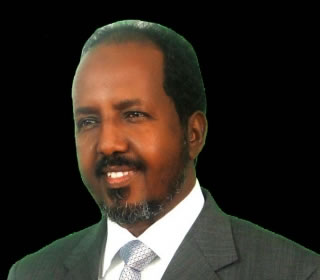
President elect Hassan Sheikh Mohamud
On Monday, Somalia lived up to its track record for never re-electing an incumbent leader. President Sharif Sheikh Ahmed lost to a political newcomer, Hassan Sheikh Mohamud, in a landslide victory that represented a stinging condemnation of the status quo, and an unequivocal vote for change.
The 275-member parliament, which also voted out a widely reviled former speaker and replaced him with a respected legal expert, appeared to be listening to the aspirations of the Somali people for the first time when they picked Mohamud over Ahmed. But the former President was gracious in defeat, delivering a unifying exit speech at a time when the overwhelming majority of the Somali people wanted him to strongly support his successor and cement the optics of nascent democracy.
I’ve known President Hassan Sheikh Mohamud for sometime. He’s a man of integrity and humility and a social entrepreneur who founded one of Somalia’s most successful higher education institutions: Simad University in Mogadishu. Mohamud is also accessible and intrepid – a civil society leader who endured Somalia’s 21-year-long period of war in the capital. Needless to say, he’ll now be evaluated more on his deeds than his personality.
Key tasks
On his first day at work, President Mohamud faces a labyrinth of problems. From terrorism to piracy and rival militias, Somalia has no shortage of tragedies. But during his first 100 days in office, the President needs to focus on achieving – or at least beginning – four fundamental tasks:
Declare war on corruption: The looting of public funds by officials was the most crippling culture which decayed the last government. A new UN report found that the highest officials were swindling eight out of every ten dollars. President Mahmoud must establish and empower – legally, politically and financially – an anti-corruption commission. The commission needs to identify and uproot the deeply entrenched corruption syndicate across government sectors. In the short term, the President should also accept the Joint Financial Management Boardenvisaged by the international community. The JFMB is designed to ensure transparency and accountability of public funds, but this tool cannot be a long term solution.
Rebuild competent state institutions: After eight years, two Presidents, five Prime Ministers and hundreds of millions of dollars donated by the international community, the only institution that the now expired Transitional Federal Government (TFG) can show its worth for is the National Security Agency (NSA), the intelligence arm of the security services, which is heavily bankrolled by the US, France and other powers. Virtually all other institutions are nothing more than a few lanky men with laptops, folders and Gmail accounts preying upon the innocent public and unsuspecting donors. President Mohamud needs to identify the most vital institutions that should be rebuilt – chiefly the police, the military and coast guard. The quantity of members of the current police and military is not the issue, it’s the required quality that is categorically nonexistent.
Reconciliation: There are 2 entities that must be engaged immediately. First, President Mohamud must continue the positive talks between the TFG and the self-declared Republic of Somaliland. The engagement with Somaliland needs to be based on mutual respect, recognition of the human rights atrocities committed by Mohamed Siyad Barre’s dictatorship against Somaliland and exploration of a common path between the two brothers. Second, President Mohamud should form a new, credible National Reconciliation Commission whose main task is to reach out to the nationalist elements within al-Shabaab. Some of these figures have had a personal beef with the former president Sharif Sheikh Ahmed, whom they consider to have betrayed them. There’s a good chance that pragmatic figures will now abandon al-Shabaab and rejoin the national dispensation, all the while isolating the global jihadist wing.
Constitutional and governmental overhaul: the now defunct TFG had imposed a new ‘Draft Constitution’ on the Somali people with almost no public consultations. The document institutionalizes sectarianism, sets the country on the road to renewed, clan-based civil unrest and effectively puts the duly elected President on a collision course with his appointed future Prime Minister. The document grants oversized powers to an unelected Prime Minister over the elected president – a perennial source of infighting in the government. The ‘Constitution’ also creates a convoluted and unworkable federal structure for one of the most homogeneous and smallest countries (population wise) in Africa.
Despite resistance from some corners, President Mohamud must be bold in re-drafting the constitution and reducing the job of the prime minister to a subordinate figure responsible for coordinating cabinet business. But the president must also recognize and appreciate the aspirations of the Somali people who yearn for local control over their government and the delivery of rudimentary services at the local and regional level. He must stand firm so that he can achieve these aspirations without creating a practically inapplicable federal structure. The UK system of governance provides an excellent model, where decentralized authority ensures fair political representation both at local and national levels.
The role of external actors
For years, members of the international community have been micromanaging the politics of Somalia from afar, often in pursuit of wrongheaded policies. The exception to this is the African Union peacekeeping force (AMISOM), which has shown a remarkable degree of neutrality.
In order for this government to succeed, external actors must take two steps:
First, they should immediately cease their appetite for meddling and imposing their will on Somali governments. President Mohamud has an unrivaled legitimacy from the Somali people. The Nairobi-based politicians should give him space to chart his own path – and make mistakes along the way.
Second, the international community ought to change the culture of supporting individuals over institutions. Much of the failure of Somalia’s institutions stems from foreign powers giving an outsized influence to unelected politicians and armed groups. The most jarring example was handing over the whole Roadmap Process that has brought us to this point, to six, widely unpopular and unrepresentative politicians. A phalanx of foreign-backed armed groups – Ahlu-Sunna Wal-Jama and Raskamboni, among others – continues to challenge the authority of security forces.
Finally, President Mohamud needs to begin the difficult task of taming extremely high expectations. The monumental challenges currently facing the country are simply too prohibitive for one leader to tackle. He must, however, demonstrate the will to usher in change.

Abdi Aynte is a Somali-American journalist and researcher. He can be reached atabdi.aynte@gmail.com

Tuesday, 11 September 2012

Yaa Yiri Hawiye Waa La Neceb-Yahay?(Kaftanka-Shacabkamedia)


PDFPrintE-mail
Written by Administrator   
Tuesday, 11 September 2012 14:53

Doorashaddii shalay ayaa waxaa dhacday arin ka yaabisay Soomaalidda,cuqdadana ka saartay Beesha-Hawiye oo iyagu awal ku calaacali-jiray (Qabiiladda-Soomaalidda wayna neceb-yihiin),laakiin arintii shalay  dhacday ayaa lagu ogaaday,in Soomaalidda ay yihiin dad aan Qabiil hadda kadib lagu shaabadeyn-karin,maadaama 3-nin oo Beesha-Abgaal u-dhashay,ay kala galeen,kaalinta (1,2 iyo 4)markii dambana 2-dii ugu sareysay tirada Codadka oo isla Beesha-Abgaal ay Final isugu soo baxeen,kadib markii uu iscasilay Musharax Gaas oo Beesha-Daarood ka tirsanaa.

Hadabba waxaa shalay soo afjarantay in Soomaalidda ay qiimeeyaan Qabiilka,maadaama 3- nin oo hal Beel ka wada tirsan ay heleen codad aysan ku xisaabtameyn,ilaa Xildhibaanad ka tirsan Xildhibaanadda ay shalay ku kaftan-tay (Hoolka Baarlamaanka ciyaarta halaga-daayo)taasoo loo fasirtay inay ka waday 3-da nin ee Abgaal ee nasiibkooda u-hiiliyay.

Waxaan shaki ku-jirin in arintii shalay-dhacday ay cuqdada ka saartay Beesha-Hawiye oo iyagu aaminsanaa muddo in Qabiiladda kale ee Soomaalidda aysan jeceleyn siyaasiintooda ku caan-baxay siyaasad ma-dhaleys ah,inkastoo hadda la doortay shaqsi nadiif ah oo siyaasadda ku cusub,waxaana shalay Xildhibaanadda Baarlamaanka ee ka kooban Qabiiladda Soomaalidda ay soo af-jareen,halkudhegii Beesha Hawiye caadada ka-dhigatay ee ahaa (Qabiiladda Soomaalida wey na neceb-yihiin)balse taa bedelkeeda shalay waxaa laga saaray cuqdadii,waxaana loo xaqiijiyay Soomalidda inaysan cuqdad u qabin Beesha Hawiye.

Qalinkii:Kaftanka-Shacabkamedia

Shacabkamedia:Beyra:Puntland

Shacabkamedia:Runta-Kama-Xishoono

Email:Shacabkamedia@live.com

Gaas Hadii Uusan Is-Casilli Laheyn Shalay Xildhibaanada Washasmsi Iguma Qaadeen:Sheekh Shariif


PDFPrintE-mail
Written by Administrator   
Tuesday, 11 September 2012 12:20

Madaxweynihii hore ee Soomaaliya Sheekh-Shariif oo maanta taageerayaashiisa Ololaha doorashadda qado-sharaf u-sameeyay,ayaa sheegay shalay hadii uusan is-casili-laheyn Musharax C/weli Gaas uu maanta ahaan-lahaa Madaxweynaha Jamhuuriyadda Federaalka Soomaaliyeed.

"Gaas markii uu ogaaday inuu galay kaalintii 3-aad,ayuu heshiis-hoose la galay Wadaadka Xasan Sheekh Maxamuud oo aan weligiis ku-riyoon inuu Madaxweyme ahaado,balse shalay xildhibaanadda ayaa aniga igu xukmeynaya,ayey Washamsi igu qaadeen"ayaa laga soo xigtay Sheekh-Shariif.

Shalay ayaa Soomaalidda is-bedeldoonka ah ku farxay in weji-cusub oo siyaasadeed la galo,kadib markii 2-dii nin ee loo saadalinayey Musharax Gaas iyo Musharax Shariif ay taako isku-dhigeen tareenka-siyaasadana iyaga iska-tuuray,iyadoo horey uu tareenka-siyaasadda uga dhacay Gudoomiyihii hore ee Baarlamaanka Shariif-Sakiin.

Shacabkamedia:Beyra:Puntland

Shacabkamedia:Runta-Kama-Xishoono

Email:Shacabkamedia@live.com

Afhayeenka Al-Shabaab: Doorashada Ma Aqoonsanin, Waana Wadeynaa Dagaalka Illaa Dhulka Laga Xoreeyo


Muqdisho (RBC) Afhayeenka ururka Al-Shabaab Sheekh Cali Maxamuud Raage ayaa maanta markii ugu horeysay ka hadlay doorashada madaxweynaha cusub ee Soomaaliya Xasan Sheekh Maxamuud oo uu ku tilmaamay mid aan ka tarjumeyn rabitaanka dadka Soomaaliyeed.
Cali Dheere ayaa sheegay in doorasho aan la dhihi karin bedelaada Shariif Sheekh Axmed balse ay tahay oo kaliya in la isku bedelay dadka u shaqeeya wadamada shisheeyaha.
“Xarakatu Shabaab ma aqoonsana doorasho ku sheeg iyo inay tahay danta dadka Soomaaliyeed, waxay wakiilo u yihiin wadamada reer galbeedka iypo wakiiladooda ku sugan gobolka” ayuu yiri afhayeenka Al-Shabaab.
War saxaafadeed qoraal ah oo uu ku saxiixnaa afhayeenka Al-Shabaab ayaa lagu sheegay in doorasho xor ah oo caddaalad ah aysan ka dhici karin wadan la heysto, sida uu hadalka u dhigay.
“Bedelaada Shariif Axmed waxay ka dhigan tahay jahwareerin lagu sameynayo dadka Soomaaliyeed ee lagu soo duulay” ayuu sii raaciyey Cali Dheere hadalkiisa.
Dhanka kale afhayeenka Al-Shabaab ayaa ku goodiyey in dagaalka ay sii wadi doonaan illaa inta ay ka xoreynayaan dhulka Soomaalida oo uu sheegay in kheyraadkiisa la boobayo dhaqaalahiisana la burburinayo.
Hadalka afhayeenka Al-Shabaab Sheekh Cali Dheere oo laga baahiyey idaacadaha ay leeyihiinAl-Shabaab sidoo kalena lagu faafiyey bogaga internet-ka ee ay adeegsadaan ururka Al-Shabaab ayaa noqonaya kii ugu horeeyay ee ka soo yeera kooxda ee ku aadan doorashada madaxweynaha cusub ee dalka Xasan Sheekh Maxamuud oo hadda in ka yar 24 saac xilka madaxweynanimo haya.

RBC Radio

Amin Arts

Puntland Welcomes Election of New President of the Federal Republic of Somalia


Puntland State of Somalia
Garowe

PRESS RELEASE
11 September 2012
Puntland State of Somalia welcomes the new and historic change that took place
in Mogadishu yesterday and congratulates President-elect His Excellency
Hassan Sheikh Mohamud on his overwhelming victory as President of the first
Federal Republic of Somalia.
Puntland shares its congratulations with the Somali people, the new
MPs of the Lower House of the Somali Federal Parliament, the
Technical Selection Committee, UNPOS and the SRSG and the international
partners who have aided Somalia's political recovery for years.
The presidential election in Mogadishu was peaceful, orderly, and transparent
and we call on all parties to seize on this moment of renewed hope and optimism
in order for Somalia to move towards reconciliation, stability, and reconstruction.
Puntland hopes that the incoming President and the Federal Government
of Somalia will build on past achievements towards national governance,
mobilize resources, and benefit from the lessons learned.
Moreover, it is our hope that the incoming President and Government
will fulfill national obligations and complete remaining tasks, in
accordance with the Provisional Federal Constitution of Somalia,
including a commitment to federalism and the establishment of the Upper House
of the Federal Parliament based on state representation.

UN chief welcomes new Somali President


SRSG Augustine Mahiga shakes hands with Somali President-elect Hassan Sheikh Mohamud during a courtesy visit. Photo: UNPOS


Tuesday, September 11, 2012
United Nations Secretary-General Ban Ki-moon today welcomed the selection of a new president for Somalia, the final step in the war-torn East African nation’s political transition process.
Hassan Sheikh Mohamud was selected as President of the Federal Republic of Somalia on Monday, following a vote which involved two rounds of balloting in the country’s so-called New Federal Parliament in the capital, Mogadishu.
“The selection of the new President brings an end to the eight-year political transition. The Secretary-General congratulates the New Federal Parliament and its Speaker for the peaceful and orderly conduct of the process,” Mr. Ban’s spokesperson said in a statement
“He also pays tribute to all the signatories of the Roadmap for Ending the Transition for the important role they have played to bring the process to a successful conclusion,” the spokesperson added, while also noting that the UN chief congratulates Mr. Sheikh Mohamud on his selection.
After decades of warfare, Somalia has been undergoing a peace and national reconciliation process, with the country's transitional governing arrangements coming to an end with the selection of a president – a key and final part of the so-called Roadmap for Ending the Transition, which Somali authorities had been implementing.
Monday’s selection marks the culmination of a series of landmark steps contained in the Roadmap. These include the adoption of Somalia’s provisional constitution, the establishment of the New Federal Parliament and the appointment of that body’s Speaker.
“The Secretary-General encourages the new President to move expeditiously, to appoint an inclusive, accountable Government that can begin the work of peacebuilding in the country,” Mr. Ban’s spokespersonsaid. “He urges Somali and international actors alike to pledge their continued support.”
He added that the UN chief looks forward to the upcoming high-level meeting on Somalia in the margins of the General Assembly later this month, which will be “an opportunity for Somalia’s new leadership to consolidate the partnership with the international community.”
The Secretary-General also thanked his Special Representative for Somalia, Augustine P. Mahiga, and the staff of the UN Political Office for Somalia (UNPOS), as well as the African Union Mission in Somalia (AMISOM) and other stakeholders for their “tireless and dedicated work” in support of the peace process in Somalia.
Earlier Tuesday, Mr. Mahiga and his deputy paid a courtesy visit on President Sheikh Mohamud in Mogadishu, congratulating him and pledging to support the new Somali Government.
According to an UNPOS news release, they also “paid tribute to the integrity and quality of the process, which was both representative and transparent,” and President Sheikh Mohamud indicated that he was looking forward to work with the United Nations.
In a statement on Monday night, Mr. Mahiga said while much remains to be done in the war-torn country, Somalis can be proud of the transition process that culminated in the selection of a new president.
“The transition is over – Somalia must now focus on stabilization, reconciliation and building sustainable and accountable institutions of governance capable of providing services to its people,” the Special Representative said.
He added, “We salute all candidates regardless of the outcome. I call on the winners to be magnanimous in victory, the losers to be gracious in defeat and for all to lead Somalia forward to a brighter day. All Somalis must now reconcile for the good of the nation at this remarkable moment in the country's history.”
Until last year, most of Mogadishu, was, for several years, riven by a fluid frontline dividing the two sides – Al Shabaab fighters and Government troops, with the latter supported by the UN-backed AMISOM forces. Displaced by fighting and drought elsewhere in the country, some 184,000 people have sought humanitarian relief in the city.
Since the Al Shabaab withdrawal from the capital's central parts in August last year, the frontlines have been pushed back to the city's surrounding area. However, the use of roadside bombs, grenades and suicide bombers still take place, as do armed clashes.
Since late May, AMISOM, Government troops and their allies pushed into the Afgooye corridor, outside of Mogadishu, and also gained control of the town of Balad, located within an important agricultural area near the capital.
Source: UN News Centre

Yemen minister survives assassination attempt


People stand near a burnt car after a car bomb exploded in central Sanaa, YemenSeveral cars were completely destroyed by the force of the blast
Yemen's defence minister has survived an assassination attempt which killed at least 11 people, including seven of his bodyguards, security officials say.
The attack targeting Maj Gen Muhammad Nasir Ahmad took place near government offices in central Sanaa.
The explosion was caused when a car bomb detonated when the minister's motorcade passed.
It comes a day after the second-in-command of Yemen's branch of al-Qaeda was reportedly killed.
"A booby-trapped car waited for the motorcade of the minister near the government offices and, as soon as it moved, it exploded," an unnamed security source told Reuters.
"A security car was totally destroyed and all its occupants were killed, but the minister survived because his car is armoured."
Officials say this is the fourth assassination attempt against the defence minister since a new government was formed last December.
No-one has yet claimed responsibility for the blast, though al-Qaeda in the Arabian Peninsula (AQAP) has carried out a number of attacks in the past.
The group was formed in January 2009 by a merger between two regional offshoots of al-Qaeda in Yemen and Saudi Arabia.
It blames the defence minister for launching the campaign that drove them from their strongholds in the south of the country.
Its second-in-command, Said al-Shihri, a Saudi national released by the US from detention in Guantanamo Bay in 2007, was on Monday reported to have been killed during an operation in the south.

Somali election of Hassan Sheikh a 'great step'


A Somali man wearing T-shirts with a picture of Somalia"s new president Hassan Sheikh Mohamud march through the streets to show his support, in Mogadishu, Somalia, Tuesday, Sept. 11, 2012.Somalis are celebrating - but there is a lot of work to do
International leaders, including British Prime Minister David Cameron, have hailed the election of Hassan Sheikh Mohamud as a "great step forward" for Somalia.
Mr Cameron congratulated Mr Mohamud on his victory and welcomed the role played by his predecessor, Sheikh Sharif Sheikh Ahmed.
However, Islamist militants said the election was organised by the "enemies of Somalia".
Somalia has suffered 20 years of war.
Accepting his defeat, former President Ahmed said it was the first fair election in Mogadishu for 42 years - since Mohamed Siad Barre took over in 1969.
'Nefarious geopolitical agenda'
President Mohamud, a moderate Islamist academic, was sworn in immediately after it was announced that he had beaten Mr Ahmed by 190 to 79 votes in a ballot of newly elected MPs.

Who is Hassan Sheikh Mohamud?

President Hassan Sheikh Mohamud
  • Born in central Hiran region in 1955
  • From the major Hawiye clan
  • Married, speaks Somali and English
  • Linked to al-Islah, Somalia's branch of the Muslim Brotherhood
  • Studied engineering at the Somali National University and became a lecturer in 1981
  • Five years later went to India to study, obtaining an MBA from Bhopal University
  • Stayed in Somalia during the civil war, working as a consultant with non-governmental groups, UN bodies and on several peace initiatives
  • Helped set up the Simad University in 1999, and was its dean for 10 years
  • Founded his Peace and Development Party (PDP) in 2011
  • Elected an MP in August 2012
"I promise that Somalia reclaims its place in the world community as of today - and to do that, we must ensure that we move forward," he said in his victory speech.
Both the British prime minister and UN envoy to Somalia Augustine Mahiga warned there was still much to do.
"Somalia's leaders must now work together to build a more representative and transparent system, tackle corruption and strengthen security and stability," said Mr Cameron, who hosted a major conference on trying to bring peace to Somalia in February.
Mr Mahiga said the Somali people had "taken a great step forward on the path to peace and prosperity".
EU foreign policy chief Catherine Ashton has called up Somalia's new leader to congratulate him, according to the AFP news agency.
However, the al-Qaeda-linked group al-Shabab still controls many southern and central parts of the country, and has staged frequent suicide attacks in the capital since it was driven out of Mogadishu last year by African Union troops and pro-government forces.
"We will only recognise a process run by Somalis and not manipulated by Ethiopia, Burundi, Kenya, Uganda, Djibouti and the West," al-Shabab spokesman Sheikh Ali Mohamud Rage told the AFP news agency.
"Hassan is operating under a constitution drafted by the enemies of Somalia, who have a nefarious geopolitical agenda, especially neighbouring countries."
map
Hassan Sheikh Mohamud, 56, is a civic activist who founded a university in Mogadishu and has worked for several national and international peace and development organisations.
He has links to al-Islah, Somalia's branch of the Muslim Brotherhood, which is strongly opposed to al-Shabab.
He stayed in Mogadishu throughout the years of conflict, unlike many intellectuals, and he has previously held a post in government.
Like former President Ahmed, he is from the Hawiye clan - one of Somalia's biggest.
BBC Somali analyst Mary Harper says President Mohamud could represent a different kind of future for the country because he is not associated with the violence and corruption of the past.
Nevertheless he faces massive challenges on multiple fronts, she adds. Firstly, he will have to deal with the powerful politicians who lost the elections; then he has to try to reunite a country torn apart by two decades of civil conflict, much of which is controlled by al-Shabab.
Since the overthrow of President Siad Barre in 1991, Somalia has seen clan-based warlords, Islamist militants and its neighbours all battling for control.

Bin Laden raid doctor Shakil Afridi speaks out


Shakil Afridi. File photoShakil Afridi described a regime of "perpetual torture" by the ISI
The Pakistani doctor involved in the US search for Osama Bin Laden has been quoted as saying he was unaware of his role in the al-Qaeda chief's death.
Shakil Afridi reportedly told Fox News from jail in Peshawar that after the 2011 killing he had been kidnapped and tortured by Pakistani intelligence.
He also reportedly said the ISI agency regarded the US as its worst enemy.
But Dr Afridi's lawyer told the BBC he was not confident about the authenticity of the interview.
Samiullah Afridi said his client was kept under "very strict security", and was even prevented from seeing his family and lawyers for months at a time.
"How a journalist can set up an interview with him in jail is beyond my comprehension," the lawyer said.
Prison officials contacted by the BBC were taken by surprise by reports of the interview, but did not rule out that a phone could have been smuggled into his cell.

Analysis

The Fox News interview raises many questions. Dr Afridi's lawyer wonders how a journalist could set up a phone interview with him in a maximum security prison cell. A jail official speculates that if anyone could smuggle a phone to him, it could only be one of the close relatives that visited him in jail twice in August.
But many ask why the relatives - a brother, two sisters and a cousin - would undermine their own rather hard-won right to meet him periodically after an initial ban?
The question is did Dr Afridi actually say the things he's reported to have said in the interview? If so, why, given that this could translate into further problems for him and his family?
One explanation is that Dr Afridi believes he's in a desperate situation, and that keeping the story alive may be his best defence.
The doctor is alleged to have used a fake hepatitis B vaccination campaign to try to obtain DNA samples of Osama Bin Laden's family.
He was sentenced to 33 years in jail in May for funding and supporting a militant group, but correspondents say it is generally acknowledged he is being punished for helping the US Central Intelligence Agency (CIA).
The interview was published on the eve of the 11th anniversary of the 9/11 attacks on the US, and came as current al-Qaeda leader Ayman al-Zawahiri confirmed the death of another senior figure in the network, Abu Yahya al-Libi, in a US drone strike in Pakistan's tribal areas earlier this year.
Meanwhile, Zawahiri's brother Mohamed hastold CNN he is prepared to negotiate peace between the West and Islamists.
Zawahiri, who spent 14 years in jail in Egypt, is said to have the respect of the new Egyptian government but claims to be ideologically close to his brother.
'Like a dog'
Speaking from Peshawar Central Jail, Dr Afridi said he had not realised that the CIA was targeting Bin Laden.
"I didn't know about a specific target apart from the work I was given to do," he told Fox.
"I was aware that some terrorists were residing in that compound, but I didn't know whom. I was shocked. I didn't believe I was associated with his killing."

“Start Quote

They said: 'The Americans are our worst enemies, worse than the Indians'”
Shakil Afridi
He said that the CIA had advised him to flee to Afghanistan.
However, he was scared to cross the volatile border region and did not think it was necessary to escape because he did not consider himself to be involved in Bin Laden's death, he said.
Dr Afridi was arrested at a checkpoint at Hayatabad on 22 May last year, 20 days after Bin Laden's death.
After this he says he was blindfolded for eight months and handcuffed for a year in a prison beneath the ISI headquarters in Islamabad.
"I had to bend down on my knees to eat with only my mouth, like a dog," he said.
During interrogations he was tortured with cigarette burns and electric shocks, he said, as the ISI rebuked him for helping the US find Bin Laden.
"They said: 'The Americans are our worst enemies, worse than the Indians,'" he added.
Dr Afridi also said fellow inmates had told him that they had been advised to make things up to prevent interrogation by visiting CIA officers.
The compound where Osama Bin Laden was hiding, on the outskirts of Abbottabad, a hill town 35 miles north of IslamabadBin Laden's killing in Abbottabad triggered a rift between the US and Pakistan
However, independent analyst Shaukat Kadir told the BBC that while it was possible to find people in the security services with such views, they were in a minority.
"That doesn't mean the bulk of the people feel the same way," he said.
'Respect and love'
Dr Afridi said that he himself was "proud" to work with the CIA and would help the US again, despite the torture and psychological abuse he said he had suffered.
"I have a lot of respect and love for your people," he said.
There has been no official response to Dr Afridi's allegations, but the Pakistani authorities have always insisted that they treated him the way any country would someone found working for a foreign spy agency.
In his comments to the BBC, Dr Afridi's lawyer said that if the comments were genuine they would "certainly add to [Dr Afridi's] difficulties in coming days".
But he said neither he nor Dr Afridi's family could confirm the interview had taken place or offer any comment on it.
Bin Laden's killing created a crisis in relations between the US and Pakistan, whose government was seriously embarrassed as it emerged that the al-Qaeda leader had been living in Pakistan.
Islamabad felt the covert US operation was a violation of its sovereignty.
Both US Defence Secretary Leon Panetta and Secretary of State Hillary Clinton have said Dr Afridi's arrest was a mistake, and called for his release.

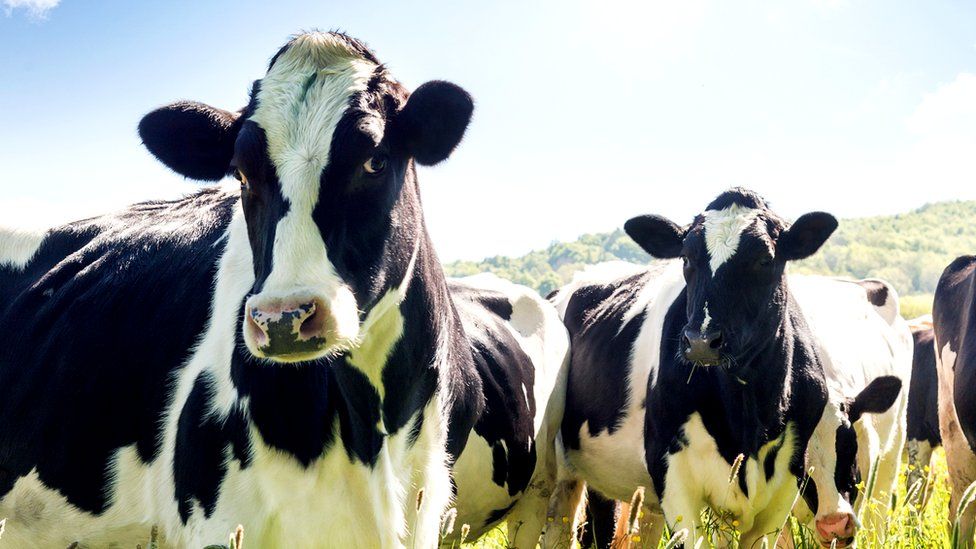
Why cows may be hiding something but AI can spot it

  By Chris Baraniuk Technology of Business reporter Published 22 hours ago Share IMAGE SOURCE, GETTY IMAGES Image caption, Herd animals like...