Friday, 12 October 2012

Somali terror trial: Who paid for travelers’ return? FBI agent unsure


October 4, 2012 | Posted by admin
The FBI agent who scoured the world tracking down travel records of 18 men who left the Twin Cities to fight for al-Shabaab said she didn’t necessarily look into who paid for the tickets.
That was the job of other FBI agents, Special Agent Karie Gibson told the jury in the trial of Mahamud Said Omar.
Gibson’s testimony prompted incredulity from defense attorney Paul Dworak on cross-examination. He noted that some of the airline tickets — some costing close to $2,000 — had been paid for with credit cards.
The tickets were for men whom Omar allegedly accompanied to a travel agency to buy tickets to Somalia. Dworak pointed out one such travel record showing some tickets had been paid for with an American Express credit card.
“Did you investigate that card?” Dworak asked.
“I don’t have any information on that credit card,” Gibson replied. She said she didn’t know if the FBI tracked down the owners, but if the agency did so, it would’ve been the responsibility of other agents.
Omar, 46, of Minneapolis, is accused of conspiracy and aiding al-Shabaab, a militant Islamic group seeking to overthrow the Somali government. The U.S. State Department designated it as a Foreign Terrorist Organization in February 2008, making it illegal to aid the group.
Gibson, who has a Ph.D. in psychology and has been an FBI agent for six years, was called to testify by federal prosecutors because she compiled the voluminous file of records documenting the travel of 18
men to Somalia.
Under questioning by Assistant U.S. Attorney LeeAnn Bell, Gibson detailed dossiers she compiled on each of the 18, including their drivers’ license records, passport applications and detailed travel information culled from government, airline and travel agency records.
As she testified, each record she mentioned was flashed on TV monitors in front of the 10 women and five men who make up the jury and alternates. There were pages and pages of records.
Prosecutors have not said how much Omar is alleged to have contributed to the “travelers,” as the FBI calls the men who left. In court documents the government says he provided “several hundred dollars” as traveling money to some of the men, and drove a couple of them to the airport.
He also traveled to Somalia himself and returned. While there, the government claims he bought AK-47 assault rifles for two of the men and contributed money for upkeep of an al-Shabaab safe-house.
His lawyers contend the $800-a-month part-time janitor lacked the financial and mental capacity needed to run what one prosecutor called “a pipeline” of men and money for al-Shabaab.
Omar’s brothers have said he didn’t even have a bank account.
Dworak noted in his cross-examination of Gibson that five of the ticket purchases were made with American Express or Visa cards. For each one, he asked the FBI agent if she knew whose cards they were.
Each time, she said she had no information on the card.
He also asked her if she’d investigated who wrote the check used to buy airline tickets for four men that showed up in a travel agency record.
“I don’t have any information specifically on this,” the agent replied.
On Thursday afternoon, the government is expected to call two of the men that Omar is alleged to have helped with their travels to Somalia. They have been convicted in federal court and are awaiting sentencing; testifying against other defendants was part of the plea deals they made with prosecutors.
In all, 18 men with Twin Cities ties have been charged in the investigation the FBI dubbed “Operation Rhino.” Omar, who aspired to be a trucker and had graduated from a truck-driving school in California, is the only one to go to trial.
Of the others, seven have pleaded guilty, eight are fugitives and two are believed to be dead.
David Hanners can be reached at 612-338-6516.

Maanta oo ah 12kii Oktoober 2012 kuna beegan sannad guuraddii 58aad ee helida astaanta calanka qaranimadda soomaaliyeed


Filed under: News | 
Maantoo kale 12-kii October sanadkii 1954-tii ayeey aheyd markii ugu horreeysay ee la la saaray Calanka Jamhuuriyadda Soomaaliya, hasa yeeshee Calanka Buluugga ah ee eg samada xiddigta Shanta geesoodka ahna ku leh bartamaha waa Calanka kaliya ee loo aqoonsanyahay Jamhuuriyadda Federalka Somalia.
Dalkeenna waxaa soo maray Sadex Calan kuwaas oo kala ahaa Calanka gumeystihii Talyaaniga iyo kan Ingiriiska oo jiray 1941-dii ilaa 1950-kii waxaana 1954-tii Qaramada midoobay dalkeenna ku wareejisay Talyaaniga si uu xornimo u gaarsiiyo iyadoo qaramada midoobay magacawday Sadex waddan oo dusha ka kontoroolayay sida uu Talyaanigu u maamulayay dalkeenna, kuwaas oo kala ahaa waddamada Masar, Colompia iyo Philibin, waxaana markaasi dalka ka jiray calanka Talyaaniga oo uu wehliyo kan Qaramada Midoobay,  qorshahaasi xornimo gaarsiinta ahna waxaa ka shaqeeyay xisbigii Leegada.
Haddaba isla sanadkaasi 1954 waxaa loo baahday in la helo Calan uu yeesho dalkeenna mar haddi la helay nidaamki xornimo gaarsiinta, waxaa la soo bandhigay naqshado farabadan hase yeeshee isla sanadkaasi 12 Obtober 1954-tii maantoo kale Allaha u naxariistee  Maxad Cawaale Liibaan oo ka tirsanaa golaha dhexe ee xisbiga Leegada ayaa jeebkiisa ka soo bixyay Calanka hadda jira ee buluugga ah.
Calankan Buluugga ah ee xiddigta ku leh bartamaha ayaa ah kan caalamka oo dhan noo aqoonsanyahay,  waana mid sharaf iyo maamuus ku leh qof kasta oo muwaadin Soomaali ah, waxaana loo soo maray halgan adag oo dhiig farabadan ku daatay, qiimaha, ixtiraamka, karaamada iyo jaceylka ay u qabaan ummadda Soomaaliyeed Calankeenna suubban darteed markii la garaaco Musigga astaanta u ah Calanka dadkoo dhan wey sara kacaan iyagoo taagnaada ilaa uu dhamaado muusigga astaantaCalanka.
Ma aha wax la soo koobi karo halganka adag ee waddaniyiinta Soomaaliyeed usoo galeen Calankeenna,  waxaana xusud mudan in halgankii ugu dambeeyay ee lagu difaacayo Calanka uu yahay kan imminka socda ee dalka lagaga saarayo kooxda Shabaab iyo Alqaacidda kuwaas oo iyagu diiday jiritaanka calankeenna iyo Soomaalinimadeennaba waxeyna dharaar cad meelo fagaare ah ku gubeen Calankeenna aynu Jecelnahay.
Hase yeeshee waxaa arrintaasi ka dhiidhiyay dhammaan ummadda Soomaaliyeed meel kasta oo ay joogaan dal iyo dibad, iyadoo malleeshiyaadkii shabaab ee doonayay in ay calan madow ku bedelaan calnkeenna sharafta leh laga saaray Muqdisho iyo inta badan gobollada dalka, iyadoo haatan uu Calankeennu ka dulbabanayo Muqdisho iyo dhammaan gobollada dalkeenna marka laga reebo meelaha kooban oo ay wali dalka ugu harsanyihiin Shabaab iyo Alqaacidda.
Ma aha wax qoraal oo kaliya lagu soo koobi karo jacelylka iyo karaamada uu Calankeennu ku leeyahay quluubta waddaniyiinta Soomaaliyeed meel kastoo ay ku noolyihiin.
W.Q. Mowliid Maxamed Sabriye

Ciidamada amaanka maamulka soomaliland oo xabsiga dhigay dad ka qeeyb qaatay dibad bax lagu taageerayay Magacaabista Ra’iisul wasaaraha cusub Ee soomalia


Filed under: News | 
Wararka ka immaanya Magaalda Laascaanood Ee xaruunta Gobaka Sool ayaa sheegaya in dad farabadan ciidamada ammanka magaaldaasi ay xabsiga dhigeen 15 qof oo kamkid ah tobanaan ruux oo ka qeeyb qadanayay Dibad bax lagu tageerayay magacaabista Ra’iisul wasaarha cusb ee jamhuuriyadda federalka ah ee somalia.
Dadkan xabsiga la dhigay ayaa waxa ka mid ah haweeyn qeeyb ka ahaa dibad baxa lagu taageerayay Ra’iisul wasaare C/faarax Shirdoon Saacid oo dhowaan loo magacaabay Xil Ra’iisul wasaarenimo Ee soomalia.
wararku waxa ay intaa ku darayaan in sidoo kale cabsi ay soo wajahday qaar ka mid ah suxufiyiinta ku sugan gobalka Sool Gaar ahaan wariyayaashii soo tabinayay Dibad baxa lagu taageerayay Ra’iisul wasaare Saacid.
sikastaba xaalku ha ahaadee maamulka soomaliland ayaa dadaal ugu jiray in kabadan 20 sanno in uu ka goosto dalka soomlia oo u noqdo dowladda ka madaxbannan Soomalia inteeda kale hayeeshee Riyadaasi ayaan u rumoobin illaa imminka

Syria: Rebels 'seize air defence base' near Aleppo


Syrian rebel fighter near Aleppo (11oct)Rebels and government have been fighting for Aleppo since July
Syrian rebels have taken an air defence base from government forces near the northern city of Aleppo, activists say.
The al-Taaneh base lies east of Aleppo, where fighting between the two sides has raged for months.
In Aleppo itself, state media said soldiers destroyed 14 rebel pick-up trucks mounted with machine-guns.
Meanwhile in the row over Turkey's interception of a Syria-bound plane, Russia said the aircraft was legally carrying radar parts.
Turkey's prime minister earlier said Russian-made defence equipment had been found on board - a claim which Syria branded a lie, challenging Ankara to put the seized items on public display.
On the border tensions continued, with Turkey reportedly scrambling fighter jets after an air attack on a Syrian frontier town by government forces.
Relations deteriorated sharply last week after the deaths of five Turkish civilians in shelling from across the border.
'Rockets destroyed'
The base at Taaneh is said to be part of a large defensive network across the country.
Video posted online showed rebels inside the base, inspecting lines of large missiles, AP reported.
A spokesman for the Revolutionary Council in Aleppo, Abu Firas, told the Guardian website that soon after the rebels' operation to take the base "the regime began to shell the base with planes and destroyed most of the rockets and radars inside".
"The planes also shelled many districts inside Aleppo and the countryside," he said.
The reported taking of the air base and renewed border flare-up came a day after what the UK-based Syrian Observatory for Human Rights said was one of the most deadly days across Syria, with some 250 deaths.
Damage in Maarat al-NumanRebel fighters are said to have the town of Maarat al-Numan, on the to Aleppo from Hama
The Syrian national news agency Sana also reported fighting across the country with dozens of "mercenary terrorists" killed, Reuters news agency reported.
Meanwhile, the UN refugee agency said on Friday it was preparing to help hundreds of thousands of Syrian refugees this winter.
According to UN figures, 340,000 Syrians have already fled to neighbouring countries - a figure that is expected to double by the end of the year.
Officials say they will make $64m (£40m) available to provide fuel, food, shelter and warm clothing for refugees, who are mostly living in camps in Turkey, Jordan and Lebanon.
They say they hope to extend help to refugees who are still in Syria as well.

Botswana women allowed to inherit


Women pictured in Gaborone, Botswana, in 2004The ruling brings customary law in line with the constitution which guarantees equality for women

Related Stories

The Botswana High Court has overturned a customary law which prevented women from inheriting the family home.
The judge ruled that the law contravened the constitution, which guarantees equality for men and women.
Edith Mmusi and her sisters have fought a five-year legal battle after their nephew said he was the rightful owner of their house.
Correspondents say traditions which stop women from inheriting property exist in many African societies.
'Respect our culture'
Judge Key Dingake said that in the name of fairness and equality women should have the right to inherit property.
"It seems to me that the time has now arisen for the justices of this court to assume the role of the judicial midwife and assist in the birth of a new world struggling to be born," AFP news agency quotes him as saying.

“Start Quote

This is a significant step forward for women's rights not only in Botswana but in the southern Africa region”
Priti PatelSouthern Africa Litigation Centre
The BBC's Letloghile Lucas in the capital, Gaborone, says Ms Mmusi, the only one of the sisters at the High Court in Gaborone, was very excited by the ruling.
"It's a great day for us," she said.
However, her nephew Molefi Ramantele said the court had undermined the country's culture, reports the AFP news agency.
"This is a sad day for me... People should learn to respect our culture," he said.
Our correspondent says they first contested their nephew's claim in a customary court in 2007.
They lost the case and a subsequent appeal before turning to the civil courts.
The Attorney General had reportedly agreed that the customary law was discriminatory but argued Botswana was not ready to change it.
"This is a significant step forward for women's rights not only in Botswana but in the southern Africa region, where many countries are addressing similar discriminatory laws," Priti Patel of the Southern Africa Litigation Centre (SALC) said in a statement.
According to the legal rights group, the case challenged an Ngwaketse customary law rule that allows for the youngest-born son to inherit the family home.
Ms Mmusi's parents had four daughters and a son, who before he died agreed that his older half-brother could inherit the family home in the Kanye area, about 85km (50 miles) south of Gaborone.
It is the son of the half-brother who brought the case seeking to evict the sisters living at the homestead, who are reportedly all over the age of 65.
Ms Mmusi and her sisters argued that as it was their home - and they had been contributing to its upkeep and expansion - it was theirs to inherit, the SALC said.
BBC News website readers from Africa have been sharing their thoughts on this. Here is a selection:
Simba Mhare, Harare, Zimbabwe
This happens in Zimbabwe - for many women the death of their husbands means the beginning of abject poverty.
Mabior Ayuen Dengajok, Bor, Jonglei State, South Sudan
In my tribe, the Dinka and Bor Dinka in particular, any property left by parents who die gets inherited by the older son. If the parents had no son of their own but only daughters, the sons of the daughter's uncle (their father's brother) will inherit the property. And it wouldn't matter that the daughters and their mother are alive. Women don't own properties in Dinka Bor culture.
Juliet Temba, Lusaka, Zambia
I am so happy for the women of Botswana! In Zambia, under customary law, women cannot inherit land. In our rural areas, many women leave their husband's homes and go back to their parents' land after their husbands die, regardless of whether they had children. In some parts of Zambia, there is a tradition locally known as "kupyanika" where a male relative of the deceased man (brother, uncle or nephew) marries the widow and inherits all the land, property - and the woman. Many women are forced into this so that they can stay in their homes with their children!
L Anteneh, Addis Ababa, Ethiopia
I was stunned by this news. My country, which is also in Africa, doesn't follow this type of discriminatory tradition. If the parents are dead it is the right of all the children, men or women, to inherit equally. I appreciate the sentence given by this civilised judge.
Dainty Jugheads, Kampala, Uganda
It is disheartening that in some countries, traditional customary laws are not keeping pace with changing environment and times. Countries all over the world are fighting for women's rights - to vote, to make reproductive health decision etc - and yet when it comes to property inheritance, it is sluggish. With more and more women getting formal education, they will continue to fight for for their rights. However, one question I would to pose to the male gender - why deny women property? They are your mothers, wives, sisters and daughters!
Raphael, Enugu state, Nigeria
We have the same case in Enugu High Court since 2000 waiting for the judgement between two sisters and their stepbrother who is claiming their father's property as the only son.

Five of history's most important places


The 'Mountain of God' or Ol Doinyo Lengai -  is part of the Great Rift Valley in Eastern AfricaThe Mountain of God or Ol Doinyo Lengai - is part of the Great Rift Valley in Eastern Africa
Trying to pick the most significant places in history is not an easy task when there are so many contenders. But History of the World presenter Andrew Marr has narrowed it down to five.

Africa's Great Eastern Rift Valley

Running through Tanzania and Kenya, this is where the human story really begins, the earliest signs of Homo sapiens and our predecessor hominids, and it's therefore where we should go back to when thinking about that great original migration out of Africa, and across the rest of the world, which happened 70,000 years ago.
We are all ultimately from the same family. We are all Africans. (And for those who think the BBC's awash with money and sent me to do the History of the World so I could visit all the places I wanted to, I should point out that I have never been there.)

The Yellow River

Visitors gathering to giant gushes of water released from the Xiaolangdi dam to clear up the sediment-laden Yellow river and to prevent localized floodingGiant gushes of water are released from a dam to clear up the sediment-laden Yellow River and to prevent localized flooding
This turbulent, explosive river, "China's Sorrow" is where we find the beginning of Han Chinese civilization, as tribes and villagers are forced to knit themselves together in order to dig channels to stop the regular and disastrous flooding.

Find out more

Rivers turn out to be absolutely vital for human social development, and we could equally well choose the Euphrates, the Indus, the Nile, or even the Volga, as examples.
But we are living through a time in world history when China is rising again, and it's both useful and interesting to knit Chinese history back into the world narrative after a couple of centuries when Western condescension and ignorance (and Chinese indifference) has rather pushed it aside.
The parallels between the Han empire and the Roman one, co-existing for centuries, are remarkable, for instance - and it is still impossible to understand modern China without understanding Confucius.

Athens

General view of Athens with the Acropolis rising above the city
Today, poor Athens is the scene of violent social protest, fast-increasing poverty and rising political tension, which were all present before, and even during, her Golden Age in classical times when she produced the philosophers, the architects, the political thinkers and the poets who in turn shaped all Western civilization.
Take a short car or bus ride to the coast nearby and wander on the sandy, pine-wooded shoreline where the Battle of Marathon was fought in 490 BC, and where the Athenians' citizen army defeated the vastly numerically superior forces of Persian tyranny.

Ancient Greek democracy

  • The ancient Greeks famously invented democracy
  • The word Demokratia meant 'people-power'
  • There's a theory that the word was coined by democracy's enemies - members of the rich and aristocratic elite who did not like being outvoted by the common herd
Source: BBC History
It's still the most important battle in Western history. One of the very few markers left is a little mound, or hillock, nearby. It's in a smallish triangle of grassy land, not much bigger than a children's park and surrounded by roads. But inside that hillock lie the remains of the Athenians who fought and died at Marathon.
It choked me up when I first saw it because of its spectacular and moving lack of grandeur - no winged gods or angels, no marble, no pompous inscriptions, just a simple pile of earth.
These are again days of Greek agony and instead of constantly blaming them for not working hard enough like the Germans, we should help by continuing to go, to spend money there, and show our friendship.
I'm afraid I also think the time is right to send back the Parthenon frieze or Elgin Marbles from our wonderful British Museum. They need a real boost just now and we are in a unique position to help.

Berkeley, Gloucestershire

Who is the Briton the world should most revere? There is an obvious case for William Shakespeare, another very powerful one for Charles Darwin (my particular hero) and a different argument for Winston Churchill. But we need to put Edward Jenner, the Gloucestershire doctor who discovered vaccination, right up there as a prime candidate.
He was a true child of the Enlightenment and a product of the free-thinking, inquisitive culture of late 18th Century England. His experiments with cowpox would have been illegal today, and had him harried by the popular newspapers for child cruelty - for he deliberately infected a young labourer's son, James Phipps with cowpox and then with smallpox.
Nor did he try to repeat the experiment, or use normal controls, as any modern scientist would. He just published - a treatise which proved almost instantly popular, being read out at dinner parties and admired by foreigners as diverse as Thomas Jefferson, Napoleon and the Russian Czar.
Smallpox had been one of the great scourges of the human race, a disfigurer and a huge killer, particularly of children. Jenner's breakthrough meant it was eventually eradicated - and the United Nations declared it had gone in 1980.
We can plausibly claim that Jenner saved more human lives than any other person in history, and that on this basis he is surely a candidate for greatest Briton. And it all happened in the sleepy, green, rolling backwaters of Gloucestershire, still a great place for a stroll.

Los Alamos, New Mexico

OppenheimerRobert Oppenheimer is known as the "father of the atom bomb"
It was here, of course, that the United States' Manhattan Project split the atom and created the atomic bombs which would then be dropped on Hiroshima and Nagasaki.
The man who led the project, Robert Oppenheimer, was a liberal-leftish intellectual who was fascinated by Eastern religion, by art and by morality, and yet he ended up working hard to calculate the exact height at which to detonate his bombs so they would burn to death the maximum number of civilians, including children.
Nagasaki bombing
He spent much of the rest of his life pondering what he had done, having - apparently - reacted to the first successful test explosion by quoting to himself Vishnu, from the Hindu scriptures: "I am become Death, the destroyer of worlds."
Mutually assured destruction kept the Soviet Union and the US from engaging in full hostilities during the Cold War and to that extent the philosophy behind the ultimate weapon "worked".
But nothing stays still and it is still too early to regard what happened at Los Alamos as "just history". If you think this story's over, you know more about Iran, Pakistan, India and North Korea than the rest of us.

Nasa's Curiosity rover finds 'unusual rock'


Jake MatijevicThe Jake Matijevic rock marked up to show where on its surface it was examined

Related Stories

It was expected to be just another lump of dull basalt, but the first rock examined up close by Nasa's Mars rover proved to be a little more interesting.
The pyramidal object, nicknamed "Jake Matijevic" after a recently deceased mission engineer, had a composition not seen on the planet before.
Scientists have likened it to some unusual but well known rocks on Earth.
These form from relatively water-rich magmas that have cooled slowly at raised pressures, said Edward Stolper.
"[The rock is] widespread on Earth, on oceanic islands such as Hawaii, and St Helena, and the Azores; and also in rift zones like the Rio Grande and so forth. So, again, it's not common, but it's very well known," the mission co-investigator from the California Institute of Technology, Pasadena, told reporters.
The Curiosity rover examined Jake Matijevic three weeks ago. At the time, the dark rock was not anticipated to have high science value; it was merely an early opportunity to use the robot's survey instruments in unison.
Jake Matijevic also had an interesting, weathered appearance that drew attention.
The rover first zapped the rock from a distance with its ChemCam laser, and then moved in close to study it with its X-ray spectrometer known as APXS. The latter device is held on the end of the rover's robotic arm; the laser is mounted on its mast.

Curiosity - Mars Science Laboratory

Rover (Nasa)
  • Mission goal is to determine whether Mars has ever had the conditions to support life
  • Project costed at $2.5bn; will see initial surface operations lasting two Earth years
  • Onboard plutonium generators will deliver heat and electricity for at least 14 years
  • 75kg science payload more than 10 times as massive as those of earlier US Mars rovers
  • Equipped with tools to brush and drill into rocks, to scoop up, sort and sieve samples
  • Variety of analytical techniques to discern chemistry in rocks, soil and atmosphere
  • Will try to make first definitive identification of organic (carbon rich) compounds
  • Even carries a laser to zap rocks; beam will identify atomic elements in rocks
Jake Matijevic was found to be high in elements consistent with the mineral feldspar, such as sodium and potassium, and low in elements such as magnesium and iron.
Prof Stolper compared the signatures with a catalogue containing thousands of Earth rocks, and determined the nearest match to be an igneous type, the formation of which he likened to the production of colonial apple jack liquor.
This saw barrels of cider left outside in winter to partially freeze. As the barrels iced up, they would concentrate the apple-flavoured liquor.
A similar process was occurring in the liquid magma several kilometres underground that gave rise to alkalic rocks like Jake Matijevic, said Prof Stolper.
"In the case of the apple jack, you take out water and concentrate alcohol; in this case you take out particular minerals - olivines, pyroxenes and some feldspars - and you generate a liquid that is very different to what you started with," he explained.
"So, the composition of Jake Matijevic is a very close match to highly crystallised or fractionated magmas that occur in particular places on Earth."
Curiosity landed in Mars' equatorial Gale Crater in August, and has driven eastwards almost 500m since then.
It is currently stationed just short of a point called Glenelg, where satellite images have revealed a juxtaposition of three different types of terrain.
Scientists expect this location to be a good starting point to begin characterising the geology of Gale.
ScoopThe rover is scooping dirt to scrub its system for handling and sorting samples
The mission is going through something of a lull presently while the rover spends a few days preparing its sample handling system.
It is running dirt through this equipment to scrub surfaces free of any residual contamination from Earth.
This is necessary to avoid skewing the analyses of rock and soil samples delivered to the rover's onboard laboratories later in the mission.
Curiosity's goal is to try to determine if Gale ever supported environments that might have allowed microbial life to flourish.
In the short time it has been on the ground, it has already identified rocks that were clearly deposited in fast running water. The theory is that the rover is sitting at the head of an ancient alluvial fan where a network of streams cut across the crater floor billions of years ago.
Mars rover (Nasa)
  • (A) Curiosity will trundle around its landing site looking for interesting rock features to study. Its top speed is about 4cm/s
  • (B) This mission has 17 cameras. They will identify particular targets, and a laser will zap those rocks to probe their chemistry
  • (C) If the signal is significant, Curiosity will swing over instruments on its arm for close-up investigation. These include a microscope
  • (D) Samples drilled from rock, or scooped from the soil, can be delivered to two hi-tech analysis labs inside the rover body
  • (E) The results are sent to Earth through antennas on the rover deck. Return commands tell the rover where it should drive next

Egypt tensions spark clashes in Cairo's Tahrir Square


Clashes between supporters of President Mursi and opponents in Cairo
Fresh clashes have broken out in the Egyptian capital Cairo in the worst violence since President Mohammed Mursi took office at the end of June.
More than 40 people were reported injured as supporters and opponents of Mr Mursi fought in Tahrir Square.
Tensions are high after Egyptian judges criticised Mr Mursi's attempt to remove the country's top prosecutor.
It follows the acquittal of 24 people accused of attacks on protesters during last year's uprising.
Witnesses said a rally critical of the president was taking place in Tahrir Square on Friday when a crowd of his supporters stormed their stage.
Fighting broke out and protesters pelted each other with stones, bottles and petrol bombs.
Doctors quoted by the state news agency Mena said some 46 people had been treated for injuries.
As darkness fell at least two buses, believed to belong to the Muslim Brotherhood which backs Mr Mursi, were seen on fire near the square.
Tahrir Square. 12 Oct 2012Rival groups fought each other for about five hours in Tahrir Square
An urgent screen caption on Egypt's state-run Channel 1 TV read: "Muslim Brotherhood group denounces regrettable incidents in Tahrir Square, calls on its members to withdraw from the square."
In unrest elsewhere, protesters in Egypt's northern industrial town of Mahalla stormed the headquarters of the Muslim Brotherhood and tore down pictures of President Mursi, security officials told BBC Arabic.
The BBC's Jon Leyne in Cairo says that, 100 days into his term, this is the first time President Mursi has experienced big demonstrations against him.
However, it is not clear how much it represents wider discontent with the Muslim Brotherhood and the government, he says.
Egyptians are frustrated that so far the new president appears to have done little to change the country or boost the economy, our correspondent adds.
Opponents are also angry at Egypt's proposed new constitution, which they see as too dominated by Islam.
Angry response
Earlier, a group of Egyptian judges criticised President Mursi's attempt to remove the country's top prosecutor as a "farce".
The president said he was reassigning Prosecutor-General Abdel Maguid Mahmoud - regarded as a figure from the era of ousted President Hosni Mubarak - as Vatican envoy.
Mr Mahmoud is refusing to go.
The move against Mr Mahmoud followed an angry public response to the acquittal of the 24 people who had been accused of sending men on camels and horses to break up a protest in Cairo in 2011, leaving several people dead.
Those accused included Fathi Sorour and Safwat al-Sherif, former speakers of Egypt's two houses of parliament.
Prosecutors said Mr Sherif, who was also the secretary general of Mubarak's National Democratic Party (NPD), had "contacted MPs, members of the NDP and financiers of the party, inciting them to disperse the protests in Tahrir Square by force and violence".
The case is the latest flashpoint between Mr Mursi's government and figures associated with the Mubarak era.

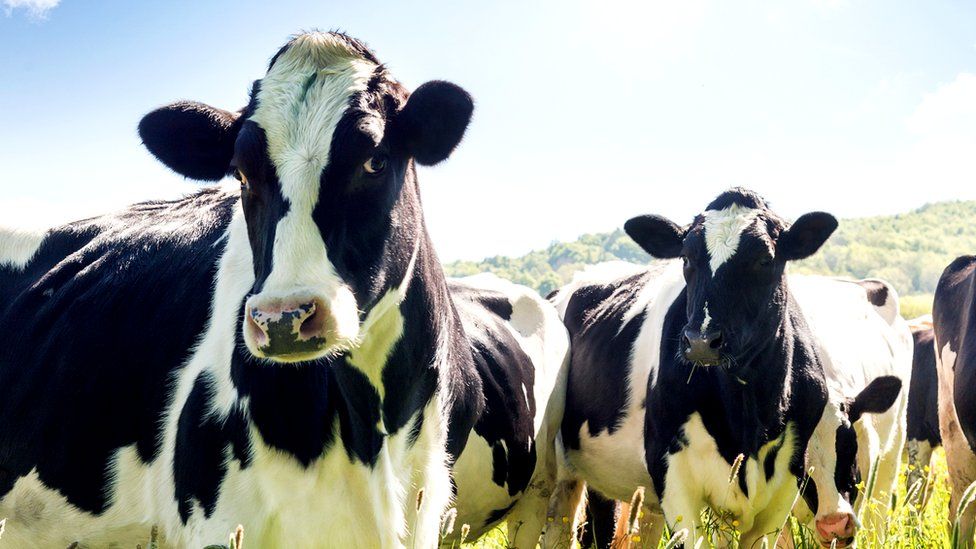
Why cows may be hiding something but AI can spot it

  By Chris Baraniuk Technology of Business reporter Published 22 hours ago Share IMAGE SOURCE, GETTY IMAGES Image caption, Herd animals like...